Key Facts on the Greenhouse Effect and Global Warming Explained
This work has been verified by our teacher: yesterday at 15:42
Type of homework: Essay Writing
Added: 21.05.2026 at 7:22
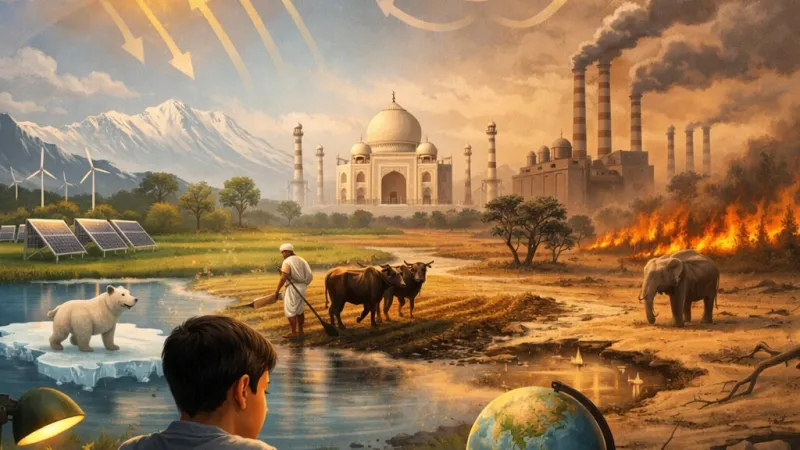
Summary:
Explore key facts on the greenhouse effect and global warming to understand their causes, impacts, and solutions from an Indian perspective for your homework.
Understanding the Greenhouse Effect and Global Warming: An Indian Perspective
The Earth, our only home, is surrounded by a thin protective layer called the atmosphere. Much like a warm shawl draped around the shoulders on a cold winter morning in Himachal, this atmosphere helps preserve the delicate balance of heat and cold necessary for life. Over the past several decades, scientists, environmentalists, and even ordinary citizens across India and around the world have expressed growing concern about changes in our climate. These shifts, visible in the form of unpredictable monsoons, severe heat waves, and recurrent floods, are deeply connected to two scientific phenomena— the greenhouse effect and global warming.
To comprehend the urgency of these concerns, it is necessary to understand two key terms. The "greenhouse effect" refers to the natural process where certain gases trap some of the sun’s heat within the Earth’s atmosphere, making the planet warm enough to sustain life. "Global warming", on the other hand, is the gradual but consistent rise in the average temperature of the Earth’s surface. This warming is heavily linked to human activities that have led to unprecedented increases in greenhouse gases. Through this essay, I aim to explain the mechanisms behind the greenhouse effect and global warming, examine their causes and impact, particularly in the Indian context, and discuss practical ways to address them.
---
The Greenhouse Effect: Nature’s Heating Blanket
How the Greenhouse Effect Works
Imagine sitting in a glasshouse, like those seen in Lalbagh Botanical Garden in Bengaluru. As sunlight pours in through the glass, it warms the air and the plants inside, but the heat struggles to escape, keeping the interior warmer than the outside. The Earth’s atmosphere does something similar on a planetary scale.Solar radiation from the sun passes through the atmosphere and reaches Earth's surface. The land and oceans absorb much of this energy and radiate it back as infrared heat. However, key gases in the atmosphere—known as greenhouse gases—trap a portion of this heat, preventing it from dissipating into outer space. This regulated heat retention establishes Earth’s warm, life-friendly climate.
The Major Greenhouse Gases
Five primary greenhouse gases contribute to this process, each with its unique sources:1. Carbon Dioxide (CO₂): Released through respiration, burning fossil fuels (like coal in Jharkhand or petrol in cities), and through the clearing of forests such as the diminishing green cover in the Western Ghats. 2. Methane (CH₄): Produced during digestion by cattle (a significant issue in rural Haryana and Punjab), from rice paddies, and leaks from natural gas infrastructure. 3. Water Vapour (H₂O): Generated by evaporation from rivers like the Ganga and lakes, and also from agricultural fields. 4. Nitrous Oxide (N₂O): Emitted from overuse of chemical fertilisers in the green revolution states, like Punjab, and various industrial processes. 5. Ozone (O₃): Forms in the lower atmosphere from vehicle and industrial emissions, especially in polluted urban areas such as Delhi.
The Necessity of the Greenhouse Effect
Without this natural insulating effect, Earth’s average temperature would descend to a frigid -18°C, making it inhospitable for most known life forms. The greenhouse effect thus underpins the existence of forests in Uttarakhand, tea plantations in Darjeeling, and the coral reefs in the Gulf of Mannar.---
Global Warming: When the Blanket Gets Too Thick
What is Global Warming?
Global warming can be compared to making your rajai (quilt) too thick for a mild night—what was once cozy becomes unbearably hot. The intensification of the greenhouse effect, primarily due to excessive buildup of greenhouse gases, has led to a steady climb in global temperatures. These changes are observable not only in rising air and water temperatures but also in more frequent and devastating weather events.Human Causes: Setting the Earth Ablaze
Over the past two centuries, human activities, especially since the industrial era, have dramatically amplified greenhouse gas emissions:- Industrialisation: Widespread reliance on coal-fired power plants (as seen in Korba, Chhattisgarh), and manufacturing processes release vast amounts of CO₂. - Deforestation: Forests like those in the Northeast and central India are ruthlessly cleared, both reducing green cover that absorbs CO₂ and releasing stored carbon. - Agricultural Practices: Rice cultivation, livestock rearing, and fertiliser overuse contribute to the emission of methane and nitrous oxide. - Urbanisation and Vehicular Pollution: The rapid growth of cities like Mumbai and Delhi has increased car ownership and industrial activity, choking the air with pollutants.
Evidence and Signs
Scientific records indicate that global average temperatures have climbed significantly since the late 19th century. In India, the last two decades have seen some of the hottest summers, with Delhi and Rajasthan experiencing unprecedented heatwaves. Himalayan glaciers are receding rapidly, threatening water supplies for millions. Kerala, in recent years, has witnessed catastrophic floods, partly blamed on altered rainfall patterns linked to global warming. Similar trends, such as increasing droughts in Maharashtra and unseasonal rainfall in Tamil Nadu, testify to the seriousness of the problem.---
The Consequences: Impact on India and the World
Altered Weather Patterns
Global warming brings with it extreme and unpredictable weather. The annual monsoon, critical for agriculture in India, has become erratic, leading to excess rainfall and devastating floods in Assam, while at the same time, Marathwada in Maharashtra suffers from deadly droughts. Cyclones are striking more frequently and with greater force, as evidenced by Cyclone Amphan’s impact in West Bengal.Distressed Ecosystems and Biodiversity
The warming climate has profound effects on ecosystems. The melting of Himalayan glaciers not only threatens river systems like the Yamuna and Brahmaputra but also disrupts wildlife habitats. Coral reefs off the coast of Tamil Nadu are bleaching due to warming seas. Traditional migratory patterns of birds and animals, like the Siberian cranes to Bharatpur, are being disturbed, affecting entire food chains.Challenges to Health and Economy
With rising heat, cities record more cases of sunstroke and dehydration. Incidents of vector-borne diseases like dengue and malaria are on the rise in cities like Kolkata and Chennai. Farmers in states such as Andhra Pradesh are struggling with shifting sowing seasons and declining yield, leading to increased suicides and economic hardship. Coastal communities in Odisha and Andhra Pradesh face the constant threat of sea water encroachment, which destroys livelihoods and displaces families.---
Solutions and the Path Forward
Reducing Greenhouse Gas Emissions
Efforts are underway in various corners of India to embrace cleaner energy. The solar parks of Rajasthan and Gujarat, and the wind farms in Tamil Nadu are examples of the move towards renewable energy. Government policies now encourage the use of public transport (like Delhi Metro), adoption of electric vehicles, and improved emissions standards for industry.Strengthening Nature’s Defenses
Reforestation schemes like the Green India Mission aim to revive and expand India’s forests. Community-led initiatives in Kerala and Arunachal Pradesh show how local action to protect wetlands and forests can store carbon and support biodiversity.Personal and Community Responsibility
Every individual can help—by using energy-efficient appliances, cycling or using public transport, and not wasting food. Urban centres like Pune and Bengaluru have active citizen groups promoting waste segregation, composting, and tree planting. Schools and colleges across India, through eco-clubs and awareness campaigns, nurture a sense of responsibility in the younger generation.Policy Initiatives and International Collaboration
India is a signatory to the Paris Agreement, committing to substantial cuts in emissions. The country’s push for International Solar Alliance demonstrates its leadership role in climate action. Stringent environmental regulations, more investment in research, and robust disaster management systems are being enforced.---
Conclusion
The interaction between the greenhouse effect and global warming is a delicate balance that governs life on Earth. While the greenhouse effect is fundamental to making the Earth habitable, its unchecked intensification through human activity becomes a curse rather than a blessing. The impacts—felt in our climate, our food systems, our health, and our very geography—serve as a dire warning.The battle against global warming cannot be won by governments or scientists alone. It requires the conscious commitment of every individual—be it a student or a policymaker, a farmer or an urban dweller. Together, informed by science and motivated by the desire to preserve our beautiful nation for future generations, we can innovate, adapt, and build a sustainable future. India, with its long tradition of living in harmony with nature, is well placed to lead the world by example. Through awareness, action, and hope, we can ensure the Earth remains a nurturing home for all.
---
Rate:
Log in to rate the work.
Log in