Important Facts About National Girl Child Day for Students
This work has been verified by our teacher: yesterday at 15:03
Type of homework: Essay Writing
Added: day before yesterday at 13:09
Summary:
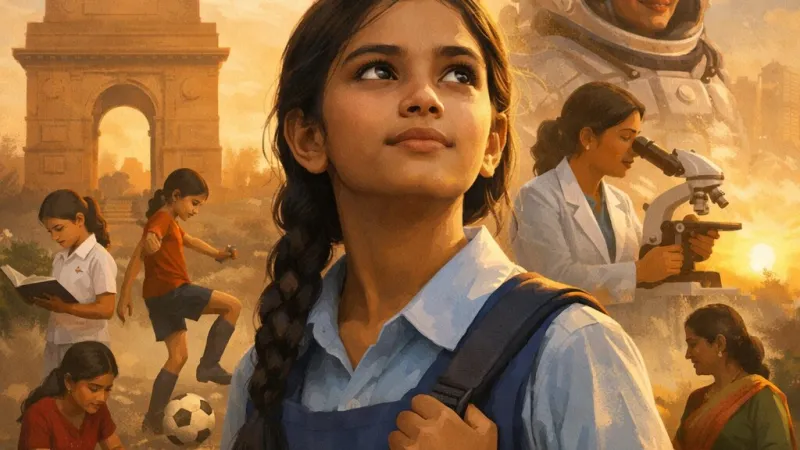
Discover key facts about National Girl Child Day, its history, and why empowering the girl child is vital for India's progress and equality.
Essay: 10 Lines on National Girl Child Day – An In-depth Exploration
India, adorned with rich cultural traditions stretching across millennia, has always revered the concept of a “Devi”, or the goddess, symbolising power, wisdom, and compassion. Yet, in the intricate fabric of our society, the girl child has often been subjected to adversities that betray this core reverence. To correct such historical wrongs and ignite progress, National Girl Child Day is commemorated every year on 24th January. Established as a solemn reminder and celebration, this day seeks to promote awareness about the rights, issues, and potential of girl children in India. Against the backdrop of persisting gender inequality, early interventions can sow the seeds of a stronger, more inclusive nation, where every girl is empowered to realise her highest potential.
Historical Background
Formally launched in 2008 by the Ministry of Women and Child Development, National Girl Child Day is more than a symbolic gesture. It emerged from the growing realisation within government and society that persistent neglect and discrimination have held back not just individual girls, but the progress of the nation itself. The day’s inception is closely tied to the roll-out of a series of schemes such as the Dhanalakshmi Scheme and later, the notable Beti Bachao, Beti Padhao initiative, all of which signify the state’s growing commitment to girl child welfare. Over the years, this date has become a focal point for evaluating how attitudes have shifted—from tokenism and celebration to meaningful policy discussions, introspection, and action.Current Status of Girl Child in India
Despite notable advancements in legislation and social awareness, challenges continue to confront the Indian girl child. A major concern remains gender discrimination in education; girls are still far less likely to pursue higher education or even complete secondary schooling, particularly in rural heartlands. The National Family Health Survey (NFHS) and Census data indicate a persistent drop in the child sex ratio, especially in northern and western states.Nutritional neglect is another stark reality, with girls suffering higher rates of malnutrition and anaemia. Societal preference for the male child persists in many regions, visible through skewed sex ratios, incidents of female foeticide, and even cases of infanticide—a theme hauntingly portrayed in films like “Matrubhoomi”. Girl children face heightened risks of early marriage, dowry demands, trafficking, and related forms of exploitation. Despite the existence of the Prohibition of Child Marriage Act, PCPNDT Act (against sex-selective abortion), and the Right to Education Act, the implementation gap undercuts their efficacy, leaving many girls still vulnerable.
Objectives and Themes of National Girl Child Day
National Girl Child Day is marked each year with the clear intent of drawing attention to such inequalities and challenging deep-rooted stereotypes. Its objectives include fostering opportunities for education and healthcare, instilling respect and value for girls within families, and creating awareness about the legal rights and safety of girl children.Themes vary each year; for instance, “Empowering Girls for a Brighter Tomorrow” and “My Voice, Our Common Future” have been used to inspire actions that look beyond mere survival towards leadership. Increasingly, the day also stresses the importance of involving girls in family decisions—mirrored in state-level campaigns like West Bengal’s Kanyashree Prakalpa, which recognises adolescent girls as agents of change rather than passive beneficiaries.
Government Initiatives and Policies
The “Beti Bachao, Beti Padhao” campaign is a flagship programme initiated in 2015, aimed at bridging the gender gap in education and child survival rates. Focused on 100 districts with dismal sex ratios, it combines awareness-raising with practical incentives like scholarships for girls who continue in school.Additionally, the Sukanya Samriddhi Yojana encourages parents to invest in their daughters’ future, offering tax benefits and higher returns for savings dedicated to girl children. To combat health disparities, the Pradhan Mantri Matru Vandana Yojana ensures expectant mothers receive nutritional support, indirectly benefiting the unborn girl child.
Legal frameworks are also robust, with the POSCO Act and guidelines from the National Commission for Protection of Child Rights (NCPCR) offering a shield against various forms of abuse. All these policies are periodically reviewed and promoted extensively on National Girl Child Day, encouraging synergy between ministries, state governments, NGOs, and civil society.
Role of Educational Institutions in Celebrations
Schools and colleges take a pivotal part in commemorating National Girl Child Day, making it an occasion that combines reflection with celebration. For instance, painting, debate, storytelling, and essay-writing competitions push students to express and challenge social divides. In several Kendriya Vidyalayas, skits and street plays about child marriage or gender stereotypes become tools for learning and empathy.Workshops and seminars are organised for both teachers and students to raise awareness about legal rights, menstrual hygiene, and gender sensitivity. Many institutions now integrate self-defense training such as karate or judo into their curriculum—an empowering move that not only boosts confidence but also instills self-reliance among girls.
Participation does not stop within school walls. Students often join rallies, nukkad nataks (street performances), or community marches, amplifying the message of girl child empowerment across neighbourhoods.
Civil Society and Community Participation
No meaningful transformation is possible without the involvement of local communities and grassroots organisations. NGOs like Nanhi Kali or Snehalaya run sustained campaigns in diverse districts, adopting a hands-on approach to empowering girls through education, healthcare, and life skills. Media houses, both vernacular and national, play a crucial role by highlighting stories of resilience and achievement—such as the inspiring tale of Malavath Poorna, the youngest girl to climb Mount Everest, breaking shackles of poverty and patriarchy.Street plays and documentary screenings, often adopted by village panchayats and urban local bodies, bring complex issues like trafficking or dowry into open dialogue. Community leaders—including teachers, ASHA workers, and faith-based influencers—are increasingly stepping forward to advocate for delayed marriage, school completion, and girls’ participation in sports and technology. The home, ultimately, is the first site of change, where supportive family members can fight stereotypes by encouraging independence, decision-making, and self-esteem.
Importance of Creating a Safe and Supportive Environment
The effectiveness of all these initiatives depends on an ecosystem where girls are safe and valued. Preventing violence and exploitation—through awareness, vigilance, and legal recourse—is crucial to nurturing self-confidence. Access to healthcare and nutrition, particularly during adolescence, deserves as much attention as academic success. Quick reporting of abuse, strict enforcement of child protection laws, and gender equity in resource allocation ensure that progress is felt tangibly.At every level—be it in the home, school, or broader society—girls must feel seen and heard. The national conversation must shift from mere welfare to the outright celebration and empowerment of the girl child, treating gender justice not as charity, but as an inalienable right.
Long-Term Impact and Vision
Over the years, National Girl Child Day has begun to tilt mindsets, if gradually. States like Haryana, once infamous for its dismal sex ratio, have shown promising improvements after sustained campaigns. Empowerment through education and skills heralds new stories of leadership: one can point to the rise of inspiring girls like Mary Kom or the rural scholars of Super 30 as testaments to what can be achieved.Long-term, the goal is to cultivate girls not just as beneficiaries, but as active contributors to India’s economic, scientific, and cultural prosperity. Whether as scientists, sportspersons, entrepreneurs, or public servants, girls are increasingly occupying the spaces once denied to them. But real transformation demands that every day—not just 24th January—be an occasion to reaffirm our pledge towards their freedom and dignity.
Conclusion
National Girl Child Day stands as a beacon—reminding us of the unfinished tasks in our pledge towards equality. It symbolises hope for a society where girls enjoy the full spectrum of rights, respect, and opportunities. For this, the efforts of individuals, families, schools, government bodies, and community leaders must synchronise in spirit and action. The empowered girl child is not just an emblem of tomorrow’s India; she is the force that will shape it—resilient, wise, and compassionate. As the poet Mahadevi Varma wrote, “Nari ke mann ko samjho, nayi pehchaan do; samaj badlo, tabhi Bharat ka kal roshan hoga.” Let us resolve that our country’s future shines with the light of every girl’s smile, courage, and dreams.---
Additional Notes
- For facts, students may cite examples such as the growing enrollment of girls in states like Kerala or Odisha due to proactive state policies. - Local heroes—like mathematician Shakuntala Devi or athlete Dutee Chand—inspire by overcoming odds. - Sensitive portrayal and specificity (avoiding stereotypes) are important. Real-life observations and simple, respectful language are most impactful in such essays.---
Summary of 10 Lines for Reference: 1. National Girl Child Day is celebrated every year on 24th January to promote awareness about the rights of girls in India. 2. It was started in 2008 by the Ministry of Women and Child Development. 3. The day aims to address issues like gender discrimination, educational inequality, and health disparities faced by girls. 4. Government schemes like Beti Bachao, Beti Padhao support girl child welfare. 5. Schools organise activities such as essays, painting, and debates to celebrate this day. 6. NGOs and communities run awareness campaigns to change societal attitudes. 7. Legal rights and financial assistance are provided to protect and empower girls. 8. Special emphasis is given on education, nutrition, and safety for girl children. 9. National Girl Child Day inspires everyone to treat girls with equality, respect, and love. 10. Empowering girls today guarantees a stronger, brighter future for India.
Rate:
Log in to rate the work.
Log in