Short Essay on My Family and Its Importance in Life
Type of homework: Essay Writing
Added: day before yesterday at 10:54
Summary:
Explore the importance of family in life and learn about Indian family values, traditions, and bonds that shape identity and emotional growth in this essay.
My Family: The Foundation of My Life
In the tapestry of Indian society, the family stands as the strongest and most enduring thread. Often called the "first school," it is where we learn our earliest lessons—about love, discipline, tradition, and togetherness. Unlike fleeting relationships, family bonds sustain and nurture us from our birth through the many stages of life. In India, the concept of family can span from tight-knit nuclear units to sprawling joint families that include several generations living together. Our families are not just blood relations; they are the transmitters of our values, the keepers of our culture, and the pillars that support us through both joy and adversity. In this essay, I will give a reflective account of my own family—its members, the roles they play, the values we uphold, the traditions we cherish, and the profound impact my family has had on shaping my identity.
---
Understanding the Concept of Family
The Indian understanding of family goes far beyond the basic definition of parents and siblings. In India, we often talk of two major types of families: the nuclear family, which consists of parents and their children; and the joint family, a rich system where uncles, aunts, cousins, and grandparents often live together under one roof. Even when families become smaller in modern cities due to job-related shifts, the emotional bonds with extended relatives remain strong. You will find in most Indian homes that ties with chachas (uncles), mausis (maternal aunts), nanis (maternal grandmothers), and dadas (paternal grandfathers) remain deeply significant.These ties are not just by blood. Indian culture respects relationships formed through marriage as equally important, welcoming in-laws as true family members. Adoption, too, is seen as an act filled with warmth—a continuation of the Indian ethos of ‘Vasudhaiva Kutumbakam’ ("the world is one family"). In our daily life, this means making decisions together, showing deference to elders, and supporting each other emotionally and, sometimes, even financially. Whether it's in rural Uttar Pradesh or the fast-paced streets of Mumbai, the family is considered a primary social and economic unit, highly valued in every sphere of Indian life.
---
Description of My Family Members
Let me introduce my own family, which is a classic example of the modern Indian nuclear setup, with active ties to our extended group. My family consists of five members: my father, my mother, my elder sister, my younger brother, and myself.My father, aged 48, is the guiding force of our family. A government school teacher by profession, he is known for his fairness and disciplined approach. He manages our finances and important decisions with a calm, firm hand, but equally enjoys telling us stories from Indian history or his own childhood in Bihar. My mother, aged 44, is the heart and soul of our household. She is a homemaker, adept at managing everything from our meals to our moods. Her care goes beyond cooking—she is my confidant during moments of anxiety before exams, and she never forgets to remind us of our moral duties.
My elder sister, who is now studying engineering in Pune, is both a friend and an inspiration. When she comes home during holidays, the house comes alive with her jokes and her music. My younger brother, still in class VI, is the mischievous one in the house, but his curiosity and eagerness to learn impress all of us. As the middle child, I am often the bridge between the two, learning patience from my sister and teaching it to my brother. My grandparents live in our ancestral home in Etawah, but their calls and occasional visits keep our family traditions alive.
---
Family Functions and Responsibilities
A distinctive feature of our family is the support we give each other—be it emotional, financial, or practical. When I struggled with my class X board exams, it was my family’s encouragement that lifted my spirits. My mother stayed up with me during late-night study marathons, while my father reassured me that sincere effort mattered more than results. Similarly, when my brother had a minor accident on the cricket field, the entire family rallied together—offering first aid, emotional comfort, and, later, a word of caution about safety.Financial stability, too, is managed collectively. My father’s salary forms the backbone, but my mother ensures wise spending, laying aside savings for our education and emergencies. We are taught from early on not to waste resources, to value money, and to contribute by saving pocket money or helping with budget shopping. Household work is not just my mother’s domain—my sister and I help her in the kitchen or with cleaning during weekends, and even my brother has begun to take responsibility for his belongings.
When it comes to decision-making, my father usually leads, but everyone is heard. For instance, when we planned to buy a new two-wheeler, each member gave their opinion. My mother and sister pointed out safety and cost, while I researched models online. Gradually, we arrived at a choice that satisfied us all—showcasing the consultative style Indian families often follow, blending authority with consensus.
Traditional gender roles do persist, but my parents are conscious of teaching us equality. Both sons and daughters are encouraged to pursue education and share duties, reflecting the changing dynamics in many Indian households today.
---
Values and Traditions Passed Through Family
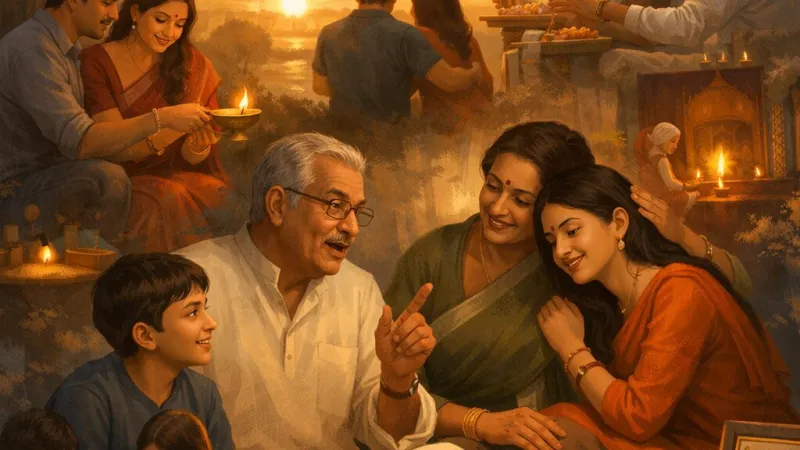
Indian families are the primary transmitters of culture and values. Festivals form the vibrant backdrop of our family life. Diwali is celebrated with lighting diyas, exchanging sweets with neighbours, and telling stories from the Ramayana. During Pongal, when we visit our grandparents, the whole house fills with the aroma of newly harvested rice. My mother preserves not only her recipes but also tales of her own childhood in Andhra Pradesh, enriching our sense of identity.Moral values are strongly instilled. My father often narrates stories from Indian epics—like the honesty of Harishchandra or the bravery of Rani Laxmi Bai—to drive home lessons of truth and courage. Respect for elders, discipline, honesty, and responsibility are emphasised daily—not just as abstract concepts, but as practices in how we treat neighbours, help relatives, or interact at school.
At the same time, my parents remind us to adapt to the world’s changes. We speak both Hindi and English at home, reflecting the blend of tradition and modernity necessary for today’s generation.
---
The Joys and Challenges of Family Life
Family life is filled with moments of joy—be it a birthday celebration, a picnic to the local zoo, or a spontaneous game of carrom after dinner. Festivals like Holi bring everyone together in a riot of colours and laughter. Even ordinary evenings spent sharing a cup of tea and discussing our day are precious rituals that keep us bonded.Disagreements, of course, are also part and parcel of family. Sometimes, the generation gap causes friction—like when I want to pursue a career in design and my father worries about its stability compared to engineering. Rather than suppressing opinions, our family believes in dialogue. We sit together and present our views, sometimes arguing heatedly but always ending with understanding and sometimes, even new insights. Forgiveness is encouraged rather than grudges, and individual dreams are balanced with family expectations.
---
How My Family Shapes My Identity and Future
Much of who I am today—my confidence, my ethics, my aspirations—has been shaped by my family. Their belief in the value of education motivates me to aim high, and their support acts as a cushion when I falter. Because of their example, I try to be disciplined, punctual, and considerate towards others.Social responsibility is also a value we imbibed together. We often volunteer at local community events or offer food to those in need during festivals. These acts have shown me the significance of empathy and giving back—qualities that enrich not just individuals, but society at large.
My parents encourage me to dream big, and assure me that whatever goal I choose, they will stand behind me—not to dictate my path, but to be my cheerleaders and guides.
---
The Special Significance of Family in Contemporary India
Today, with urbanisation and busy lives, families in India are adapting. Even as young people move to other cities for studies or work, technology such as WhatsApp and video calls ensure that family bonds remain unbroken. The family continues to be a steady anchor in uncertain times, offering not only economic support, but emotional backing when faced with the pressures of modernity.Joint families, though less common in cities, still play a vital role in rural areas, pooling resources and sharing responsibilities such as farming or running family businesses. Elders are respected and looked after, ensuring old age does not become a solitary experience. The notion of “family honour” remains important in many spheres, guiding decisions and underlining the weight of social reputation in Indian life.
---
Rate:
Log in to rate the work.
Log in