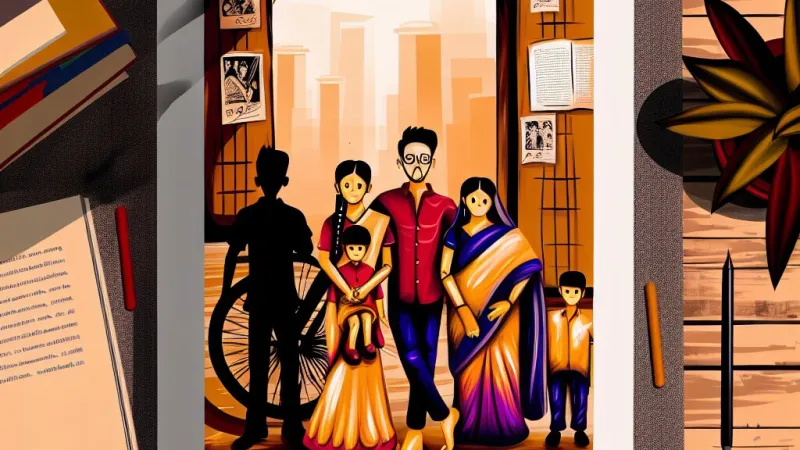
10 Short Lines Celebrating International Day of Families
This work has been verified by our teacher: 13.02.2026 at 11:13
Type of homework: Essay Writing
Added: 12.02.2026 at 11:22
Summary:
Discover 10 short lines celebrating the International Day of Families and learn why family is the cornerstone of society and values in India.
The International Day of Families: Celebrating the Pillar of Society
The family is often called the bedrock of civilisation. In every Indian home, the idea of “parivaar” goes beyond just parents and children, extending to grandparents, uncles, aunts, and sometimes neighbours who are treated as family. From learning the first words at a mother’s knee to gathering for evening prayer with elders, the family is where every human being receives their first lessons in life’s values and morals. It is fitting, then, that a day is set aside to honour this vital institution. The International Day of Families, observed every year on 15th May, serves as a reminder of the role families play globally—not just in personal development, but as foundational units of every society. Initiated by the United Nations in 1993, this day seeks to draw attention to the welfare and challenges of families worldwide, while inspiring both policy-makers and ordinary citizens to work towards stronger, healthier families.I. Understanding the Importance of Family in Society
In the culturally rich context of India, the family holds a position of reverence that is hard to overstate. Our traditional joint family system, depicted in literary classics like Munshi Premchand’s *Godaan*, demonstrates the emotional support, financial security, and continuity of traditions offered by interconnected generations living under one roof. Even today, despite the spread of nuclear families in urban centres, festivals like Diwali, Pongal, and Eid see extended families reuniting to celebrate togetherness.A family is more than a biological unit; it is a nurturing ground for values like honesty, resilience, and compassion. For a child, a family provides not only protection but a first sense of identity—who they are, whom they belong to. It is within the home that generations transmit languages, folk tales, rituals, and even recipes, thus ensuring that our diverse tapestry of customs endures. Additionally, families are economic units—whether it is the humble tailor teaching his children his craft in Meerut, or a farmer passing on agriculture know-how to the next generation in Punjab, economic sustenance often hinges on family collaboration.
Moreover, the family is the first classroom for socialisation. Respect for elders, empathy for siblings, cooperative play, and gender roles are largely shaped within these four walls. This blend of emotional, social, and economic functions establishes the family as the cornerstone of stability, growth, and cultural perpetuation.
II. The Significance of Celebrating the International Day of Families
A dedicated observance such as the International Day of Families shines a spotlight on family-related challenges that might otherwise remain in the shadows. In India and elsewhere, families encounter a host of difficulties—rampant poverty, gender bias, unemployment, domestic abuse, substance addiction, and even generational friction fueled by changing aspirations and lifestyles.Each year, the United Nations chooses a fresh theme to reflect contemporary concerns. For instance, the 2021 theme, “Families and New Technologies,” acknowledged how the digital divide can exclude rural families from educational and economic progress, a problem clearly seen during the COVID-19 pandemic when online schooling left behind countless children in remote villages. Past themes such as “Families and Climate Action” have prodded families to adopt practices like waste segregation and water conservation, underlining their role in sustainable development.
This day is a catalyst for dialogue—encouraging government bodies, social organisations, and individuals to acknowledge the diversity in families, ranging from joint families found in West Bengal villages to single-parent urban households in Mumbai, or LGBTQ+ families demanding dignity and acceptance. By raising awareness, the International Day of Families generates a sense of shared responsibility for the welfare and strengthening of family ties across society.
III. Key Challenges Faced by Families in India and Beyond
While the family remains a resilient institution, it is neither immune nor blind to modern pressures. In India, over 22% of the population still lives below the poverty line (as per recent government estimates). This poverty affects access to nutritious food, quality education, and timely healthcare, trapping families in cycles of deprivation. Initiatives like the Public Distribution System and mid-day meal schemes have tried to cushion the impact, but challenges persist.Another significant hurdle is the deep-rooted gender inequality within families. Despite improvements, girl children in many households are still denied the same opportunities as their brothers. Social evils like dowry, female foeticide, and domestic violence are wrongful burdens on families, addressed through policies like Beti Bachao Beti Padhao, yet they demand greater societal change and vigilance.
Illiteracy, especially among women in rural areas, restricts not only their own prospects but also those of their children. According to the National Sample Survey, female literacy in India, though rising, still lags behind male literacy. Without education, families struggle to access government welfare schemes, secure decent jobs, or navigate healthcare systems efficiently.
Health remains a critical concern—malnutrition among children, high maternal mortality rates, and mental health stigma continue to plague families, particularly in underserved regions. Programmes like the National Health Mission and Janani Suraksha Yojana have made progress, but awareness and implementation need strengthening.
Modernisation, too, poses new challenges: as young members migrate to cities for work or study, family structures fragment. The elderly often feel isolated, and traditional bonds weaken. Meanwhile, addiction to technology can lead to dwindling family interactions, even when members live under the same roof.
IV. Observing International Day of Families: Global and Indian Initiatives
Globally, the International Day of Families is marked by conferences, seminars, and media campaigns led by the United Nations and its agencies. These events provide platforms for researchers, policymakers, and activists to exchange ideas and implement solutions. For example, panel discussions on affordable healthcare or child rights have inspired policy changes at country and regional levels.In India, the government has enacted noteworthy policies—MGNREGA (Mahatma Gandhi National Rural Employment Guarantee Act) aims to provide rural employment and social security, while schemes like Pradhan Mantri Matru Vandana Yojana and Integrated Child Development Services target maternal and child welfare. Women’s empowerment policies encourage girls’ education and entrepreneurial support.
Non-governmental organisations like CRY and SEWA play a vital role in spreading awareness, running helplines for distressed women and children, and conducting skills training in remote areas. On the International Day of Families, many schools and colleges host drawing competitions, debates, and street plays to engage students on family welfare topics. Media—whether it is All India Radio, DD National, or digital platforms—uses this opportunity to promote family values, health tips, and information about government schemes.
V. International Day of Families and Sustainable Development
The International Day of Families is closely tied with global ambitions such as the Sustainable Development Goals (SDGs). If we are to achieve goals like No Poverty, Quality Education, Good Health and Wellbeing, or Gender Equality, families must be empowered and supported. An educated, healthy, and secure family provides the backbone of a skilled workforce, active citizenship, and vibrant democracy.Environmental consciousness, too, begins at home. Campaigns around the day often urge families to plant trees, reduce plastic usage, or save water—a nod to the importance of collective action towards climate goals. Technology, when harnessed inclusively, helps families access telemedicine, online schooling, and social security benefits, narrowing developmental gaps between urban and rural populations.
VI. Personal and Societal Benefits of Strong Families
A strong family translates to a peaceful and stable society—an echo of the saying, “Vasudhaiva Kutumbakam”—the world is one family. Children raised in supportive families are more likely to become responsible, law-abiding adults. Community harmony, higher productivity, lower crime, and a vibrant cultural life all stem from the collective strength of healthy families.Moreover, in times of crises—whether it is the illness of a member, job loss, or a pandemic—families provide crucial financial and emotional cushioning, reducing the burden on social welfare systems. Strong family bonds foster resilience, empathy, and a sense of duty to society.
Rate:
Log in to rate the work.
Log in