Kohinoor Diamond: Its History, Colonial Journey and Ongoing Dispute
This work has been verified by our teacher: 16.01.2026 at 15:07
Type of homework: History Essay
Added: 16.01.2026 at 14:30
Summary:
Kohinoor: klejnot z Golcondy, zdobycz imperiów, symbol kolonializmu i sporu o zwrot dziedzictwa. 💎⚖️
Kohinoor Diamond: Gem, Empire and Contested Heritage
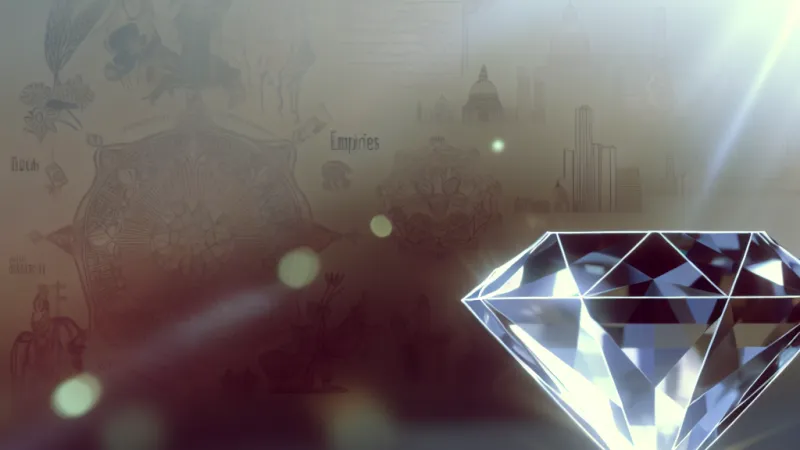
Few artefacts from the Indian subcontinent have captured the world’s imagination as intensely as the Kohinoor diamond. With a past as intricate as its legendary facets, the Kohinoor stands not just as a rare gem, but a powerful symbol of changing empires, colonial ambition, and unresolved questions of cultural ownership. Once mined in the rich alluvial terrains of South India and now encrusted within the British Crown Jewels, it reflects the turbulent tides of South Asian history and the enduring arguments about cultural restitution. Today, the diamond’s journey is more than a tale of kings and conquerors—it is a prism refracting issues of national identity, colonial justice and contested heritage. In this essay, I investigate the geological origins of the Kohinoor, retrace its journey through major periods of South Asian and British history, explore the legends and meanings woven around it, and critically examine the legal and ethical claims that continue to fuel global debate. Through this lens, the Kohinoor emerges not simply as a mineral marvel, but a living archive of memory and struggle—a microcosm of India’s broader encounters with imperial power and the legacy of colonial dispossession.
---
Geological Emergence and Early Provenance
The Kohinoor’s origins can be traced deep into the fertile soils washed by the Krishna River. Its probable birthplace is the famed Kollur mines, nestled in the present-day Andhra Pradesh—historically part of the Golconda region. These mines, renowned from at least the 13th century, were celebrated for yielding exceptionally large and pure diamonds, sometimes called the “Golconda stones”—a mark of unrivalled brilliance that made them coveted throughout Asia and Europe. The diamond-rich plateau, intersected by rivers and ancient trading routes, meant that gems like the Kohinoor circulated not just as objects of adornment but as pegs in the political chessboard of the Deccan.According to early Telugu and Persian chronicles, as well as the diaries of visiting merchants, diamonds from Golconda were integral to royal treasuries and tribute networks. The early history of the Kohinoor itself is slice-of-shadow: while legends claim it adorned various thrones centuries before, verifiable historical tracing begins only in the late medieval period, when the region’s shifting dynasties started documenting their treasures with greater care.
---
Physical Characteristics and Gemological Odyssey
The Kohinoor, over centuries, has undergone metamorphoses reflecting both the evolving tastes of its owners and the misfortunes that befell them. Early descriptions say it once weighed above 186 old carats (approximately 37.2 grams) and was not a precisely-cut, symmetrical stone but a large, irregular, rose-cut gem typical of Indian lapidary traditions. When the British acquired it after 1849, contemporary records (such as the catalogue of the Great Exhibition) noted it as somewhat dull and lacking uniformity, but still impressive in sheer bulk.Anxious to enhance its sparkle, Prince Albert—consort of Queen Victoria—commissioned London’s Garrard & Co. to re-cut the Kohinoor in 1852. This drastic process reduced its weight to 105.6 metric carats, effectively sacrificing mass for brilliance using Western cutting styles. Today, the stone possesses an oval, brilliant-cut profile, clear and radiant but forever altered. While the modern gemological institutions such as the Gemmological Association of Great Britain have conducted spectroscopic and microscopic analysis, the Kohinoor’s singular history lends it a pedigree impossible to replicate, irrespective of its current measurements.
---
A Chronological Tapestry of Ownership
Medieval Dynasts and Early Turmoil
The first credible mentions of the Kohinoor surface amidst the tumult of the late medieval Deccan. Royal court records from the Kakatiya or Vijayanagar empires hint at “an unrivalled white diamond” decorating royal paraphernalia, likely as a symbol of sovereign legitimacy. By the 14th and early 15th centuries, as the mighty Bahmani sultans rose to power, the gem migrated northwards, its aura magnified with each transfer. Chroniclers wrote of the diamond as “a tribute worthy of kings,” suggesting it played a diplomatic role in alliances and surrenders.Delhi Sultanate and the Mughal Ascent
With the frequent upheavals of the Delhi Sultanate and the ascendance of Mughal power, the Kohinoor found itself part of northern India’s shifting centres. By the time of Emperor Babur (early 16th century), records in the Baburnama (Babur’s memoirs, translated and annotated by scholars such as Annette Beveridge) mention a spectacular diamond the size and value of a hen’s egg, gifted to the emperor on his conquest of Delhi. Successive Mughal rulers—Akbar, Jahangir, Shah Jahan—counted it among the most prominent items in the “Peacock Throne,” making it a touchstone of Mughal imperial grandeur.Eyewitnesses like Jean-Baptiste Tavernier, the French gem merchant who visited the Mughal court in the 17th century, identified the Kohinoor by its size and colour, though the nomenclature varied and precise matches remain debated among historians.
Persian Seizure and the Tide of Empire
The 18th century brought devastation to the Mughal domain. In 1739, the Persian ruler Nadir Shah invaded Delhi, plundering its treasures after a bloody sack. According to Persian and Indian chroniclers, Nadir Shah seized the Peacock Throne and its prime gem—the stone now commonly accepted as the Kohinoor—carrying it to Isfahan. Legend claims it was after this conquest that the diamond acquired its Persian name “Koh-i-Noor,” meaning “Mountain of Light,” a term that cemented its awe across West and South Asia.Shortly after, Nadir Shah’s assassination led to fresh transfers amidst regional collapse; the diamond drifted to Afghanistan, passing through tumultuous hands from Ahmad Shah Abdali to Shah Shuja Durrani, reflecting the battered landscape of post-Mughal power.
Sikh Empire and British Acquisition
The early 19th century saw the Kohinoor re-emerge in Punjab, in the treasury of Maharaja Ranjit Singh of the Sikh Empire. Unlike other conquerors, Ranjit Singh wore the gem only occasionally, reportedly using it as a form of spiritual and political capital, even hinting on his deathbed (in Sikh oral lore) that it be gifted to the Jagannath temple at Puri—though this was never carried out.A new chapter began after 1849, when the British East India Company annexed Punjab following the Second Anglo-Sikh War. Under the terms of the Treaty of Lahore (1849), the 10-year-old Duleep Singh—last Sikh ruler and heir—was compelled to “surrender” the diamond to Queen Victoria. The exact degree of coercion remains hotly debated, but as documented in the treaty and British official letters, the transfer was both symbolic and material, representing the empire’s triumph over a formidable adversary.
British Display, Crown Jewel and Public Symbol
Soon after, the Kohinoor arrived in London, displayed at the Great Exhibition of 1851 for a curious public. While its muted brilliance under London’s foggy light caused some disappointment, its mystique grew as it was embedded in crowns and regalia—from Queen Victoria to later consorts. As the centrepiece in the Crown of Queen Elizabeth (now displayed in the Tower of London), it became the most visible symbol of colonial trophy and British monarchy’s self-image as global overlords.---
Myths, Legends and Enduring Cultural Meanings
Across centuries, the Kohinoor has accumulated layers of myth, often untethered from history but illuminating the diamond’s deep place in South Asian mental worlds. Regional folklore insists the diamond is cursed, bringing misfortune to any man—Hindu, Muslim, or Sikh—who dares to own it, a trope echoed in Hindi and regional literary works. Some link its powers to ancient Sanskrit scriptures, though no direct Shastric record exists. The recurring motif is one of fate and divine justice—an object too potent for mere mortals, whose brilliance exacts a price. The persistence of such myths stems from a mix of oral memory, colonial exoticisation and the symbolic function of the gem as a stand-in for lost sovereignty.Scholars like Romila Thapar urge caution, pointing out the need to separate documented history from the stories strategically revived for nation-building or colonial justifications. Yet, these stories—whether warning of a curse or promising divine legitimacy—remain a vibrant part of the diamond’s aura.
---
The Kohinoor and Imperial Power
For every ruler who acquired the Kohinoor, the diamond signified more than opulence; it was an icon of sovereignty and absolute power. The Mughal emperors arrayed it in their crowns and thrones to express an authority granted by divine right. Later, for the Persian and Afghan conquerors, it broadcast victory over a famed foe. The British, however, went further, turning the Kohinoor from a private treasure to a public relic of domination.The careful display of the diamond during the Great Exhibition (1851) and its embedding in British regalia turned Indian defeat into enduring imperial spectacle. Period newspapers and parliamentary speeches trumpeted the surrender of the Kohinoor as the “brightest prize” of British conquest, erasing stories of suffering while reinforcing colonial legitimacy. To this day, its presence in the British Crown offers a material reminder of power asymmetries, fuelling debates about reparations and memory.
---
The Contemporary Debate: Legal, Ethical and Diplomatic Contests
The Kohinoor’s contested ownership remains a diplomatic flashpoint, particularly between India and the United Kingdom. Independent India first made formal requests for its return in 1947, reprised at various points (notably during the 2012 and 2016 state visits). Pakistan and Afghanistan have also staked claims, citing historical episodes of possession.Each side marshals legal arguments. India and others argue that the Treaty of Lahore was imposed under duress upon a child monarch and is thus morally and legally questionable. They invoke international norms about the repatriation of cultural property, like UNESCO conventions (which do not act retroactively) and the broader ethics of correcting colonial injustices. The British government, by contrast, has cited the “clear legal transfer” under treaty and the statute of limitations, while also arguing that the diamond is now an integral part of British “shared heritage.”
Ethically, the debate pivots on whether artefacts seized in colonial contexts can ever truly belong to the former coloniser. The Indian government and cultural activists have pointed to the unique emotional and historical resonance the Kohinoor holds for South Asians, insisting on the necessity of symbolic justice, while the British position suggests compromise through continued display for educational value.
There have been spirited public campaigns and petitions—such as the All India Human Rights and Social Justice Front’s letter to the UK government in 2016—raising the issue in British and Indian media. Yet, clear legal resolution remains elusive, haunted by the ambiguities of colonial treaties and international law.
---
Museology, Conservation and Ethical Display
Presently, the Kohinoor is displayed as part of the Crown Jewels at the Tower of London, encased in glass and closely guarded. Its label acknowledges Indian provenance but frames its history primarily as British. As conversations about decolonising museums and transparency in acquisition grow, questions arise: should museums provide fuller context, acknowledge contested origins, or even enable shared custody or long-term loans?Best practice, as advocated by curators such as those at the Victoria & Albert Museum, inclines toward collaborative curation—inviting input from descendant communities, exploring joint exhibitions, and fostering dialogue about difficult histories. Conservation concerns for such famous gems also mean careful climate and security protocols, though the ethical imperative of telling a fuller story is now equally pressing.
---
Sources, Historiography and Challenges in Tracing the Kohinoor
Researching the Kohinoor’s past involves navigating multiple layers of evidence: Persian, Mughal and colonial chronicles; oral traditions; diplomatic and legal texts such as the Treaty of Lahore; and material records like inventories and gemmological analyses. Key repositories include the India Office Records at the British Library, the National Archives in New Delhi and London, and numerous regional palace archives. Recent years have also seen peer-reviewed studies re-examining the diamond’s provenance, often challenging earlier colonial narratives.Yet, difficulties abound: sensationalist news articles, unsourced internet claims and fictionalised retellings muddy the waters, forcing historians to painstakingly cross-check documents and account for biases—whether imperial triumphalism or nationalist nostalgia. As with so many artefacts marked by colonial violence, absolute certainty is often impossible, making critical scrutiny all the more vital.
---
Conclusion
The Kohinoor’s journey—across mines, empires, vaults and courts—encapsulates many of the central dilemmas of South Asian and world heritage. It reveals how objects can outgrow their physical origins, becoming woven into the fabric of myth, politics and law. The ongoing contest over the diamond’s “true” owner is less about possession than about recognition: of histories wounded or silenced, and the possibility of more just futures. Whether through shared stewardship, museums foregrounding uncomfortable truths, or the diamond’s possible return to the subcontinent, the Kohinoor remains a lodestone for reckoning with colonial pasts and the restitution of pride and memory. To study its history is to understand, in microcosm, the power and complexity of cultural heritage—and the unfinished business of decolonisation.---
Bibliography
Primary Sources
- Babur, *Baburnama* (trans. Annette Beveridge) - Treaty of Lahore (1849) - Jean-Baptiste Tavernier, *Travels in India* (17th Century) - India Office Records, British Library - Official exhibition catalogues, Crystal Palace (1851)Secondary Sources
- Dalrymple, William and Anita Anand. *Koh-i-Noor: The History of the World’s Most Infamous Diamond* (2017) - Singh, Bhupinder. “Punjab and the Kohinoor: Anglo-Sikh Relations and the Annexation of the Diamond.” *Indian Historical Review* (2015) - Roy, Tirthankar. *A Business History of India: Enterprise and the Emergence of Capitalism from 1700* (2018) - Thapar, Romila. *Somanatha: The Many Voices of a History* (for myth analysis) - Publications of the Gemmological Association of Great BritainDigital Archives
- British Library Digital Collections - National Archives of India catalogue*(Note: Full bibliographical entries and citation style to be formatted as per college guidelines.)*
Rate:
Log in to rate the work.
Log in