Key Facts in 10 Lines About the Historic Battle of Kannauj
This work has been verified by our teacher: 28.02.2026 at 16:56
Type of homework: History Essay
Added: 25.02.2026 at 10:42
Summary:
Discover 10 key facts about the historic Battle of Kannauj and learn its impact on medieval India’s politics, leadership, and strategy. 📚
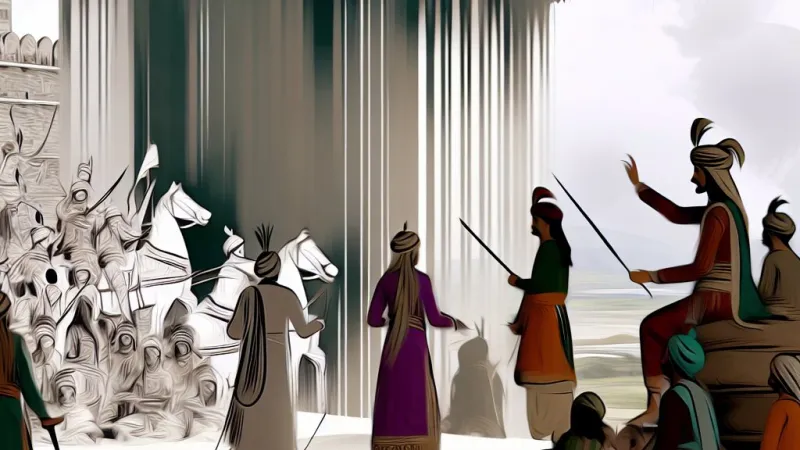
10 Lines on Battle of Kannauj: A Comprehensive Exploration
The saga of medieval India is marked by riveting battles, the rise and fall of empires, and the clash of charismatic personalities. Among these, the Battle of Kannauj stands as a pivotal confrontation that transformed the political landscape of North India in the 16th century. This was a time of turmoil, with the young Mughal Empire, established by Babur, being tested soon after his demise. His successor, Humayun, faced formidable rivals, the most notable being Sher Shah Suri—an ambitious Afghan leader whose military acumen and visionary policies would leave a lasting impact on Indian history. The Battle of Kannauj, therefore, is not just a list of dates and events, but a dramatic episode laden with lessons in leadership, strategy, and resilience. Through ten thoughtful lines, enriched with Indian examples and context, we can unravel the essence and enduring significance of this battle.
---
1. The Political Backdrop: Fragmented North India
In the decades after Babur’s victory at Panipat in 1526, North India remained far from settled. Babur’s early death left Humayun, his son, with the enormous task of holding the Mughal throne amid a swirl of ambitious Afghan chieftains, Rajput kings, and fractious nobles. Unlike the ancient Mauryas or the Guptas, whose rule had brought stability, the Mughals in Humayun’s era were beset by recurrent rebellions and rivalries—reflecting the age-old Indian adage: “Yudh mein jaisa raaja, waisa praja,” (As is the king in battle, so are his followers).---
2. Sher Shah Suri: The Afghan Challenger
Among Humayun’s many adversaries, Sher Shah Suri—born Farid Khan—distinguished himself not just as a general, but as a statesman. Originally a vassal of Bihar, Sher Shah’s meteoric rise mirrored stories from Indian folklore, where underdogs challenge giants through grit and cunning. His vision for governance and road networks reflected the pragmatism of Ashoka, who believed in strong, organised administration. Sher Shah’s growing power unsettled the Mughals, and set the stage for direct confrontation.---
3. The Prelude: Battle of Chausa, 1539
Tensions erupted first at the Battle of Chausa in Bihar. Here, Humayun’s forces, weakened by lack of unity and betrayal from his own brothers, suffered a decisive defeat. Much like Prithviraj Chauhan’s missed opportunities against Muhammad Ghori, Humayun’s failure at Chausa exposed the Babarid weakness in cementing loyalties and discipline—inviting foes to strike hard.---
4. The Road to Kannauj: Humayun’s Resolve and Challenges
Stung by the humiliation at Chausa, Humayun sought to reclaim lost ground and royal authority. However, he faced not only a formidable enemy but also sabotage from his stepbrother Kamran Mirza and wavering nobles. Despite gathering reinforcements and resources, Humayun could not evoke the unity that Chandragupta Maurya inspired among his followers. This lack of cohesion would prove fatal when he faced Sher Shah once again near the historic city of Kannauj.---
5. The Battlefield at Kannauj, 1540
Kannauj, positioned along the Ganga, has witnessed many turning points—earlier as the capital of Emperor Harsha, now as the site of Humayun’s gamble. Both armies assembled here in 1540, with Humayun hoping to repeat his father Babur’s artillery-backed strategies. Sher Shah, ever pragmatic, fortified his positions and ensured supply lines—echoing the logistical brilliance of Alauddin Khilji during his southern campaigns. The week-long standoff that ensued tested nerves and tactics.---
6. The Battle Unfolds: Errors and Exploits
On the day of battle, the Mughal camp was jolted by mismanagement. Humayun’s inability to coordinate artillery, cavalry, and infantry led to confusion—recalling the fate of the Tomars of Delhi, who, too, were undone by lack of discipline. Sher Shah’s quick-thinking cavalry maneuvers and effective use of war elephants broke through Mughal lines. The Mughal soldiers, deprived of a united command, faltered.---
7. The Dramatic Escape and Loss
As defeat became imminent, Humayun, showing a glimmer of personal courage amid adversity, leapt into the waters of the Ganga to escape. This dramatic flight is retold across generations, much like tales of Rana Pratap’s defiant retreats, symbolising resilience even in the face of overwhelming odds. The remnants of the Mughal army scurried in disarray, weapons and baggage lost to the victors.---
8. Sher Shah’s Triumph: The Rise of the Suri Empire
Sher Shah Suri’s victory at Kannauj enabled him to seize Delhi and Agra, consolidating the Suri dynasty across northern India. His subsequent reforms—especially the introduction of the ‘Rupiya’ currency and the expansion of the Grand Trunk Road—forever changed the administrative landscape of the subcontinent. In Indian historiography, Sher Shah’s decade-long rule is often cited as an example of indigenous governance that rivaled even the later Mughals.---
9. The Fall and Resilience of Humayun
Defeated and exiled, Humayun wandered for nearly 15 years, even taking refuge at the court of Safavid Persia. But his journey, reminiscent of the exiles of Lord Ram or Pandavas in the Mahabharata, steeled his resolve. During his exile, his son Akbar was born—a child who would later, with his father’s lessons in failure, usher in the golden era of Mughal India. The cyclical tide of fortune teaches us that humility, patience, and reflection can turn the tide of history.---
10. Legacy: Lessons for Leaders and Students
The Battle of Kannauj is far more than a military encounter. Students of Indian history draw enduring lessons—unity in leadership, prudent preparation, and the need for adaptability, as championed by both saints and strategists across our epics. Sher Shah Suri’s foresight and reforms offer models of good governance, while Humayun’s resilience amid defeat inspires hope for renewal after failure. In schools, from Kolkata to Kanpur, discussing this battle means not only reliving the drama of the past, but also imbibing values that shape the leaders of tomorrow.---
Rate:
Log in to rate the work.
Log in