The Selfish Giant: Class 8 NCERT English Chapter 3 MCQs & Solutions
This work has been verified by our teacher: 22.01.2026 at 13:55
Type of homework: Analysis
Added: 17.01.2026 at 22:04
Summary:
Master MCQs on The Selfish Giant: Class 8 NCERT English Chapter 3 with detailed solutions, practice tips and exam strategy to boost comprehension and scores.
The Selfish Giant MCQs with Answers: A Comprehensive Guide for NCERT Class 8 English Chapter 3
: The Role of MCQs in NCERT CurriculumIn India’s CBSE-affiliated schools, NCERT textbooks lay the foundation for English learning, blending narrative appreciation with exam-oriented skills. Chapter 3 of “It So Happened”, titled "The Selfish Giant," is not merely a tale of transformation but also a resource for developing competencies like comprehension, analysis, and interpretation. Multiple Choice Questions (MCQs) have become essential in assessing students rapidly and objectively. By their very design, MCQs efficiently check recall, understanding of themes, vocabulary, and a student’s ability to read between the lines. For students aspiring to do well in school assessments or preparing for boards, and for teachers aiming to set practice tasks, mastering MCQs on stories like “The Selfish Giant” is a practical necessity.
Compact Synopsis: "The Selfish Giant" for Quick Reference
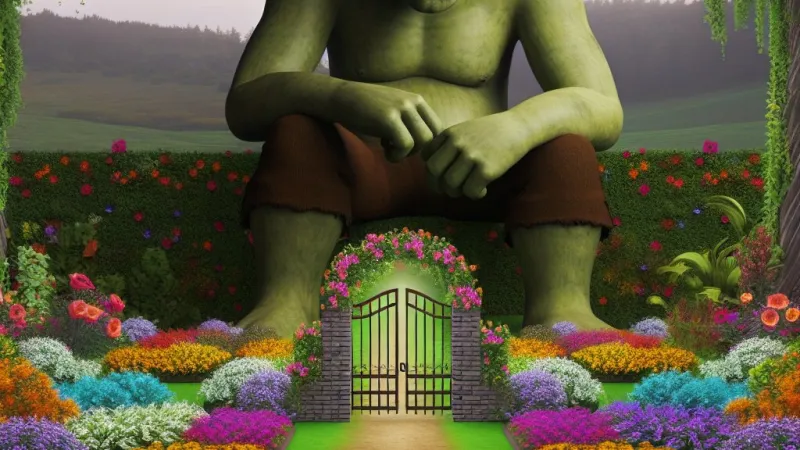
Before exploring MCQ strategies, a brief recapitulation of "The Selfish Giant" helps frame possible question areas. The story introduces us to a large, imposing Giant who possesses a beautiful garden. While he is away, local children play joyously there, bringing the place alive. Upon his return, the Giant, consumed by selfishness, forbids entry and erects a high wall. As a result, perpetual winter reigns in his garden, untouched by the happiness of Spring or Summer. Over time, the garden remains cold and barren, a sharp contrast with the vibrant world outside. Its transformation commences only when the children sneak back in, their laughter coaxing blossoms from the trees. A significant turning point is the appearance of a little child—wounded and humble—whose presence moves the Giant to kindness. Ultimately, the Giant’s change of heart restores warmth to the garden, and he achieves spiritual redemption when, at the end of his life, the mysterious child welcomes him to a realm “of gold”, hinting at divine forgiveness.MCQs: What They Test in This Chapter
CBSE-style MCQs tap into various levels of understanding:- Direct recall: Who locked the garden? When did Spring return? - Vocabulary-in-context: What does “barren” mean in the passage’s setting? - Inference: Why did winter linger? Does the child symbolise more than innocence? - Character understanding: How does the Giant evolve? - Theme identification: What is the core message—is it about sharing, repentance, or both? - Literary devices: Where is personification used to deepen meaning? - Grammar in passage: Can you spot correct tense/reporting? Effectively, MCQs serve as a tool to measure both fact-based memory and broader literary insight.
Categories of MCQs: Structure, Examples, and Tips
A. Pure Factual
Structure: - "Who built the wall around the garden?"Tip: - Read the chapter looking for proper nouns and event markers. Answers are usually directly lifted from the text; memorising the sequence and details is key.
B. Sequence/Cause-Effect
Structure: - "What happened first: the Giant’s return, or the children fleeing?"Tip: - Make a simple timeline as you read, noting what leads to what.
C. Character-Based
Structure: - "Which word best describes the Giant at the story’s beginning?"Tip: - Note specific adjectives and verbs associated with main characters.
D. Theme/Central Idea
Structure: - "Which statement best summarises the story’s message?"Tip: - Before answering, try to sum up the core idea in your own words.
E. Vocabulary in Context
Structure: - "What is the closest meaning of ‘frost’ as used in the passage?"Tip: - Check the sentence surrounding the word—context often changes meaning.
F. Inference/Implied Meaning
Structure: - "Why didn’t Spring enter the garden?"Tip: - Eliminate options that go beyond what’s written. The correct inference is always supported by the text.
G. Grammar/Usage
Structure: - "Choose the correct reported speech for: ‘How happy we are here!’ said the children."Tip: - Recall rules of reported speech and tense consistency.
H. Application/Extension
Structure: - "What might happen if another rich man imitated the Giant’s earlier actions?"Tip: - Apply the story’s values, not personal bias.
Step-by-Step Approach: Tackling an MCQ Paper
Before Exam
- Revise: List characters, themes, important events, and 10 key vocabulary words. - Practice: Attempt quizzes of 20 MCQs under 20 minutes. Mark errors and review immediately.During Exam
- First pass: Finish all “easy” memory-based questions. - Second pass: Address vocabulary and inference. - Last pass: Approach tricky or confusing items, using elimination harder. - Time Plan (for 40 questions): ~10 min for first pass, ~20 min for analysis, last ~10 min for review.Marking Policy
- If there’s no negative marking, attempt every question. If negative marking exists, attempt only if 60% certain.Selecting Correct Options: Advanced Tips
- Highlight words like “not”, “always”, “never”—many errors happen by missing these. - Prefer options lifted nearly verbatim from the book (for factual questions). - In vocabulary items, imagine replacing the word with the option in the passage—does it fit? - For inference, ask: “Can I back up this choice with two different facts from the story?” - In grammar, read the option aloud; see which “sounds” naturally correct in the story’s context. - When faced with two close options, hunt for time markers or small shifts in subject.Sample MCQs (With Options and Answers)
Q1. Who first brought Spring back to the Giant’s garden? A) The Giant's servant B) The village children C) The little child D) The North Wind Answer: B. The laughter and presence of the children restarted Spring in the garden. —Q2. Arrange the following in order: 1. Children play in the garden freely. 2. The Giant returns and builds a wall. 3. Winter refuses to leave the garden. 4. Children creep in through a hole. A) 1,2,3,4 B) 2,1,3,4 C) 1,3,2,4 D) 3,2,1,4 Answer: A. This is the correct chronological flow. —
Q3. In the chapter, the garden is described as 'barren'. What does 'barren' mean here? A) Full of flowers B) Without plants or life C) Wet with rain D) Covered with fruit Answer: B. —
Q4. The Giant at the beginning of the story can best be described as: A) Generous B) Timid C) Selfish D) Playful Answer: C. —
Q5. What does the endless winter in the Giant’s garden symbolise? A) The natural climate B) His inner coldness and lack of compassion C) The approach of a festival D) The children’s mischief Answer: B. —
Q6. The central lesson of "The Selfish Giant" is: A) Hard work leads to success B) Sharing brings happiness and redemption C) Children must obey elders D) Winter is the best season Answer: B. —
Q7. Why did Spring not enter the garden at first? A) The Giant forgot to plant seeds B) The wall kept happiness (children) out C) The garden was too small D) The children were sick Answer: B. —
Q8. How did the children return to the garden after being locked out? A) They broke the gate B) They climbed over the roof C) They found a hole in the wall D) The Giant invited them Answer: C. —
Q9. The wounds on the little child’s hands and feet are a symbol of: A) Injury from climbing B) A deeper, possibly spiritual, suffering C) Playing too much D) None of the above Answer: B. —
Q10. Which of these is the correct reported speech for: "How happy we are here!" said the children. A) The children said that they are happy here. B) The children said that they were very happy there. C) The children said they will be happy there. D) The children said that they were happiness here. Answer: B. —
Q11. If another wealthy man behaved as the Giant once did, his garden would likely: A) Remain empty and joyless B) Become famous C) Produce more fruit D) Remain unchanged Answer: A. —
Q12. Which line best explains why the Giant changed his attitude? A) He was angry at the cold B) He saw the children struggling to climb a tree C) He realised his selfishness kept happiness away D) The North Wind annoyed him Answer: C. —
Constructing High-Quality MCQs: Teachers’ Toolkit
1. Objective: Clearly state what skill you wish to assess (recall, inference, application). 2. Clarity in Questions: Ensure stems are concise, options consistent. 3. Plausible Distractors: Wrong options should be tempting but incorrect. 4. No Redundant Clues: Avoid obvious giveaways, like “always” or phrases borrowed only by correct answers. 5. Include Variety: A mix of factual and interpretative questions builds depth. 6. Pilot Test: Run questions through a small group; tweak if most students err or answer too easily.Practical Revision Schedule
- Week 1: Read and annotate the story, noting specific instances of character change and literary devices. - Week 2: Compile vocabulary—use digital flashcards. Test meanings in sentences from the story. - Week 3: Draw a timeline of plot events. Make and answer 20 basic MCQs. - Week 4: Write a summary of morals/themes. Try 10 inference MCQs. - Continuous: Twice weekly, attempt timed MCQ sets. Review and rewrite all mistakes. - Peer Learning: Exchange MCQs with friends for diverse practice.Common Mistakes and How to Sidestep Them
- Skipping question stems: Carefully underline important words. - Stopping at first ‘suitable’ option: Evaluate all four; elimination helps. - Misunderstanding figurative language: Check if a phrase is literal or metaphorical. - Confusing close distractors: Cross-check with context—tense, character, order. - Over-memorising exact text: Understand ideas; paraphrase for better retention.Going Beyond Exams: MCQs for Literary Insight
Solving MCQs is not just a “marks game.” Regular practice fosters attentive reading, pattern spotting, and sharper vocabulary. It strengthens one’s ability to distinguish literal from figurative speech—a major help in long-answer writing as well. Over time, it turns passive reading into active engagement, deepening textual appreciation and exam readiness.Conclusion: Mastery Through Practice and Reflection
Success in MCQs on "The Selfish Giant" is largely a blend of thoughtful reading, repeated practice, and knowing how to decode options. With consistent effort, even students who find English challenging can improve scores and, more importantly, discover the joys of literary exploration. Before exam day, focus more on understanding themes and events than cramming. Sleep well, enter the exam hall with a calm mind, and remember: each error is a step towards mastery.---
Appendix A: Sample MCQ Test
1. How many children are there in the garden after the Giant lets them in again? A) None B) All children C) Only one D) Only the Giant Answer: B2. What does the garden symbolise? A) Wealth B) The Giant’s emotions C) Hard work D) Friendship Answer: B
(Continue up to 20, as needed.)
Appendix B: Explanations
Each answer can be justified by referencing an episode, dialogue, or descriptive line in the chapter—not just memory, but logic.Appendix C: Mini-Glossary
- Personification: The seasons act and speak as people. - Symbolism: Garden = Giant’s soul, Winter = selfishness. - Imagery: Descriptions like “the trees were covered with silver frost.”Appendix D: 24-Hour Revision Checklist
- Recall main characters and their arcs. - Write the story’s central message in one line. - Revise 10 important words. - Skim 2–3 short MCQs of different types.---
A final word: Try crafting your own MCQs as revision after every reading session. This not only prepares you for exams but also unearths aspects of the story you might otherwise overlook. Keep a log of your mistakes with explanations—you’ll be surprised how quickly your accuracy and understanding grow.
Rate:
Log in to rate the work.
Log in