Ganesh Chaturthi Paragraph for Students: Traditions & Significance
This work has been verified by our teacher: 21.01.2026 at 8:56
Type of homework: Essay Writing
Added: 17.01.2026 at 20:43
Summary:
Learn a clear Ganesh Chaturthi paragraph for students explaining traditions, significance and celebrations, with simple writing tips to ace homework essays.
Paragraph on Ganesh Chaturthi
Short Paragraph (about 60 words)
Ganesh Chaturthi is a Hindu festival celebrated every year in Bhadrapada (August–September) to honour Lord Ganesh, the remover of obstacles. Families and communities install clay idols of Ganesh in their homes and local pandals, offer prayers, and prepare sweets like modak. The festival ends with the immersion of the idol in water. It symbolises new beginnings and unity among people.---
Medium Paragraph (about 130 words)
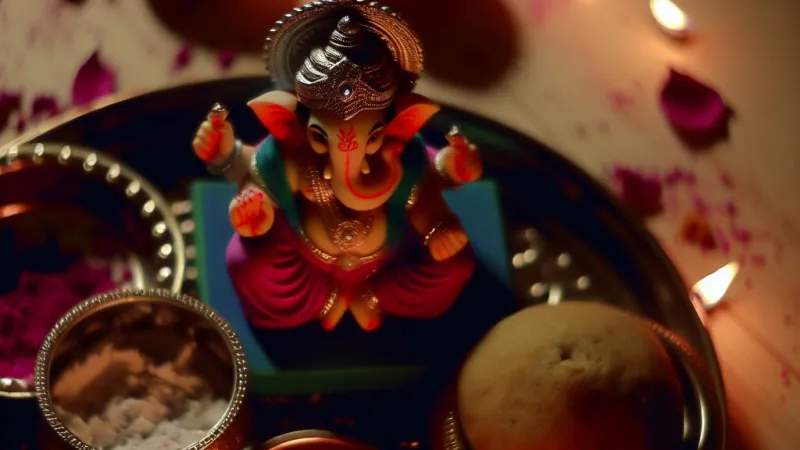
Ganesh Chaturthi, observed during the month of Bhadrapada (August–September), is one of the most prominent Hindu festivals in India dedicated to Lord Ganesh. Before the festival, families clean and decorate their homes, buy or make clay idols, and set up colourful altars adorned with flowers and lamps. During the ten days of celebration, people perform daily aartis, offer prasadam such as modak, coconuts and fruits, and chant hymns. Communities install large idols in decorated pandals, organise cultural events, and conduct processions. On the last day, devotees carry the idols to nearby rivers or ponds for immersion, bidding farewell to Ganesh with songs and drums. People celebrate this festival to seek wisdom and the removal of obstacles in their lives, and to foster togetherness in society.---
Ganesh Chaturthi: Celebration, Significance, and Social Impact
India is a land where festivals transform daily life into a series of vibrant, communal celebrations. Among its many festivals, Ganesh Chaturthi stands out as an occasion marked by great devotion, creativity, and community spirit. Observed every year in the month of Bhadrapada (usually falling in August or September), Ganesh Chaturthi honours Lord Ganesh, revered as the god of wisdom, prosperity and beginnings. The festival is widely celebrated across the country, uniting people irrespective of age, background or faith.
Mythical and Historical Background
According to tradition, Lord Ganesh is the son of Goddess Parvati and Lord Shiva. The most popular story narrates that Parvati fashioned Ganesh from sandalwood paste; later, Shiva blessed him with an elephant’s head, making him the symbol of wisdom and the remover of obstacles. While the stories around Ganesh vary in different regions of India, the message of hope and overcoming challenges remains the same. In its present form, Ganesh Chaturthi became a major public festival in Maharashtra in the late 19th century, thanks to social reformers like Lokmanya Tilak, who encouraged its collective celebration to promote unity.Preparations and Domestic Rituals
The excitement for Ganesh Chaturthi begins weeks in advance, as families prepare both physically and spiritually. Homes are thoroughly cleaned, and the entrance is decorated with rangoli and toran (mango leaves and marigold garlands). Some families buy beautifully handcrafted clay idols from local artisans, while others create simple idols at home from natural clay (mitti). These idols are placed on colourful altars, surrounded by lamps, incense sticks, and flowers. The daily routine during the festival often begins with a morning bath, followed by offering flowers, fruits, and sweets—most famously, modak, considered Ganesh’s favourite. Family members gather for aarti, an act that fills the air with the rhythmic sound of bells, the fragrance of camphor and incense, and the melody of devotional songs. In our locality, children often help with decorations and take pride in making eco-friendly ornaments for the altar.Public Celebrations and Community Life
Beyond homes, Ganesh Chaturthi comes alive through grand public celebrations. Neighbourhood associations, youth groups, and local trusts establish majestic pandals with creative themes ranging from mythology to current social issues. These pandals house large Ganesh idols—some reaching over ten feet—attracting streams of devotees daily. Cultural programmes, including classical dance, music, plays and quiz competitions, are organised for all age groups. The aroma of food stalls, the energetic beats of dhol-tasha (drums), and the sight of crowds in festive attire make the atmosphere electric. In cities like Mumbai and Pune, the festival is celebrated on a scale unmatched elsewhere, but even small towns and villages observe unique customs with similar enthusiasm. One notable aspect is the inclusivity—people from various communities, regardless of religion or caste, often volunteer in crowd management or distribute prasadam, reflecting India’s composite cultural ethos.Visarjan and Environmental Considerations
On the final day, the time arrives for visarjan, the immersion of Ganesh idols in rivers, lakes or the sea. Processions of devotees, accompanied by music, energetic chants of “Ganpati Bappa Morya!”, and bursts of colour powder, make their way to water bodies. This ritual, meant to symbolise the transient nature of life, brings both joy and a touch of sadness. However, in recent times, concern has grown regarding the environmental harm caused by plaster-of-paris idols and chemical paints. Water pollution, harm to aquatic life, and littering become serious issues after mass immersion. Thankfully, awareness is spreading. Many now choose eco-friendly clay idols, natural colours, and community-made immersion tanks to protect rivers and lakes. Our school, for example, organises workshops teaching students how to create small mitti idols, encouraging sustainable celebration.Significance and Personal Reflection
Ganesh Chaturthi goes beyond religious worship. It represents fresh starts, the power of knowledge and the inclusive spirit of Indian society. The festival fosters family bonds, as everyone from children to elders participates in rituals, decorations, and making sweets together. Community pandals become platforms for social bonding, volunteerism, and cultural exchange. Observing the celebrations in my city each year, I feel a strong sense of pride and belonging. The memory of making modaks with my grandmother and watching the local aarti procession are precious to me, reminding me of both continuity and change in our traditions.Conclusion
To sum up, Ganesh Chaturthi is not just a religious observance but a reflection of India’s unity in diversity. Celebrated with enthusiasm, faith, and growing environmental awareness, the festival weaves together devotion, art, and community life. Protecting the traditions while embracing eco-conscious methods will ensure that the joy and wisdom of Ganesh Chaturthi continue to enlighten future generations.---
Exam and Writing Tips:
- Begin each paragraph with a clear topic sentence and keep your arguments focused. - Use simple, local examples whenever possible for a personal touch. - End with a short reflective line that connects the festival’s themes to your own life or society. - Always check for spelling, grammar and coherence before submitting your answer.---
Ganesh Chaturthi, as seen through both its radiant rituals and evolving practices, truly reflects the rich, resilient and inclusive spirit of our country.
Rate:
Log in to rate the work.
Log in