Impact of Noise Pollution: Causes, Effects, and Prevention in India
This work has been verified by our teacher: 1.04.2026 at 12:42
Type of homework: Essay Writing
Added: 31.03.2026 at 13:40
Summary:
Explore the causes, effects, and prevention of noise pollution in India to understand its impact on health and environment for your homework or essay.
Paragraph on Noise Pollution
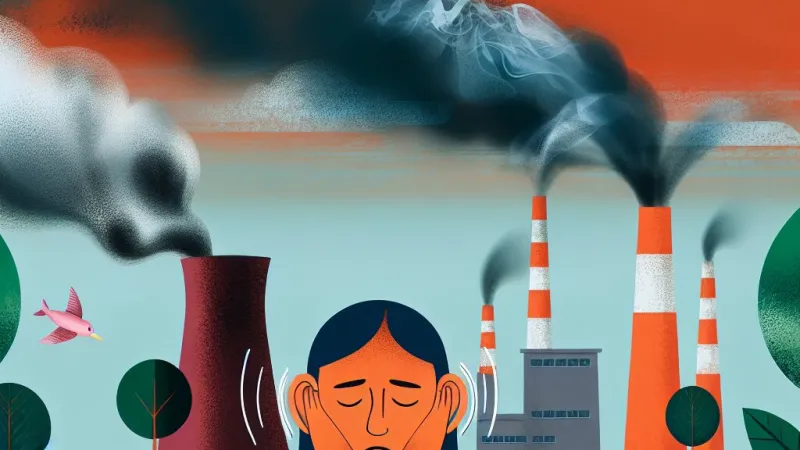
Noise, in its essence, is a form of energy – invisible, yet powerful enough to influence our emotions, thoughts, and health. In Indian culture, sound has always played a significant role; from the rhythmic chants in temples of Varanasi to the melodious songs in Bollywood, pleasing sounds have the power to uplift. Yet, not all sound is welcome. When sound turns harsh, unsolicited, and excessive, disrupting the natural peace of our environment, it transforms into what we term as noise pollution. In today’s rapidly urbanising India, noise pollution has surged as a pressing issue, affecting not only our well-being but also the delicate balance of life that surrounds us.Understanding Noise Pollution: The Science and Perception
Scientifically, sound can be described by its frequency (measured in Hertz) and its volume or intensity (measured in decibels, dB). The human ear is exquisitely sensitive, hearing frequencies from 20 Hz to 20,000 Hz, and comfortable with ordinary conversation at about 60 dB. A serene library hovers around 30 dB, embodying peacefulness, while the traffic outside Mumbai’s CST station or near Delhi’s Connaught Place often exceeds 90 dB, breaching the limit of what is considered safe and tolerable. Anything above 85 dB, if experienced repeatedly, starts to damage our hearing – a silent menace.Noise pollution is not just about loudness; it is about unwanted sound, sounds that jar us out of concentration, out of rest, or out of harmony with our environment. “One man’s music is another man’s noise,” as the saying goes. In Indian cities, the blaring of vehicle horns during traffic jams, the relentless drilling at construction sites, or even the loudspeakers during Ganesh Chaturthi celebrations, all contribute to a background cacophony that is difficult to ignore. Unlike natural sounds such as rain or birdcalls, which are generally soothing and of short duration, artificial noise from machines, traffic, and public events is persistent and often beyond the control of common people.
Causes and Sources: The Hustle and Bustle of Modern India
The roots of noise pollution in India lie in a combination of tradition, progress, and negligence. Cities like Bengaluru, Hyderabad, and Kolkata are currently experiencing a boom in both population and economic activity. This growth has led to increasingly crowded roads, perpetual construction, and ever-expanding industries.Automobile traffic is perhaps the biggest contributor: the honking of impatient drivers, revving of engines, and the ceaseless movement of buses, autorickshaws, and trucks add a constant, high-decibel hum to urban life. It’s not uncommon for a busy intersection in Old Delhi or Pune to register noise levels above 100 dB during rush hour. The picture is the same across most urban centres, from Ahmedabad to Chennai.
Construction sites are an ever-present feature in Indian cities, symbolising progress but also creating a barrage of noise from drills, hammers, bulldozers, and concrete mixers. Residential areas are often disturbed by these sounds for months at a stretch.
Loudspeakers are another distinct Indian phenomenon. Whether deployed for religious festivals like Durga Puja in West Bengal, processions during Muharram, or wedding baraats in Punjab, the volume tends to be high. Political rallies and public demonstrations further intensify this audio overload. Even in villages, the call to prayer or announcements from a mobile public address system can be loud and persistent.
At home, routine appliances – pressure cookers, mixers, TVs, and mobile phones – rarely seem restful. Children’s firecrackers during Diwali, though momentary, raise decibel levels dramatically, sometimes leading to temporary or permanent hearing loss.
Underlying these immediate causes is a broader culprit: the lax enforcement of existing noise control rules. While laws exist to regulate the use of loudspeakers and vehicle horns, they are often ignored by both authorities and the public, sometimes under the pretext of tradition, celebration, or ignorance.
Effects and Consequences: The Unseen Dangers
The most dangerous aspect of noise pollution is that its effects often go unnoticed until significant damage has occurred. On the surface, noise is simply annoying, but medical research and empirical observation show that its impacts are far more insidious.*For Humans*: Prolonged exposure to high-decibel noise can lead to partial or even total hearing loss. According to studies cited by the All India Institute of Medical Sciences, increasing numbers of urban Indians are reporting hearing problems in their 30s and 40s, far earlier than previous generations. Apart from this direct damage, continuous noise induces anxiety, irritability, and chronic stress. Students lose their ability to concentrate, leading to poor academic performance, as was reported in several schools located near highways in Mumbai and Hyderabad. Adults suffer from sleep disturbances, causing fatigue and reducing productivity. Vulnerable groups face heightened risks: research by the Indian Council of Medical Research has shown that expectant mothers exposed to loud, regular noise may risk miscarriage, while the elderly can experience rapid cognitive decline.
*On Animals and the Environment*: Street dogs and cattle living in cities show signs of aggression, agitation, and reduced ability to respond to other environmental cues. Numerous studies on birds in urban parks, such as the famous Bharatpur bird sanctuary, have indicated that excessive noise alters migration and mating behaviour, threatening their survival. Cows exposed to horns and traffic noise have been seen to produce less milk as a result of stress. Even plant growth can be stunted as chronic vibration disturbs their cellular processes.
On a larger scale, all of these effects disrupt the essential balance that defines our relationship with nature, leading to a gradual but powerful reduction in biodiversity.
Ways to Control and Reduce Noise Pollution: Paths to a Quieter Tomorrow
Combating noise pollution requires a concerted effort at individual, community, and governmental levels.*At Home*: Individuals can take responsibility for regulating the volume of their own music, television, and gadgets. Buying and maintaining appliances that run more quietly, or at least not using them unnecessarily, makes a difference. Parents can educate children about the dangers of bursting firecrackers or shouting in residential areas.
*Public Behaviour and Festivals*: Community members can encourage the use of eco-friendly festival practices. For instance, during Diwali, opting for light over firecrackers. Organisers of religious or cultural events can keep sound levels within legal limits and finish loud celebrations by prescribed timings.
*Enforcement and Urban Planning*: Certain areas, especially near hospitals and schools, can be declared as ‘silent zones’ where honking and loudspeakers are banned. Traffic police can strictly enforce fines for unnecessary horn usage. Promoting public transport and carpooling can reduce the sheer number of vehicles on roads. Switching to electric vehicles – as is increasingly being done in parts of Delhi and Bangalore – also helps as they are far less noisy than traditional vehicles.
*Industry and Construction Management*: Factories must employ sound dampening materials and install noise barriers. The government’s zoning laws should ensure that heavy industry is kept far from residential colonies. Construction activities must adhere to time restrictions, perhaps only during daytime hours.
*Legislative Action and Awareness*: The National Green Tribunal and Central Pollution Control Board have issued several guidelines and set limits for noise emission, but implementation, particularly by local municipal bodies, has to be strengthened. Awareness campaigns can be included in school curricula, just like road safety classes, to ensure that the next generation grows up with respect for the importance of a peaceful environment. Youth groups, RWAs (Resident Welfare Associations), and NGOs can take up noise mapping and reporting violations.
Conclusion: Towards a Harmonious Soundscape
In summary, noise pollution is more than just an urban inconvenience – it poses real, lasting threats to our health, our harmony, and our environment. Its causes are rooted in both our ambitions and our careless attitudes. India’s unique vibrancy, marked by festivals and daily hustle, need not be muted, but it must be balanced with mindfulness and respect for others’ right to peace. Every citizen and authority shares responsibility for ensuring that progress does not come at the cost of tranquility.As Rabindranath Tagore once imagined in his poetry, “Where the mind is without fear and the head is held high…” — let us also envision a nation where the air vibrates not with relentless noise, but with the sounds of nature, laughter, learning, and harmony. We owe it to ourselves, and the generations yet to come, to create a quieter, healthier India.
Rate:
Log in to rate the work.
Log in