Navratri Festival: Celebrating Divine Power and Indian Traditions
This work has been verified by our teacher: 15.01.2026 at 21:02
Type of homework: Essay Writing
Added: 15.01.2026 at 20:06
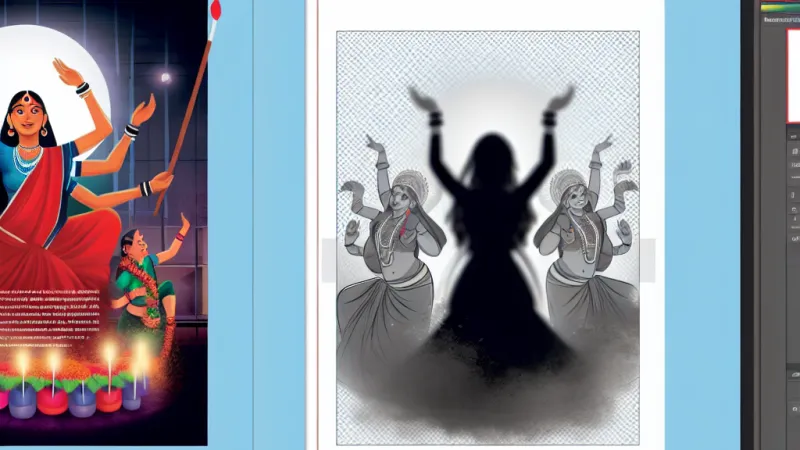
Summary:
Navratri to barwne święto Indii, łączące ludzi w tańcu i modlitwie, celebrujące siłę kobiet oraz zwycięstwo dobra nad złem. 🎉🪔
Navratri – A Vibrant Festival Celebrating Divine Strength and Indian Culture
Among the many festivals that colour the Indian calendar, Navratri holds a special place, not just for its grandeur but also its deep-rooted spiritual and social significance. As one of the most widely celebrated Hindu festivals across the diverse regions of India, Navratri is remarkable for uniting people from different backgrounds in devotion, dance, and joyous festivities. More than a religious occasion, Navratri stands as a living symbol of Indian heritage, signifying the victory of good over evil and reflecting the strength of women in Indian mythology and society. This essay aims to explore the various dimensions of Navratri—its origins, rituals, regional flavours, and its role in modern Indian life.Mythological and Historical Origins
Navratri finds its origins in ancient Hindu mythology, particularly in the legend of Goddess Durga’s epic battle against the buffalo demon Mahishasura. As the story goes, Mahishasura, having received a boon of near-immortality, began terrorising the heavens and the earth. In response, the gods invoked Durga, the embodiment of Shakti, or divine feminine power. For nine nights and ten days, Durga fought the demon, finally vanquishing him on the tenth day, thus restoring peace and order.The symbolism of this legend is profound. The nine nights (Navratri literally means ‘nine nights’ in Sanskrit) stand for the struggle against negative forces within and around us, and ultimately the triumph of righteousness and inner strength. India observes two main Navratris: Chaitra Navratri in the spring and the more widely celebrated Shardiya Navratri in autumn, aligned with the Sharad Ritu. Shardiya Navratri, which falls in the months of September-October, marks the onset of the festive season and is considered especially auspicious.
The Nine Divine Nights – Worship of Navadurga
Central to Navratri is the worship of the nine forms of Goddess Durga, collectively known as Navadurga. Each night is dedicated to a particular manifestation of the goddess, with her own legend, attributes, and colours. For example, the first day celebrates Shailaputri, the daughter of the Himalayas, who stands for strength and resolve. The next form, Brahmacharini, symbolises penance and devotion. Chandraghanta, venerated on the third night, represents beauty and bravery, followed by Kushmanda, Skandamata, Katyayani, Kalaratri, Mahagauri, and Siddhidatri. Each avatar represents different qualities—courage, compassion, wisdom, protection, and spiritual fulfilment—encouraging devotees to imbibe these values in their lives.A significant ritual that marks the beginning of Navratri is the ‘Ghatasthapana’, or Kalash Sthapana, where a sacred pot is established in homes and temples, signifying the abode of the goddess. This ritual sets the spiritual tone for the festival, filling homes with prayers, devotional music and the aroma of incense.
Rituals and Observances – Daily Celebration of Faith
Preparation for Navratri begins well in advance. People clean and decorate their homes, creating vibrant setups for the goddess’s idol or picture. Colourful rangolis adorn entrances, and marigold flowers fill the air with their fragrance. Special puja rooms or ‘pandals’ are set up, where family members gather for daily prayers. Scriptures such as Durga Saptashati and Devi Mahatmya are recited, invoking blessings and recounting the tales of Durga’s bravery.Fasting is an integral part of Navratri. Some observe rigorous ‘nirahara’ fasts, abstaining from grains and salt, subsisting only on fruits and milk, while others follow simplified diets with ingredients like sabudana and kuttu. The aim is not just physical discipline but spiritual cleansing, believed to aid concentration and devotion during prayers. Morning and evening aartis ring with the sounds of bell and conch, while bhajans and devotional songs create an atmosphere of collective reverence.
Flowers, sweets, and fruits are offered as ‘prasad’, shared among family and neighbours, symbolising community and gratitude. In many places, night-long vigils called ‘Jagran’ or ‘Mata ki Chowki’ are organised, where devotees sing, dance and stay awake in the goddess’s honour.
Regional Flavours – India’s Diverse Navratri
The beauty of Navratri lies in its adaptability—the festival is celebrated in unique ways across different parts of India, each adding its own local touch. In Gujarat, Navratri transforms into the country’s biggest dance carnival, where thousands gather for Garba and Dandiya Raas. Women clad in colourful chaniya-cholis and men in kediyus whirl to the rhythmic beats of traditional songs under a sky dotted with fairy lights. The festive spirit is infectious, and the nights come alive with music, dance, and laughter.West Bengal gives Navratri its own magnificent interpretation as Durga Puja—a five-day extravaganza that goes beyond ritual worship. The city of Kolkata and towns across Bengal are adorned with artistic pandals, each more creative than the last, showcasing idols of Durga slaying Mahishasura. Rituals like ‘Sindoor Khela’ see married women smear vermillion as a mark of triumph and goodwill, before the grand immersion or ‘visarjan’ brings the festivities to a dramatic close.
In Tamil Nadu, families arrange ‘Kolu’—a display of dolls on stepped platforms, narrating stories from Hindu epics. Women visit each other’s homes to exchange gifts and sing devotional songs. Maharashtra celebrates with Durga aartis and the renowned Dandiya nights, while Assam welcomes ‘Durga Puja’ with traditional music, dance, and community feasts. These regional varieties reinforce the idea that Navratri is not just a ritual, but a living celebration of India’s rich and diverse heritage.
Vijayadashami – The Culmination of Navratri
The tenth day after Navratri, known as Dussehra or Vijayadashami, marks the peak of the festival. In North India, Dussehra commemorates Lord Rama’s victory over Ravana, an event dramatically enacted in ‘Ramlila’ performances. Huge effigies of Ravana, along with Meghnath and Kumbhkaran, are burnt amidst fireworks, symbolising the destruction of evil and the reaffirmation of virtuous ideals.In Bengal, Dussehra is the final day of Durga Puja, when the goddess’s idols are immersed in rivers and ponds, signifying her return to her celestial abode. Vijayadashami is a day for new beginnings—people exchange greetings and sweets, students are initiated into studies (Vidyarambham), and families seek the blessings of elders.
Cultural and Social Significance
Navratri is more than a religious event; it is a celebration of womanhood, courage, and righteousness. The worship of the goddess in her powerful forms is a reminder of the respect accorded to women in Indian thought, and a call for gender equality and empowerment in today’s society. The festival promotes social harmony, as communities gather regardless of background, linking together through dance, music, and shared meals.Economically, Navratri brings a wave of activity. Markets bustle with the sale of new clothes, decorative items, sweets, and puja materials. Artisan communities, especially idol makers, rangoli artists, and flower sellers, find their skills in demand. The fairgrounds that spring up in cities and villages provide employment and entertainment, keeping cultural traditions alive for the younger generation.
For children and youth, Navratri is both a time of fun and a subtle lesson in values and community living. Many schools organise special assemblies, essay competitions, and cultural programmes. The experience of fasting, participating in rituals, and learning mythological stories fosters a sense of discipline and reverence.
Navratri in Contemporary India
With the pace of modern urban life, the way Navratri is celebrated is also changing, especially in cities. Grand pandals are sponsored by corporate houses, and social media platforms are flooded with images and live telecasts of Garba nights, Dandiya competitions, and puja ceremonies. Event organisers blend traditional and contemporary music, attracting the youth in large numbers.However, these grand celebrations bring challenges too. Environmental concerns are rising with the immersion of non-biodegradable idols. Many communities are now shifting to eco-friendly clay idols and natural colours. Public awareness campaigns and regulations have begun to make a difference, reflecting a new consciousness in Indian society.
Moreover, technology has made it possible for Indians settled abroad to participate virtually in Navratri celebrations, fostering global connections and ensuring that traditions are not lost with distance.
Rate:
Log in to rate the work.
Log in