Water Pollution in India: Causes, Effects and Solutions
This work has been verified by our teacher: 30.01.2026 at 11:27
Type of homework: Essay Writing
Added: 29.01.2026 at 12:59
Summary:
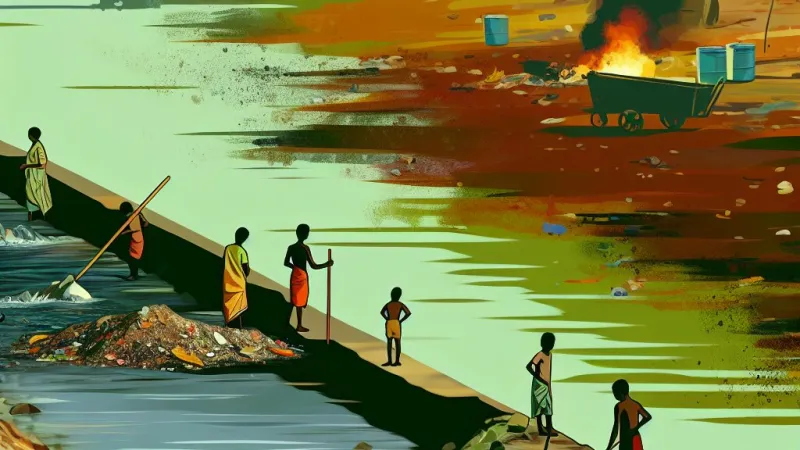
Explore the causes, effects, and solutions of water pollution in India to understand its impact and learn how to protect this vital resource for future generations.
Paragraph on Water Pollution
Water, the crystal-clear elixir that sustains all forms of life on Earth, is often called the very lifeblood of our planet. Despite covering nearly seventy percent of the Earth’s surface, it is surprising to many that less than three percent of this water is fresh—and an even smaller part of it is accessible and safe for human use. In the context of India, water has an even deeper meaning, tied as it is not just to survival but to culture, customs, and the rhythm of everyday life. Vast rivers like the Ganga, Yamuna, Godavari, and countless lakes and ponds are essential sources of drinking water, play a central role in agriculture, and serve as sites for rituals. Yet, this precious resource is increasingly threatened. Water pollution—meaning the harmful contamination of water bodies—has become a grave concern affecting millions. In this essay, I will delve into the causes and consequences of water pollution, with particular focus on the Indian context, and suggest remedies necessary to ensure clean water for generations to come.
---
The Importance of Water: India’s Lifeline
For every living being, water is non-negotiable. Our own bodies are composed of around sixty percent water, and we rely on it for digesting food, transporting nutrients, regulating temperature, and excreting waste. Beyond these biological processes, human societies are woven together by their relationship with water. In India, water shapes livelihoods. The thick monsoon-fed paddy fields of West Bengal, the sugarcane belts of Uttar Pradesh and Maharashtra, and the cotton farms of the Deccan all depend on rivers and groundwater for irrigation. Similarly, water is central to industry: from textiles in Surat to tanneries in Kanpur.Culturally and spiritually, water’s significance is unique in India. Rivers are personified and revered, like Mother Ganga, considered a goddess who purifies and nourishes. Countless stories in Indian epics—whether it is the descent of Ganga in the Ramayana or Krishna playing on the banks of Yamuna—highlight water as a source of sanctity and renewal. Festivals like Chhath Puja and Magh Mela revolve around the worship of rivers and lakes. For rural and urban communities alike, water touches every aspect of daily life.
---
Understanding Water Pollution: What Does It Mean?
When we talk of water pollution, we refer to the entry of substances into water bodies—rivers, lakes, ponds, or groundwater—that harm its quality and render it unfit, sometimes even dangerous, for humans, animals, and plants. Contaminants can be chemical, such as pesticides and heavy metals like lead and mercury; biological, such as bacteria, viruses, and worms; or physical, such as plastic debris. Water pollution may result from clearly identified sources, such as the miserably untreated sewage outlets flowing into the Yamuna in Delhi, or from dispersed sources, like rainwater running off pesticide-laden fields. In India, both the mighty sacred rivers as well as small village ponds face contamination, threatening ecological balance and public health.---
Causes of Water Pollution: A Closer Look
Though some water pollution arises naturally—a heavy monsoon flooding and dumping organic debris in rivers, or an occasional silt-laden stream after a landslide—today’s crises are mainly man-made.Industrial Discharge
India’s path to rapid industrialisation has brought growth, but also carelessness. Many factories still empty untreated chemical effluents directly into rivers. The tanneries of Kanpur, for example, are infamous for releasing chromium and other toxins into the Ganga. Similarly, thermal pollution from power plants further upsets aquatic balance.Urban Sewage
Alongside industrial pollution, urban sewage is a gigantic problem. Megacities like Mumbai and Kolkata generate thousands of litres of untreated or partially treated sewage. Due to inadequate infrastructure, much of this waste flows straight into water bodies, filling them with pathogens that cause diseases like cholera, dysentery, and typhoid.Agricultural Runoff
India’s Green Revolution, while boosting food production, resulted in another challenge: the excessive use of chemical fertilizers and pesticides. During rains, these chemicals are washed into lakes and rivers, promoting sudden and dangerous growths of algae—seen as green scum in places like Bangalore’s Bellandur Lake. This process, called eutrophication, depletes oxygen and kills aquatic life.Plastic and Solid Waste
India generates thousands of tonnes of plastic waste every day, a large portion of which ends up blocking drains, rivers, and even reaching the ocean. Varanasi’s ghats, once pristine, are now littered with plastic carry bags, bottles, and wrappers. This chokes aquatic organisms and mars the beauty of the water.Ritual Practices and Lifestyle
Indian traditions often mean making offerings in rivers—flowers, food, and sometimes chemical-laden items like vermilon, synthetic dyes, and idols made of plaster of Paris during festivals such as Ganesh Chaturthi or Durga Puja. Washing clothes or animals in rivers, a practice still common in many villages and towns, introduces detergents and faecal matter into the water.Deforestation and Soil Erosion
The clearing of forests for agriculture or urban projects has another side effect—without plant cover, rain easily washes topsoil into rivers, clouding the water and destroying fish habitats.---
Effects of Water Pollution: Dangerous Ripples
Human Health
The most immediate impact is on health. Crores of Indians, especially those in slums and villages, still rely directly on rivers, ponds, and wells. Waterborne diseases—such as gastroenteritis, hepatitis, cholera, and typhoid—kill thousands every year, with children being most at risk. Polluted water containing metals like arsenic (as seen in West Bengal and Assam) causes long-term damage, including cancers and developmental issues.Aquatic Life
The decline in river dolphin numbers in the Ganga or the death of fish in Bellandur Lake underscore how toxic pollution devastates aquatic life. Eutrophication reduces oxygen, suffocating fish and plants, and toxic chemicals get passed up the food chain in a process called biomagnification—eventually threatening even those who eat the fish.Socio-Economic Impact
Fishing communities lose their catch, farmers struggle with irrigation, and scenic places see tourism dwindle. Cleaning polluted rivers or treating diseases arising from impure water means a huge expense for the government and ordinary families alike.---
The Freshwater Crisis in India
India is home to nearly 18 percent of the world’s population but possesses only about 4 percent of its freshwater resources. This imbalance is worsened by over-extraction: borewells have forced water tables to plummet in Punjab and Tamil Nadu. In cities such as Chennai, groundwater has turned saline, and in rural areas, toxic substances like fluoride and arsenic have made water undrinkable. The World Bank once estimated that over 70 percent of India’s surface water is contaminated—a figure illustrating the scale of the crisis.---
Solutions: Steps Towards ‘Nirmal Jal’
The problem may be overwhelming, but it is not unsolvable. India has already embarked on several paths:Policy and Governance
The government’s National Water Policy and flagship schemes like the ‘Namami Gange’ (Clean Ganga Mission) represent nation-wide efforts to rejuvenate polluted waters. These involve setting up sewage treatment plants, monitoring and enforcing stricter discharge norms, and involving communities in restoration.Technology
Modern wastewater treatment plants, including decentralised systems used in Bengaluru’s new residential areas, can clean domestic sewage. Techniques like bioremediation—using microorganisms or plants to absorb pollutants—are being tested along lakes and rivers, such as in Pune’s Ramnadi rejuvenation.Community and Cultural Revival
Civil society is playing a huge role: organisations like the Clean Yamuna Movement in Delhi or the Art of Living’s river rejuvenation projects are led by citizens, students, and volunteers. Villages in Rajasthan, under the guidance of waterman Rajendra Singh, revived dead rivers by building check dams and traditional johads, showcasing the power of traditional methods.Agriculture and Industry
Reducing the use of chemical fertilisers by promoting organic farming, as in Sikkim, and encouraging industries to treat water and recycle, are vital. 'Zero Liquid Discharge' is being gradually promoted in several factories.Awareness
Simple steps—like not throwing plastic into water bodies, reducing detergent use, or choosing eco-friendly materials for idols during festivals—can make a huge difference if followed at scale. Schools, including the Kendriya Vidyalayas and Navodaya Vidyalayas, now conduct regular ‘Cleanliness Drives’ to raise awareness among students.---
Conclusion
To sum up, water stands at the heart of India’s survival, culture, and progress. Yet, the rapid pace of development, unplanned urbanisation, disregard for age-old traditions of conservation, and neglectful attitudes have together led us to the brink of a crisis. Water pollution is an issue that threatens every Indian—whether living in the shade of the Himalayas, on the banks of the Godavari, or in the lanes of Chennai. It robs us of our health, our heritage, and our future. But with effective government policies, active technological support, revived traditional wisdom, public awareness, and responsible behaviour, reclaiming the purity of our water is within our reach.As Sunita Narain, noted Indian environmentalist, once said, “Water is everybody’s business.” If together we commit to safeguarding this vital resource, the day will come when clean, safe water flows again in our rivers and lakes, nourishing generations to come. Protecting water, after all, is protecting life itself.
Rate:
Log in to rate the work.
Log in