Exploring Navratri: The Nine Nights Festival Honouring Goddess Durga
This work has been verified by our teacher: 5.03.2026 at 13:17
Type of homework: Essay Writing
Added: 2.03.2026 at 9:54
Summary:
Discover the significance of Navratri, the nine nights festival honoring Goddess Durga, and explore its mythological roots, cultural traditions, and celebrations in India.
Navratri: The Vibrant Festival Celebrating Shakti in Indian Culture
India, known for its rich tapestry of festivals and traditions, witnesses a splendid burst of colour, devotion, and celebration each year during Navratri, perhaps one of the most widely observed Hindu festivals across the subcontinent. The term “Navratri” might simply mean “nine nights”, but for millions, these days are a symbol of cultural pride, spiritual renewal, and the joyous celebration of feminine divinity. This essay delves into Navratri’s deeper meanings, tracing its mythological roots, recounting its varied regional forms, and reflecting upon its contemporary relevance in Indian society.The Meaning and Mythological Foundations of Navratri
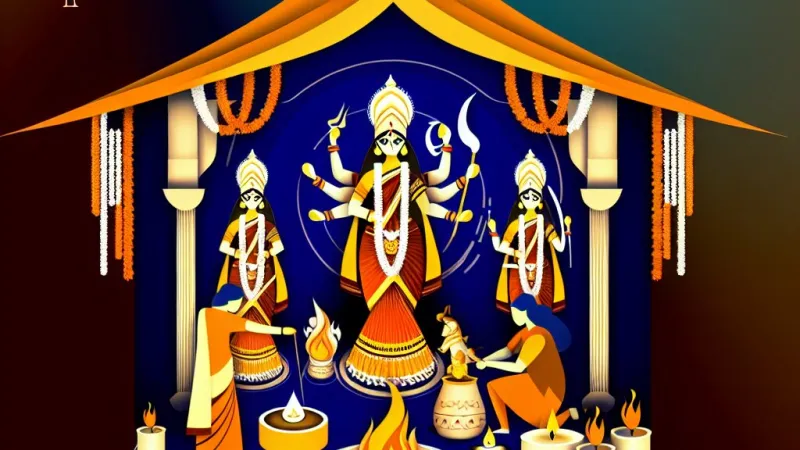
The very word “Navratri” derives from Sanskrit — ‘Nav’ meaning nine and ‘Ratri’ meaning nights — signifying a period of nine nights and ten days marked by fervent devotion and festivity. The focal deity of Navratri is Goddess Durga, considered the embodiment of shakti — the primordial feminine energy responsible for creation, preservation, and destruction in the universe.As per popular legend, Navratri commemorates Goddess Durga’s battle with the buffalo demon Mahishasura. The story narrates that Mahishasura, through severe penance, earned the boon that no man could kill him. Drunk with power, he unleashed terror across the three realms. To restore cosmic balance, the gods invoked Durga, who fought relentlessly for nine nights and finally vanquished Mahishasura on the tenth day. This dramatic saga epitomises the victory of good over evil, a motif repeated in the stories and arts surrounding Navratri celebrations.
Each night of the festival is dedicated to one of the nine forms of Durga, collectively called Navadurga. These are Shailaputri, Brahmacharini, Chandraghanta, Kushmanda, Skandamata, Katyayani, Kalaratri, Mahagauri, and Siddhidatri. Each form represents a distinct facet of feminine strength, compassion, and wisdom, offering a meditative journey for the devotee.
Navratri is also linked to stories from the epic Ramayana, particularly in North India where the festival culminates in Dussehra, or Vijayadashami, marking Lord Rama’s victory over Ravana, another story reinforcing good triumphing over evil forces.
Calendar of Navratri: Types and Timing
Of the several Navratris observed during the year, Sharad Navratri — falling in the Ashwin month (September-October) — is the most significant. According to the Hindu lunar calendar, this is the period when the monsoon retreats, giving way to the mellow onset of autumn, a metaphor for victory and fresh beginnings. There is also Chaitra Navratri, celebrated during spring, as well as Magha and Ashadha Navratris, though these are more subdued and localised in nature.The daily structure of Sharad Navratri involves rituals and fasting, culminating in Vijayadashami — Dussehra — celebrated on the tenth day. The rhythm of each day, with its unique stories and prayers, inspires mindful living and collective reflection.
Rituals and Customs: Living the Spirit of Navratri
Navratri’s observance is as much about internal cleansing as communal togetherness. Fasting, or “vrat”, is a prominent custom. While practices vary according to family traditions and regional beliefs, most adherents abstain from grains, lentils, and non-vegetarian food, consuming only fruits, dairy products, and special “vrat-friendly” preparations using ingredients like buckwheat (kuttu) or water chestnut (singhara) flour. This dietary discipline is believed not just to purify the body, but to prepare the mind for a more focused period of prayer and introspection.Worship routines, or ‘poojas’, take place both at home and in temples. In a typical household, an earthen lamp or 'diya' glows before the Goddess's idol or image, incense wafts through the air, and families recite shlokas from texts like the Durga Saptashati. Offerings, or ‘prasad’, often include home-made sweets like halwa, fruits, and coconut.
A particularly beautiful custom observed towards the end of Navratri is Kanya Poojan or Kanjak. On Ashtami or Navami, nine young girls — symbolic of the nine forms of Durga — are invited, their feet ceremonially washed, and they are honoured with gifts and a special meal comprising puri, chana, and halwa. This ritual not only affirms the respect given to the feminine, but also reinforces the importance of nurturing and valuing the girl child in society.
Devotional gatherings are another highlight. Bhajans ring through the night, and many temples organise ‘jagran’ — all-night vigils filled with music and prayer. The atmosphere pulses with faith and festivity, binding communities across religious and social backgrounds.
Regional Diversity: Many Colours, One Spirit
Navratri’s greatest strength lies in its astonishing diversity, as every region paints its own unique picture of the festival.Eastern India
In West Bengal, Assam, and Odisha, Durga Puja dominates the landscape. Huge artistic pandals sprout in neighbourhoods, often themed around national or social issues, and house elaborately crafted idols of the Goddess riding her lion. Traditional dhunuchi dances, the rhythmic beat of dhaks (drums), and the mass immersion of idols in rivers on Vijayadashami create an emotional crescendo that is both spiritual and cultural.Northern States
In Uttar Pradesh, Delhi, Punjab, and parts of Haryana, Ramlila performances breathe new life into the Ramayana story. Local actors, sometimes children, enact scenes culminating in Rama’s victory over Ravana, climaxing with the spectacular burning of effigies during Dussehra. “Mata ki Chowki” — vibrant nights of collective worship with singing and storytelling — are common, promoting community ties.Western India
Gujarat is perhaps the best-known for its Garba and Dandiya Raas dances, performed in vibrant circles around a central lamp (symbolising the Goddess). Dressed in colourful chaniya-cholis and kurta-pyjamas, people of all ages participate, singing traditional songs that celebrate the energy and grace of the Devi. These dances are not just a spectacle but also serve as a metaphor for the cosmic cycles of life. In Maharashtra, too, puja pandals and processions are popular, with special foods like sabudana khichdi making an appearance.Southern India
Down south, especially in Karnataka, Mysore Dasara stands out, marked by royal processions, decorated elephants, and illuminated palaces. The “Bommai Golu” or “Kolu” — an exhibition of dolls representing deities and mythological scenes — assembles in Tamil homes, while dance and music recitals take place in temples. Kerala, though not as grand in Navratri celebrations, completes the spectrum with unique temple rituals.Even in regions like Bihar and Madhya Pradesh, Navratri is celebrated through collective fasting, local processions, and the sharing of festive dishes such as aloo ki sabzi and vrat ke pakore.
Social and Spiritual Dimensions: More than a Festival
Beyond rituals, Navratri serves as an annual reminder of essential values — victory of good over evil, the nurturing energy of womanhood, and the resilience of the human spirit. The stories retold over these nine nights invite every participant to strengthen their moral compass and aspire toward righteousness, much like the victorious Goddess.Navratri’s reverence for the feminine — reflected in the worship of little girls — elevates the discourse around women’s respect in society. In a country still grappling with gender bias, these customs reinforce the enduring power and value of the female presence, both divine and earthly.
Perhaps most importantly, festivals like Navratri foster a vivid sense of community. Families clean and decorate their homes, neighbours exchange sweets, and people from different backgrounds join together in celebration. At school, children might stage dance recitals, draw rangolis, or conduct Navratri-themed assemblies, making the festival not just a matter of faith, but an exercise in art, history, and social harmony.
Fasting and prayer practices also provide a time for personal introspection, encouraging self-discipline, and spiritual growth — parallels can be drawn to the idea of “tapasya” (penance) in Indian philosophy.
Navratri Today: Celebrating in a Modern World
The form that Navratri takes in present-day urban India continues to evolve. In big cities like Mumbai, Ahmedabad, and Kolkata, grand puja pandals, modern Garba nights, and community events dominate. Even schools and colleges incorporate Navratri through cultural competitions and awareness programmes. Information and photographs flood social media, connecting those who cannot be physically present through virtual aartis and online dandiya workshops.Navratri is now a key driver of cultural tourism — both Indian and international tourists are drawn to the grandeur of Kolkata’s Durga Puja or the energetic dance nights of Gujarat. Yet, this popularity comes with challenges: there are debates about the increasing commercialisation of celebrations and neglect of traditional values. Still, cultural leaders, artists, and families work to preserve the festival’s spiritual heart, ensuring its enduring relevance.
Conclusion: The Enduring Legacy of Navratri
In summary, Navratri is more than an annual festival — it is a living tradition that weaves together myth, art, community, and faith. From the mythic tales of Durga’s courage to the collective rhythm of Garba, from the simplicity of fasting food to the celebration of feminine power, Navratri showcases the very best of India’s diversity and shared spirit.Ultimately, Navratri is a reminder to every generation — young students and elders alike — that celebration is not merely outward, but also about conquering the inner evils of ignorance, anger, and prejudice. It invokes the courage to fight for goodness, the sincerity to honour women, and the energy to connect and uplift society.
For Indian students, understanding and participating in Navratri offers not just an opportunity to enjoy music, food, and holidays, but to appreciate the deep well of cultural and spiritual wisdom that has sustained the festival for centuries. As the lamps of Navratri continue to shine across the land, they illuminate not only homes, but also the hearts aspiring for knowledge, harmony, and the victory of truth.
Rate:
Log in to rate the work.
Log in