Top 10 Facts About Spiders for Secondary School Students in India
This work has been verified by our teacher: 6.03.2026 at 18:20
Type of homework: Essay Writing
Added: 4.03.2026 at 13:07
Summary:
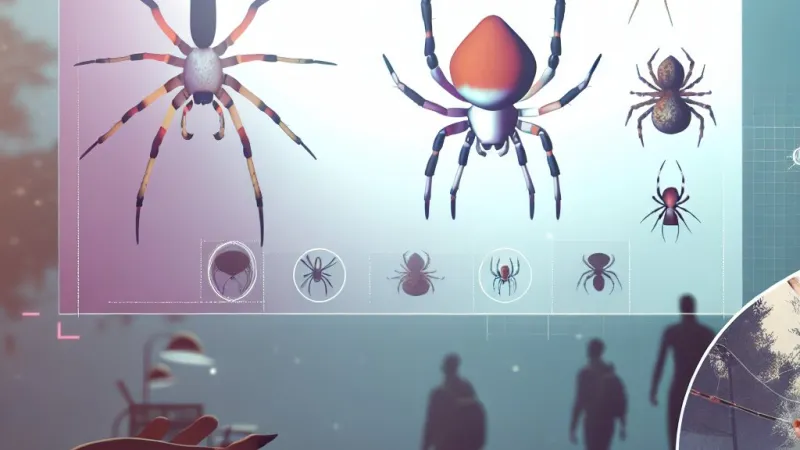
Discover top 10 facts about spiders that help secondary school students in India understand their unique biology, strength, and role in nature. 🕷️
10 Lines on Spider
Spiders, those delicate creatures that often weave intricate homes in the corners of our houses, have long fuelled both curiosity and fear among students and adults alike. In India, many of us encounter spiders daily—sometimes as we sweep the veranda in the morning, or spot shimmering webs between the leaves during the monsoon. Yet, how much do we truly know about this remarkable arthropod? Let us embark on a journey to discover ten engaging and educational facts about spiders, especially suited for Indian students.---
1. Spiders Are Arachnids, Not Insects
At the most basic level, spiders belong to the class Arachnida, which sets them apart from insects. While students often confuse the two, a quick comparison reveals clear differences. Insects have three body parts—head, thorax, and abdomen—and only six legs. Spiders, on the other hand, have just two main body sections: the cephalothorax (a fused head and thorax) and the abdomen, sporting eight legs. This difference is important in the study of life sciences and is a favourite question in our Indian school quizzes and Olympiads!---
2. Spiders Have Eight Eyes—But Don’t Always See Well
Have you ever wondered how spiders navigate the world? Interestingly, most spiders have eight eyes, arranged in patterns unique to their species. However, despite these many eyes, their vision is usually quite poor. Many spiders rely more on their sense of vibration and touch. Jumping spiders, which can often be seen in Indian gardens, have excellent vision and even appear to look back at you curiously, but others use web vibrations to ‘feel’ their dinner arriving.---
3. Spiders Spin Silk Stronger Than Steel
The webs we see glistening after a rain shower are made of silk released from the spider’s spinnerets, small organs at the rear of their abdomen. By weight, spider silk is stronger than steel—imagine a delicate thread with the power to catch speedy insects mid-flight! In fact, scientists in India and around the world are studying spider silk’s unique properties to develop stronger sutures, bulletproof fabric, and eco-friendly materials. Our own Indian Ornamental Tarantula, found in the Western Ghats, weaves strong and beautiful webs.---
4. Spiders Are Expert Pest Managers
In Indian villages and cities alike, spiders quietly perform an important role: they help manage insect populations. By catching flies, mosquitoes, and crop pests, spiders reduce the spread of diseases like dengue and malaria, and minimise damage to crops. Organic farmers actually appreciate having spiders around, since they act as natural pest controllers—no chemical sprays needed! The next time you see a spider in your kitchen, remember, it might be working harder than any store-bought “hit” spray.---
5. Spiders Live Nearly Everywhere—Even Among Us
Take a careful walk through a paddy field in Kerala or wander through an urban park in Delhi; you are never too far from a spider. These resilient creatures inhabit almost every environment in India. While the domestic house spider makes do with dark corners and forgotten cupboards, the giant wood spider spins its golden orbs between trees in Goa and Meghalaya. India’s biodiversity—from deserts in Rajasthan to mangroves in Sundarbans—supports hundreds of spider species. However, you will not find them in extremely cold regions like Antarctica.---
6. Not All Spiders Spin Webs—Some Are Hunters
When we think of spiders, a web is the first thing that comes to mind. Yet, many spiders do not spin webs at all. Jumping spiders, for instance, hunt by leaping onto their prey, while wolf spiders chase down insects on the ground. Trapdoor spiders, found in parts of southern India, build hidden burrows and surprise their victims. This diversity in hunting behaviour makes spiders a rich topic for school science projects and exploration.---
7. Most Spiders Are Harmless to Humans
There is a popular fear of spiders, but the truth is that almost all spiders in India are harmless to people. They do produce venom, but this is meant for catching prey, not attacking humans. Only a handful of spiders worldwide have venom strong enough to harm us, and these are rare in India. The Indian Black Widow, for instance, is found in some locations, but bites are very rare and treatable. With a gentle attitude and awareness, we can safely share spaces with our eight-legged friends.---
8. Spiders Play Key Roles in Indian Folklore and Art
Across Indian storytelling and art, spiders represent patience, creativity, and resilience. In many folk tales, a spider’s slow and steady web-building inspires lessons about hard work and determination. For instance, in the Panchatantra, small creatures are often shown to overcome difficulties through intelligence, and the spider’s clever webs are linked to that spirit. Spider-woman motifs even appear in Gond and Warli tribal art. Of course, the superhero Spider-Man, popular in India as well as globally, brings the spider’s powers of agility and creativity to life for children.---
9. Spiders Are an Important Subject in Science and Medicine
In recent years, scientific research has highlighted spiders’ roles beyond pest control. Venom from some species is being studied for new medicines, such as painkillers or treatments for nervous system disorders. Spider silk, as mentioned before, has potential applications in surgery and biotechnology. Indian institutions like the Indian Institute of Science have ongoing research into these fascinating creatures, offering inspiration for budding scientists.---
10. Observing Spiders Teaches Us About Biodiversity
Finally, taking some time to watch a spider in its web offers valuable lessons. We learn about food webs, adaptation, and the balance of nature—key concepts in the environmental studies (EVS) curriculum. Many schools in India now encourage students to participate in bio-walks or keep nature diaries. Observing a garden spider catching its prey, or sketching a beautiful orb web, can spark curiosity and respect for all forms of life.---
Conclusion
Spiders are more than just creatures that scurry in the dark or hang in forgotten corners. They are engineers, hunters, artists, and helpers. From the spinning of resilient silk to their role in controlling pests and inspiring cultural stories, spiders play vital roles in both nature and human lives. In our Indian homes, fields, and forests, they remind us about the wonder and complexity of the natural world.It is natural to be wary of spiders—after all, fear of unknown creatures is ancient and deeply rooted. But with careful observation and open-mindedness, we can replace fear with fascination. The next time you spot a spider in your classroom or garden, take a closer look: you may discover a universe built on delicate threads of patience, intelligence, and balance.
---
Activities for Curious Students
If you want to learn more, try spotting a spider web on your balcony, draw its pattern in your notebook, or look up the names and shapes of spiders found in your state—such as the Giant Wood Spider of the Western Ghats or the Indian Ornamental Spider. Write down your own “10 lines on spiders” and share them with your friends. By observing and respecting these tiny creatures, we develop love and care for biodiversity, ensuring a harmonious world for all.---
In summary, spiders are not just subjects for scary tales, but ambassadors of creativity, patience, and harmony in the Indian environment. Let us nurture curiosity about them, celebrate their contributions, and study their wonders with open eyes and open hearts.
Rate:
Log in to rate the work.
Log in