Key Moral Values and Their Importance in Daily Life Explained
This work has been verified by our teacher: 18.03.2026 at 9:11
Type of homework: Essay Writing
Added: 16.03.2026 at 12:03
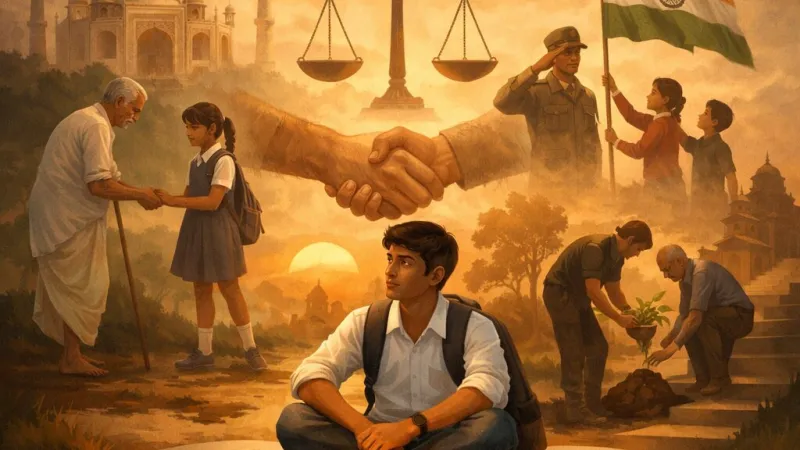
Summary:
Explore key moral values and their importance in daily life to build character, make ethical choices, and become responsible citizens in India’s context.
The Importance of Moral Values in Life: A Comprehensive Insight
Moral values, though intangible, deeply influence every aspect of our daily lives. At its core, a moral value is a principle that guides us to distinguish right from wrong, good from bad. Unlike written laws or social rules which can be enforced by authority, moral values arise from within—they touch the heart and govern actions, even when no one is watching. For instance, telling the truth, respecting elders, or helping someone in need are not dictated by fear of punishment, but by an inner sense of what is “the right thing to do.” These values serve as an inner compass, shaping our personalities, making communities healthier, and societies more peaceful.
In the Indian context, the importance of moral values is even more pronounced. Throughout history, Indian society has laid enormous emphasis on virtues such as non-violence (ahimsa), truth (satya), compassion (karuna), and respect (samman). As students, understanding the foundation, relevance, and practice of moral values is vital—not only to become successful individuals but, even more, to become responsible citizens who can contribute to nation building. This essay explores the origin, importance, and ways to cultivate moral values, particularly for the youth of India.
---
Historical and Cultural Context of Moral Values
Moral values are not a modern invention; they have been guiding human conduct since ancient times. In India, their roots can be traced as far back as the Vedic age. Ancient scriptures like the Vedas and Upanishads did not simply focus on rituals, but also on virtues such as satya (truth), daya (compassion), and dharma (duty). The grand epics—Ramayana and Mahabharata—are filled with stories wherein moral values are tested, upheld, or sometimes, tragically compromised. Lord Rama’s unwavering commitment to truth and duty continues to inspire generations, while the ethical dilemmas faced by characters like Arjuna in Mahabharata highlight the complexities of moral choices.Religions in India, be it Hinduism, Islam, Christianity, Sikhism, Buddhism, or Jainism, have all placed tremendous emphasis on moral conduct. For example, Guru Nanak’s teachings emphasise honest labour (kirat karo), sharing with others (vand chhako), and remembering God (naam japo). Jainism’s stress on ahimsa reached such depth that even harming a small insect is discouraged. Sufi saints, Buddhist monks, and Christian missionaries alike have spoken about the values of love, sacrifice, and forgiveness.
Even beyond texts and philosophy, Indian culture embodies moral values in everyday traditions—respecting elders by touching their feet, hospitality towards guests as “Atithi Devo Bhava,” and the strong emphasis on family bonds. Over time, moral values have evolved with society. What did not change, however, is their essential role in maintaining peace and harmony.
---
Sources of Moral Values and Their Acquisition
The first school of moral learning is always the family. Much before a child steps into a classroom, it is at home where parents, grandparents, and other elders become role models. A time-honoured Indian proverb says, “Actions speak louder than words.” Indeed, children absorb values by observing honesty in parents’ dealings, their compassion towards the less fortunate, and respect for others. Everyday rituals—like saying “thank you,” addressing elders politely, and listening patiently—sow the seeds of good character.Schools and teachers then reinforce these lessons. Subjects like moral science, role-plays, and group activities help students to put values into practice. Teachers often become second parents, showing by personal example the power of truth, discipline, and kindness. Participation in sports, group projects, NSS (National Service Scheme), or Scouts and Guides fosters values like teamwork, honesty, and fair play.
Society, too, plays a significant role. Our participation in religious gatherings, community festivals like Diwali or Eid, and charity events exposes us to a broader sense of ethical duty and collective responsibility. However, modern media—television, films, and social networks—presents a double-edged sword. While inspirational stories can encourage empathy and integrity, sensationalism and negative role models can sometimes breed jealousy, dishonesty, or aggression.
Last but not least, each individual’s personal experiences act as potent teachers. Failing in an exam, being forgiven after making a mistake, or seeing the joy on a stranger’s face when helped—these experiences stay with us, sharpening our conscience and self-control.
---
Key Moral Values and Their Significance
Some moral values stand out as the pillars upon which good character is built.1. Honesty and Truthfulness: “Satyamev Jayate”—truth alone triumphs—is not just India’s national motto but a guiding principle. Without honesty, trust collapses, whether in friendships, families, or public life. The persistent problem of cheating in exams or corruption in society highlights the urgent relevance of this value.
2. Respect and Empathy: Respecting elders, teachers, women, and even nature is deeply embedded in Indian tradition. Empathy—the ability to understand another’s pain—can break barriers, reduce conflicts, and build lasting relationships. Gandhiji, known as the Father of the Nation, once said, “The simplest acts of kindness are by far more powerful than a thousand heads bowing in prayer.”
3. Responsibility and Discipline: Being responsible means fulfilling one’s duties—be it completing homework, caring for parents in old age, or contributing to civic cleanliness. Discipline—the art of controlling desires and maintaining focus—is essential for both personal and national development.
4. Kindness and Generosity: Helping without expecting a favour in return is true generosity. Acts like volunteering in Swachh Bharat campaigns, distributing food during festivals, or supporting weaker classmates create a culture of shared happiness.
5. Justice and Fairness: Treating all people equally, opposing injustice, and standing up for what is right are virtues that prevent discrimination and promote societal harmony. The Indian judiciary system, the concept of “equal opportunity,” and respect for diversity all rest on these foundations.
---
The Role of Moral Values in Shaping Character and Behaviour
Moral values play an invisible yet decisive role in personality development. They not only determine how we react in difficult situations, but also build self-esteem and confidence. A student who refuses to cheat, even if everyone else is doing so, becomes an example for peers.In day-to-day life, these values are the adhesives holding families and friendships together. When we trust, help, and respect each other, bonds are strengthened, and misunderstandings are fewer. In professional or public spheres, integrity leads to genuine teamwork and better productivity.
On a broader scale, when a large population upholds moral values, problems like communal strife, corruption, and violence reduce. The dream of a “Ram Rajya”—a just and peaceful society—can only materialise through the collective practice of moral values.
---
Challenges in Upholding Moral Values Today
Our times are changing rapidly. Exposure to different cultures, ideas, and lifestyles through technology creates both opportunity and confusion. Today, children encounter a variety of opinions on social media, some constructive, others misleading. Peer pressure and advertisements sometimes glorify material success at the cost of honesty or empathy.At home, changing family structures—with both parents working and nuclear families becoming common—sometimes limit the transmission of values. News headlines of dishonest practices, scams, and rising intolerance remind us that moral decline is a real danger.
Despite these challenges, hope remains. Many schools are now reinstating moral education, introducing meditation, yoga, and community service into daily routines. Parents and teachers must be more proactive, encouraging dialogue on ethical dilemmas and not just academic success.
---
Practical Ways to Cultivate and Practice Moral Values
Cultivating values starts with introspection. Taking a few minutes daily to reflect on our actions—have I been honest today? Did I help someone? Did I control my anger?—helps us remain grounded. Setting resolutions, like standing against bullying or not littering, and rewarding oneself upon success creates positive reinforcement.Storytelling and drama workshops, especially for younger students, can be powerful tools. Tales from Panchatantra, Jataka, or Akbar-Birbal are perfect vehicles for teaching complex morals in a simple, relatable way.
Getting involved in social service, such as volunteering at NGOs, participating in “Swachhata Abhiyan,” or just helping neighbours, fosters a sense of duty and belonging. Open discussions about difficult subjects—say, academic cheating, online bullying, or gender discrimination—help develop tolerance and critical thinking.
---
Conclusion
To summarise, moral values are the foundation stones of individual character and national progress. In the Indian ethos, these values are more than just good habits; they are woven into the very fabric of culture and history. Upholding them brings out the best in us—instilling pride, purpose, and peace.It is the duty of every student, indeed every citizen, to not only learn these values but to practise and spread them. Small acts, done with sincerity, can multiply and ripple across society. As Rabindranath Tagore wisely pointed out, “The highest education is that which does not merely give us information but makes our life in harmony with all existence.” When moral values guide our lives, society flourishes, and the journey towards a better, more compassionate India becomes reality.
Rate:
Log in to rate the work.
Log in