Key Facts About India’s Freedom Fighters and Their Historic Struggle
This work has been verified by our teacher: 15.03.2026 at 13:17
Type of homework: History Essay
Added: 14.03.2026 at 8:35
Summary:
Explore key facts about India’s freedom fighters and their historic struggle to inspire learning and deepen your understanding of India’s journey to independence.
10 Lines on Freedom Fighters of India
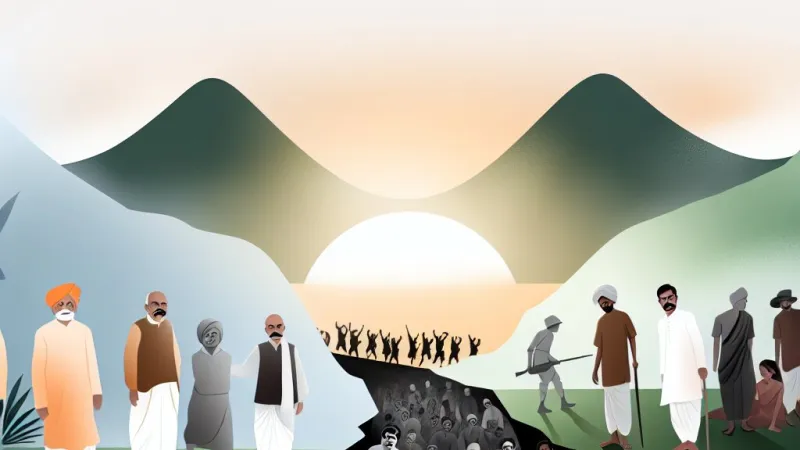
India’s journey to independence is an epic tale, etched into the memory of every citizen through the contributions and sacrifices of its freedom fighters. These remarkable individuals, hailing from different corners of the country and diverse backgrounds, united under the common purpose of liberating the motherland from colonial rule. More than 75 years since India unfurled the tricolour at the Red Fort, the significance of our freedom fighters remains deeply embedded in the national narrative. By reflecting on their stories, courage, and legacies, we not only pay our respects but also reaffirm our commitment as citizens of a free nation. In this essay, I aim to present ten essential points that shed light on the unparalleled journey of India’s freedom fighters, their struggles, and their lasting impact on our society.
India Under British Rule: The Crucible of Change
For nearly two centuries, India was subjected to British imperial control, leaving an entire subcontinent grappling with exploitation, poverty, and social unrest. The British came as traders and cemented their grip with military might and cunning policies. Famines became frequent, wealth was drained, and fundamental rights were trampled. It was in this harsh climate that the seeds of revolt were sown. The urgency of the freedom movement was born out of this relentless oppression—from forced revenue systems that shattered rural life, to direct atrocities witnessed during events like the Jallianwala Bagh massacre in 1919.Freedom fighters emerged as torchbearers, awakening a collective conscience among Indians and mobilising varied communities—farmers, students, artists, women, and workers—to rise against foreign domination. Their leadership, both visible and silent, turned isolated acts of defiance into nationwide movements that could not be silenced.
1. Early Sparks: The First War of Independence
The first major uprising against British rule began in 1857. Known variously as the Revolt of 1857 or the First War of Independence, this rebellion was spearheaded by legends like Mangal Pandey and Rani Laxmibai of Jhansi. Mangal Pandey, a soldier in the East India Company army, is remembered for firing the first shot. Rani Laxmibai became a symbol of fearless resistance, famously riding into battle with her infant son tied to her back. While the revolt was eventually suppressed, it ignited a spirit of resistance that would smoulder for decades to come.2. Growth and Transformation: The 20th Century Movements
After the initial sparks, the Indian struggle for freedom took on diverse forms. By the early 20th century, the freedom struggle witnessed the rise of the Indian National Congress, founded in 1885, which played a crucial role in organising political opposition to British rule. The method of struggle shifted from violent uprisings to mass civil disobedience and non-cooperation, especially under the leadership of Mahatma Gandhi. The influence of world events, such as the two World Wars, further weakened British power and emboldened Indian aspirations for self-determination, creating a fertile ground for large-scale peoples’ movements.3. Mahatma Gandhi: Champion of Non-Violence
Mohandas Karamchand Gandhi, revered as the ‘Father of the Nation’, stood at the forefront with his philosophy of Ahimsa (non-violence) and Satyagraha (truth-force). Through the Non-Cooperation Movement (1920-22), the Dandi Salt March (1930), and the Quit India Movement (1942), Gandhi successfully involved millions in peaceful defiance against injustice. His campaigns crossed all barriers of caste, creed, language, and province, transforming political agitation into a people’s movement. Gandhi’s legacy finds echoes in countless current struggles for justice around the world and remains a guiding light for Indian polity.4. Subhash Chandra Bose: The Firebrand Patriot
If Gandhi symbolised peaceful resistance, Subhash Chandra Bose (“Netaji”) embodied the revolutionary zeal to achieve freedom “by any means necessary”. Breaking away from the Congress, Bose established the Azad Hind Fauj (Indian National Army) in 1943, forging strategic alliances and calling for armed struggle. His famous slogan, “Give me blood, and I shall give you freedom!” inspired many to take up arms. Bose’s demise remains mysterious, but his legacy continues to stoke the fires of patriotism, especially among the youth.5. Bhagat Singh and the Revolutionaries
The name Bhagat Singh is synonymous with courage and youthful rebellion. Along with Rajguru, Sukhdev, and others, he engaged in acts designed to rouse the consciousness of both the British rulers and the Indian public. The Central Assembly bombings (1929) were meant to ‘make the deaf hear’, not to kill. Bhagat Singh’s execution at age 23 made him a martyr and an enduring symbol of selfless sacrifice. His commitment to the cause of freedom over personal safety holds a special place in every Indian heart.6. Women Freedom Fighters: Courage Beyond Conventions
The Indian freedom struggle was not the domain of men alone. Women like Rani Laxmibai, Sarojini Naidu (“Nightingale of India”), Aruna Asaf Ali, and Kasturba Gandhi were leaders in their own right. Sarojini Naidu combined poetry and politics, leading from the front during the Civil Disobedience and Quit India Movements. Kasturba Gandhi supported and sometimes led Gandhi’s ashram initiatives and protests. Many unsung heroines like Matangini Hazra, Usha Mehta, and Durgabai Deshmukh braved imprisonment and torture to keep the flame of freedom alive.7. Unsung Heroes: Stories Beyond the Headlines
While public memory celebrates a few names, countless others made invaluable contributions. Ramprasad Bismil, Ashfaqulla Khan, and Chandrashekhar Azad orchestrated the famous Kakori Train Robbery (1925) to fund revolutionary activities. Their daring act and subsequent martyrdom inspired many to shake off the shackles of oppression. These lesser-known heroes remind us of the breadth and depth of India’s battle for self-rule.8. Sardar Vallabhbhai Patel: Forging Unity
Sardar Vallabhbhai Patel, celebrated as the “Iron Man of India”, was instrumental not only in the freedom struggle but also in the consolidation of the nation after independence. His leadership in movements like the Bardoli Satyagraha (1928) displayed his organisational prowess and resilience. Later, Patel’s diplomacy and firmness ensured the integration of over 500 princely states into the Union of India, shaping the map of modern India.9. The Lasting Legacy
The sacrifices and ideals of freedom fighters have left a deep imprint on Indian society. Their spirit finds a place in the Indian Constitution, which enshrines values of liberty, equality, and justice. The celebration of national festivals like Independence Day and Republic Day is a collective tribute to their struggles. Every year, educational institutions hold debates, skits, and essay competitions to keep their memories alive; their portraits gaze down from school halls and public offices, serving as reminders of our duties.10. Living the Values: Responsibility of Today’s Citizens
To truly honour the freedom fighters is to live up to the values they embodied. There is a grave responsibility on all citizens, especially the youth, to protect the hard-fought freedom by upholding justice, communal harmony, and democratic traditions. Simple acts—voting honestly, respecting the law, and staying informed—are ways we can extend their legacy. Schools and families must encourage deeper learning about these figures, not just the famous leaders but also the regional and lesser-known patriots whose stories are no less inspiring.Conclusion
In summary, the history of India’s freedom fighters is a tapestry woven from the threads of courage, sacrifice, and unwavering dedication. This struggle was not confined to one region or section, but embraced diversity—men, women, young, old, urban, rural, all united in their love for the country. Some wielded the pen, some picked up the sword, some led protests, and others energised society through poetry and song. Today, as we walk free in a sovereign India, enjoying rights and opportunities unthinkable in colonial times, we owe everything to those who dared to dream and struggled to realize that dream.Let us strive not just to remember these heroes on national holidays, but to carry their example into our daily lives. By adopting the virtues of service, unity, and integrity, we can build an India worthy of their sacrifice. May the stories of our freedom fighters continue to inspire, reminding us that the price of liberty is eternal vigilance and that we are all, in our own ways, custodians of this precious legacy.
Rate:
Log in to rate the work.
Log in