The Great Stone Face-I: Summary and Analysis for Class 8 CBSE English
This work has been verified by our teacher: 25.03.2026 at 16:08
Type of homework: Essay Writing
Added: 23.03.2026 at 9:27
Summary:
Explore the summary and analysis of The Great Stone Face-I for Class 8 CBSE English to understand key themes, characters, and moral lessons clearly.
The Great Stone Face-I: A Comprehensive Essay for Indian Students
In the lush pages of the CBSE Class 8 English textbook "Honeydew," the story “The Great Stone Face-I” stands as a memorable and thought-provoking lesson. Authored by Nathaniel Hawthorne, but adapted with careful language for Indian students, this story unfolds in a quaint valley watched over by a wonderfully peculiar natural rock formation—the Great Stone Face. It is not the product of human hands but a wonder sculpted by nature herself. The tale is more than a simple narrative; it is woven with rich threads of moral reflection, presenting deep philosophical questions about the real meaning of greatness and nobility.
In the context of Indian education, reading such stories is a valuable opportunity for learners to build not just language skills but also their sense of right and wrong. “The Great Stone Face-I” is a highly relevant inclusion in the syllabus, as it subtly nudges students to think beyond superficial measures of success. This essay aims to give a detailed exploration of the story’s summary, characters, themes, and life lessons, making it approachable and relatable for all Indian students preparing for their CBSE examinations.
---
Setting and Context
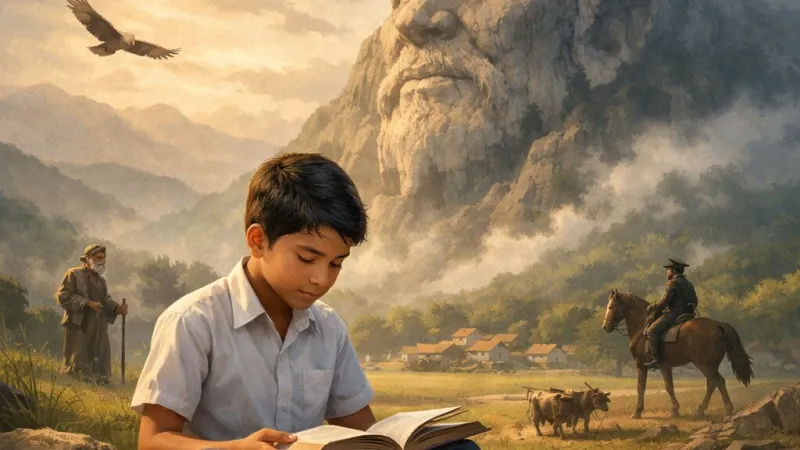
At the heart of the story is a serene, picturesque valley encircled by mountains. The valley’s most remarkable feature is a gigantic rock formation on one of the mountains, which, when viewed from a certain angle, appears to be a human face. This is “The Great Stone Face,” a silent guardian, its features wise and peaceful, giving the landscape an almost sacred quality. Such unique natural scenery brings to mind the rocky hills of Meghalaya or the serene valleys of Himachal Pradesh, deeply connecting the power of nature with the lives of villagers.The valley community is depicted as simple and harmonious, with people closely bound to local beliefs and stories. The story introduces an age-old prophecy known to every inhabitant: One day, a great person, bearing a striking resemblance to the Stone Face, will be born in the valley and bring great prosperity and wisdom to its people. This prophecy becomes the foundation for local hopes, shaping not only the views of the villagers but also those of the story’s main character, Ernest.
---
Plot Summary with Detailed Analysis
The journey begins with the telling of the prophecy. Some believe it is just legend; others, like the innocent Ernest, are filled with faith. As a child, Ernest would often gaze at the Great Stone Face, marvelling at its calm grandeur and wondering when the promised man would arrive. His mother, a simple and warm village woman, encourages her son to hold onto the hope, thus nurturing his imagination and trust in the unseen.The scene soon shifts as news arrives of a wealthy local boy named Gathergold, who had left as a youngster and returned as a rich merchant. The villagers’ excitement is palpable—surely, this rich man, they think, must be the one foretold by the prophecy. However, when he arrives, it becomes clear his outer appearance or wealth does not match the noble face of the mountains. He brings riches, but not the goodness or wisdom the valley needs. Disappointed, the villagers move on, soon turning their attention to a returning soldier, another candidate for the prophesied greatness.
Throughout this, Ernest maintains his quiet patience. Unlike the others, he neither judges hastily nor loses faith. His growth is intertwined with the failure of these so-called great men: as they rise and fall from the villagers' favour, Ernest’s own moral strength shines ever brighter. He grows into a man of gentle virtue, known for his honesty and compassion, still waiting for the prophecy's fulfilment.
---
Character Analysis
Ernest
Ernest is the heartbeat of the story. From a tender age, he embodies simplicity, sincerity, diligence, and an almost saintly patience. He is an ordinary village boy, but his extraordinary goodness sets him apart. Unlike those around him, Ernest is not attracted by outward glamour or short-term excitement. His bond with his mother and his respectful ties in the valley help reinforce the Indian value of family and community, making him an ideal role model for young readers.Mr Gathergold
Mr Gathergold emerges as a symbol of misplaced priorities. While his name literally suggests gathering gold, his character shows that wealth alone cannot create greatness. He is welcomed with fanfare but soon falls from grace as it becomes obvious that riches cannot replace true nobility.The Villagers
The villagers, though affectionate and united, often make the mistake of rushing to judgement. Their eagerness to fulfil the prophecy blinds them to the true measure of a great person. Their behaviour mirrors the typical tendency in society to idolise those with wealth or status without examining their character.The Great Stone Face
The rock formation is a silent yet powerful presence throughout the story. It is more than a geological marvel; it is a constant, patient teacher, always available for those who seek inspiration. To the villagers, it is not merely a feature of the landscape but a living symbol of high ideals.---
Themes and Moral Lessons
One of the enduring themes of “The Great Stone Face-I” is the distinction between outer appearances and inner virtues. The villagers’ repeated error of identifying greatness with wealth or military achievement offers a timely warning against superficiality.Patience and the power of hope also shine through, especially in Ernest’s unwavering faith. This lesson is particularly valuable in an Indian context, where students often feel pressured to achieve instant results, forgetting that true success stems from perseverance and sincerity.
The use of prophecy and myth highlights how stories shape societies. Just as legends like those of King Harishchandra or Akbar’s navaratnas teach values in Indian history, the Great Stone Face legend influences the behaviour and aspirations of the valley’s people.
Simplicity and humility emerge as the story’s greatest lessons. Ernest’s life shows that being kind, truthful, and hardworking is far more valuable than riches or fame. The Great Stone Face itself, unchanging and unbiased, is a metaphor for ideals that withstand the test of time.
---
Language and Style in the Story
The language of the story remains simple and accessible, making it suitable for Class 8 students. Yet, it is poetic and full of beautiful imagery, especially in descriptions of the valley and the majestic Stone Face. Conversations between characters are crafted to encourage introspection about moral and philosophical ideas, gently guiding readers to reflect on what truly matters in life.---
Difficult Words and Their Meanings
1. Prophecy: A statement that something will happen in the future; prediction. (e.g., "The villagers believed the prophecy about the Great Stone Face.") 2. Likeness: Resemblance; similarity in appearance. (“His face bore a likeness to the Great Stone Face.”) 3. Noble: Having fine moral qualities. (“Ernest was noble in his thoughts and actions.”) 4. Diligent: Hardworking and careful. (“Ernest was known for his diligent efforts in the fields.”)To remember such words, connect them with moments in the story: think of ‘prophecy’ whenever the villagers discuss the legend, or ‘noble’ when Ernest helps his neighbours.
---
Importance of the Story in Academic and Moral Education
Within the CBSE curriculum, “The Great Stone Face-I” serves two crucial purposes. Academically, it develops comprehension, vocabulary, and critical analysis. Morally, it asks students to question what qualities make a person truly great.It is especially relevant for Indian students living amidst the pressures of modern society, where glamour and success often overshadow simple values. By learning Ernest’s story, students are encouraged not only to perform well in exams but also to become principled and empathetic members of society.
---
Application of the Story’s Lessons in Real Life
This story inspires students to practise patience and maintain hope, even when their ambitions seem far-fetched. It also encourages humility and acts of kindness, as shown by Ernest’s everyday behaviour. Just as the villagers learned not to equate greatness with riches, students are reminded to respect all, irrespective of status.Teachers can use this story for classroom discussions on honesty, genuine success, and character-building, making it more than just a lesson in English.
---
Conclusion
In summary, “The Great Stone Face-I” beautifully blends the charm of storytelling with essential life lessons. Set in a valley rich with dreams and legends, the story uses its characters and symbolism to probe the meaning of true greatness. Ernest, with his humble heart and steadfast belief, emerges as the embodiment of all that is noble.Stories like this deserve their place in our syllabus, not just for literary merit but for shaping the young minds of India. As we read about Ernest waiting patiently for the prophecy to come true, we are reminded to believe in ideals and cultivate goodness within ourselves. Let us draw inspiration from the Great Stone Face, striving always to live lives of honesty and hope.
---
Rate:
Log in to rate the work.
Log in