Key Insights on Robotics and Machine Intelligence for Students
This work has been verified by our teacher: 4.04.2026 at 16:29
Type of homework: Essay Writing
Added: 3.04.2026 at 5:35
Summary:
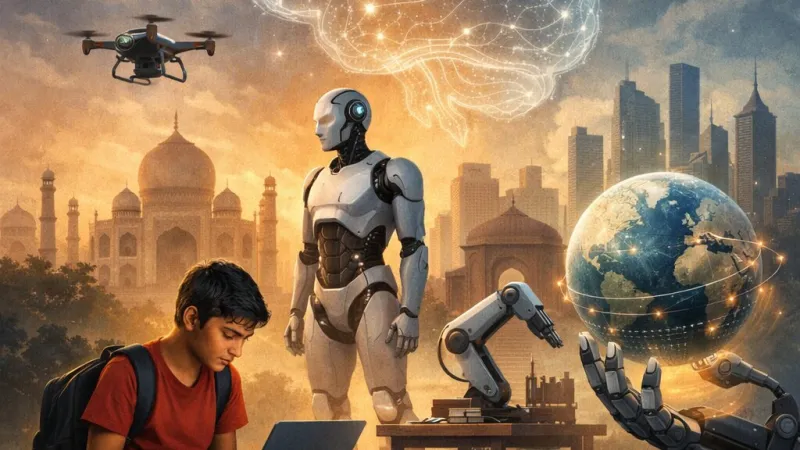
Explore key insights on robotics and machine intelligence to understand their history, types, uses, and future impact for students preparing in India’s evolving tech landscape.
An In-Depth Exploration of Robotics and Machine Intelligence
Introduction
The past few decades have seen humanity propelled into an age where technology deeply shapes every aspect of our day-to-day lives. From using smart mobile phones to experiencing digital classrooms, technology in the 21st century has redefined how we think, learn, and create. Among the most fascinating advancements are robotics and machine intelligence, two interlinked fields that hold the promise of radically transforming everything from our workplaces to our homes. For students in India, gaining insights into these domains is more than just an academic exercise—it is vital preparation for the nation’s rapidly changing economic, industrial, and social fabric. In this essay, we will closely examine what robotics and machine intelligence entail, how they have evolved, their types and uses, their challenges and ethical implications, and their future potential, with special attention to how these developments resonate within the Indian context.Understanding Robotics: Definition and Historical Context
Robotics can be understood as a multidisciplinary field where mechanical engineering, electrical engineering, computer science, and automation come together to create machines capable of carrying out tasks with varying degrees of autonomy. At its simplest, robotics involves designing, constructing, and programming robots—devices that can sense their environment, process information, and act accordingly.The word “robot” finds its origin in the Czech play “R.U.R.” (Rossum’s Universal Robots), penned by Karel Čapek in 1920. In the play, robots were artificial beings created to serve humans. Since then, the meaning has expanded to include complex mechanical and digital systems capable of independent action. Over time, the field of robotics has seen several milestones. For instance, the introduction of “Unimate,” the first industrial robot, at a General Motors factory in the United States in 1961, marked the dawn of an era where robots began transforming industrial manufacturing. Pioneering figures like Joseph F. Engelberger, often called the “father of robotics,” were instrumental in moving these concepts out of science fiction and into the real world.
In India too, robotics has a storied history. The automation of textile mills in Ahmedabad and the rise of robot-based research at Indian Institutes of Technology (IITs) have been pivotal in fostering early interest in this field among Indian students and engineers.
Types and Classifications of Robots
Robots manifest in many forms and guises, often determined by their functional role and design. Broadly, we can classify them as:- Industrial Robots: These are perhaps the most familiar, seen on assembly lines in car manufacturing, or in industries like electronics and pharmaceuticals. These robots weld, paint, package, and perform repetitive tasks with unmatched speed and precision. In India, large-scale factories such as Maruti Suzuki or Tata Motors increasingly adopt industrial robots to boost production efficiency.
- Service Robots: Moving beyond factories, service robots work in domains such as healthcare (think robotic nurses assisting surgeries or managing hospital logistics), hospitality (robots serving food in restaurants in Chennai and Bengaluru), and even parcel delivery (drones being piloted for rural medicine drops).
- Humanoid Robots: These robots, such as the globally recognised Sophia or India’s own ‘Manav’ robot, are designed to resemble humans and interact socially. They are often used for educational purposes or public demonstrations, such as AI-powered greeters in banks or museums.
- Autonomous and Remote-Controlled Robots: Some robots are entirely controlled by humans in real time (e.g., bomb disposal robots in police units), while others function with minimal human intervention (like automatic vacuum cleaning robots found in modern Indian homes).
Physically, robots range from large, arm-like machines in factories, right down to micro-robots, or “nanobots,” researched for medical use in detecting or treating diseases like cancer. Robots can move on wheels, legs, or even fly as drones or swim underwater, depending on their designed task. When it comes to programming, some robots simply repeat pre-formulated instructions, while more advanced examples can learn and adapt—heralding the fusion of robotics with machine intelligence.
Introduction to Machine Intelligence: Concepts and Mechanisms
Machine Intelligence is a broader concept that involves developing machines capable of intelligent behaviour. Artificial Intelligence (AI) is often used interchangeably, but “machine intelligence” more specifically refers to a system’s ability not just to perform tasks, but to analyse data, learn from experience, and make decisions much like a human.At its core, machine intelligence relies on several mechanisms:
- Data Processing and Pattern Recognition: Machine intelligence systems interpret vast amounts of data—images, speech, or numerical data—and identify meaningful patterns. - Decision Making: By mimicking human cognitive processes, these systems can take decisions, sometimes even outperforming humans in speed and accuracy for specific tasks. - Machine Learning: There are different learning techniques: - Supervised Learning: For example, training a system to identify handwritten digits from labelled datasets, a common project at IITs and several coding clubs in Indian colleges. - Unsupervised Learning: Enabling systems to find patterns in unlabelled data, such as clustering medical patient records to find new disease patterns. - Reinforcement Learning: Where a system hones its actions by trial and error, as seen in AI trained to play chess or video games.
In practical life, machine intelligence powers voice assistants like Amazon Alexa or Google Assistant (even though they may not be truly “intelligent” in a human sense), as well as facial recognition technologies deployed in security systems at Indian airports and stadiums, or the biometric Aadhar system for identity verification.
Applications and Impact of Robotics and Machine Intelligence
Robotics and machine intelligence have set their mark across various sectors in India and the world:- Industry: Large Indian manufacturing plants use robotic arms for welding, fabricating, or packaging, reducing errors and workplace injuries. For example, Bajaj Auto’s Pune plant boasts one of India’s most automated production lines.
- Healthcare: Advancement in “robotic surgery” has made minimally invasive operations—like those performed using the Da Vinci Surgical System—increasingly common in Indian hospitals. During COVID-19, Kerala used robots to deliver food and medicines to quarantine centres, minimising exposure risks for frontline workers.
- Agriculture: Start-ups like TartanSense and Fasal have developed farm robots and drones that analyse crop health and soil, spray fertilisers, and optimise yield, providing vital support to small-scale Indian farmers.
- Defence: The Indian armed forces deploy AI-powered surveillance drones along borders (such as at the Ladakh frontier) and use bomb-disposal robots to neutralise threats.
- Daily Life: In urban households, robotic vacuum cleaners are growing popular. Educational institutions, like Amity University and IIT Bombay, now use humanoid robots for lectures, practical demonstrations, and administrative assistance.
These applications are rapidly changing the way we work, access healthcare, secure our borders, and manage everyday tasks.
Challenges and Ethical Considerations
With opportunity always comes challenge—technological, economic, and ethical.- Employment: Automation has sparked concerns about job losses in traditional sectors such as manufacturing, textiles, and even banking. This makes it vital for the Indian workforce to adapt through continuous skill upgradation, vocational training, and fostering a spirit of lifelong learning. As the National Education Policy 2020 recognises, integrating coding and robotics into school curriculums is an important step forward.
- Technical Limitations: Advanced robots are expensive to develop, purchase, and maintain. For many smaller businesses and government institutions in India, high costs remain a significant barrier to adoption. Further, current AI systems can lack common sense and flexibility, leading to errors or unpredictable behaviour.
- Ethical and Social Questions: The use of surveillance robots in public places raises surveillance and privacy concerns. Mistakes made by autonomous vehicles or medical robots pose tricky questions about responsibility and liability. The debate on granting legal rights or even citizenship to robots, as seen when Sophia was granted honorary citizenship by Saudi Arabia, has also triggered discussions in Indian media about machines’ place in society.
- Safety: Ensuring human safety in environments shared with robots (such as factory floors, classrooms, or operating theatres) is paramount, as is preventing the misuse of robotics for harmful or antisocial purposes.
The Future of Robotics and Machine Intelligence: Opportunities and Trends
New waves of innovation are on the horizon. The convergence of machine intelligence with robotics is enabling the creation of robots that are more agile, perceptive, and collaborative. Advances in sensor technology, soft robotics (robots that move more like living organisms), and cloud-based AI are making such progress possible.India is embracing this future through initiatives like "Make in India," which promotes indigenous manufacturing, and "Digital India," aiming to boost digital infrastructure and literacy. Edtech companies and start-ups like GreyOrange and Emotix (the makers of Miko, a popular Indian companion robot for children) are pushing boundaries. Additionally, policy steps such as including AI, robotics, and programming in the CBSE and ICSE curricula, as advocated by the NITI Aayog, are preparing the coming generation.
From environmental monitoring to supporting people with disabilities and contributing to climate-smart agriculture, robotics and machine intelligence promise positive social impact. Yet, their adoption must be guided by ethical, inclusive, and sustainable practices.
Conclusion
In summary, the world of robotics and machine intelligence is both an unfolding marvel and a significant challenge. These technologies promise to reinvent industry, create smarter healthcare, empower agriculture, and redefine how we interact with our environment. For a country as vast and diverse as India, embracing these changes responsibly is critical—not just for economic growth, but for ethical and inclusive progress. The key lies in a balanced approach: nurturing curiosity, updating our skills, embedding ethics in design, and ensuring that the benefits of robotics and machine intelligence uplift every section of society.Additional Tips for Students Writing on This Topic
- Use simple, relatable examples—such as describing a robot vacuum cleaner or drone surveillance—instead of abstract explanations. - Refer to recent Indian advancements, like AI-based language translators or robotics competitions at IITs, to ground your argument. - Avoid using overly technical terms; if necessary, briefly define them. - Present both the opportunities and possible pitfalls of robotics and machine intelligence for a balanced essay. - Use government statistics, newspaper articles, and case studies for a convincing, up-to-date discussion.Suggested Further Reading and Resources
- Books such as "Introduction to Robotics" by S.N. Sivanandam (an Indian author). - NITI Aayog’s “National Strategy for Artificial Intelligence” report. - Websites: India AI (https://indiaai.gov.in), CBSE/NCERT Robotics curriculum modules. - Free online courses: Introduction to Python and C++ for robotics, available on NPTEL and SWAYAM platforms. - Documentaries on Indian robotics research, such as "India’s Robot Revolution" broadcast by Rajya Sabha TV.---
Through diligent study and thoughtful engagement, Indian students can be at the forefront of a technological revolution that is not only transforming the nation, but shaping the future of humanity itself.
Rate:
Log in to rate the work.
Log in