10 Lines on Shaheed Divas: Honouring India’s Martyrs and Their Sacrifice
This work has been verified by our teacher: 5.04.2026 at 15:47
Type of homework: Essay Writing
Added: 2.04.2026 at 10:34
Summary:
Explore 10 lines on Shaheed Divas highlighting India’s martyrs, their sacrifices, and inspiring lessons on patriotism for students and essay help.
Shaheed Divas (Martyr’s Day) in India: Honouring Sacrifice, Inspiring the Nation
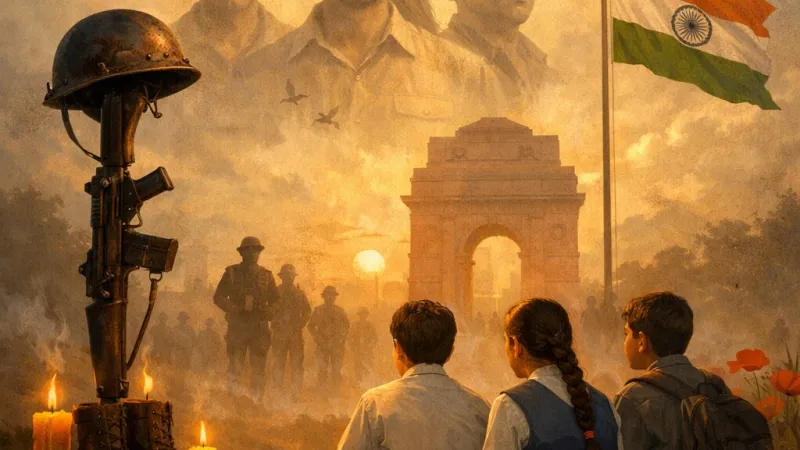
India’s history is inscribed with stories of extraordinary sacrifice—of men and women who placed their country’s freedom and welfare above their own lives. One of the most meaningful ways we, as a nation, express our gratitude and remembrance is through the observance of Shaheed Divas, known in English as Martyr’s Day. This solemn occasion goes far beyond a date on the calendar; it is a living reminder of the price of liberty, the indomitable courage of our freedom fighters, and the debt we owe to those who chose martyrdom over submission or silence.Understanding Shaheed Divas: Meaning and Relevance
The term Shaheed is derived from Persian/Urdu and literally means “martyr,” one who willingly sacrifices life for a noble cause. In India, Shaheed Divas is not a single day; rather, it is a set of observances dedicated to various individuals who laid down their lives for the nation. Above all, it is a national pause—an act of collective homage to freedom fighters and leaders who worked and died for our independence and unity.But Shaheed Divas is not just a matter of rituals and remembrance. It is a day meant to revive our sense of patriotism and make us reflect: Are we doing enough to honour their sacrifices in our own lives? It acts as an anchor, especially for the younger generations, educating and inspiring them with the stories of the valour and idealism that shaped modern India.
Key Dates of Shaheed Divas: Remembrance and Reverence
India observes Martyr’s Day chiefly on two specific dates—30th January and 23rd March. These days are marked nationally and resonate deepest in our collective memory.- 23rd March is remembered as the day when Shaheed Bhagat Singh, Sukhdev Thapar and Shivaram Rajguru were executed by the British colonial government in 1931. Their hasty execution at Lahore Jail, after a trial shaped by political interests, ripped the conscience of the nation. They remain symbols of fearless youth and unyielding opposition to colonial injustice.
- 30th January marks the assassination of Mahatma Gandhi in 1948. Known across the world for his doctrine of non-violent resistance, Gandhiji’s death at the hands of Nathuram Godse shocked a nation still reeling from the trauma of Partition. The air in Delhi, at Birla House, was heavy with grief and disbelief when the Mahatma, the Father of the Nation, fell to bullets while on his evening prayer walk.
Beyond these, several states mark their own Martyr’s Days in honour of regional heroes. For example, 17th November is observed in Odisha for Lala Lajpat Rai, 21st October as Police Commemoration Day nationwide, and 19th November in Jhansi for Rani Lakshmibai—a legend whose courage in 1857 became the stuff of folklore.
Rituals and Observances: From National Memorials to Local Schools
Shaheed Divas is marked with reverence and a deep sense of collective mourning—and gratitude. The most visible rituals happen at national level. On both 23rd March and 30th January, the President, the Prime Minister, and other dignitaries gather at memorials such as Raj Ghat (memorial to Mahatma Gandhi) and Shaheed Smarak (for Bhagat Singh and his comrades) to lay floral tributes and wreaths. At 11 a.m., a two-minute silence is observed across the country in schools, offices, and public places, with announcements made via All India Radio and Doordarshan. This practice serves as a moment for everyone—regardless of their occupation or status—to introspect and remember.Many educational institutions organise special assemblies where children are encouraged to present poems and speeches on the lives of martyrs. In my school, I remember reading Bhagat Singh’s moving quote: “They may kill me, but they cannot kill my ideas. They can crush my body, but they will not be able to crush my spirit.” Such readings not only imbue the day with emotional resonance, but also teach us to think about freedom as more than an inherited privilege.
Bhajans (devotional songs), patriotic dramas, poster-making, and essay competitions are common activities, as are exhibitions showing images and biographies of martyrs. Media houses feature stories and interviews with family members of martyrs, especially those from armed forces who laid down their lives in recent decades—at the Kargil War, or during anti-terror operations. Social media becomes awash with hashtags like #ShaheedDivas and #NeverForget, helping young Indians connect history with the present day.
Many regions have ensured the establishment of war memorials—such as the Assam Rifles War Memorial in Nagaland and the National Police Memorial in Delhi. On these days, candles and incense sticks are lit, and at some places, members of the public join candlelight marches in tribute to the fallen. Some states mark Shaheed Divas as a dry day, halting alcohol sales as a sign of respect.
The Significance of Martyrdom in Indian Ethos
To truly grasp the importance of Shaheed Divas, one must look deeper into Indian culture, where martyrdom occupies a sacred position. Sacrifice (tyag) has always been considered a virtue. From the tales of Raja Harishchandra who gave up his kingdom for truth, to Rani Padmini of Chittorgarh or Guru Tegh Bahadur who was executed in Delhi but refused to renounce his faith—Indian history is replete with those who embraced death over dishonour.Bhagat Singh, Sukhdev, and Rajguru became living examples for millions of youths, not only during their own time but ever since. Their photographs are still seen on posters and in textbooks, their acts dramatized in films and street plays from Punjab to Tamil Nadu. Their sacrifice speaks of commitment that transcended religious or regional lines and rested solely on love for motherland.
Mahatma Gandhi’s martyrdom, though of a different nature, is enshrined in our ethos as the highest form of non-violent resistance—a reminder that truth and love can be stronger than any weapon. Every Shaheed Divas thus becomes a clarion call to Indian citizens: Be worthy of this legacy. Uphold democracy, fight injustice, and protect secular values so dearly won.
Nurturing the Spirit: Education and Contemporary Challenges
But there are challenges in preserving this sacred memory. While rituals continue, there is always the risk that Shaheed Divas becomes just a tick on the calendar, performed out of routine or political calculation. Several freedom fighters have cautioned that freedom’s true value can fade with time unless it is nurtured in every new generation.This is why simple textbook lessons are not enough. Schools and homes must become vibrant spaces where stories of lesser-known martyrs from different corners of India—Manipuri leader Rani Gaidinliu, Tamil poet Subramania Bharati, Assam’s Kushal Konwar or Kerala’s A. K. Gopalan—are shared and discussed. Visits to memorials, museums like the Cellular Jail in Andaman or the Jallianwala Bagh in Amritsar, have the power to leave a deeper impression. Interactions with war veterans and families of martyred jawans during community events enable us to form a living link with history.
The principles of the martyrs remain as relevant as ever. At a time when communalism, corruption and social inequality threaten India’s harmony, their stories remind us that unity and courageous resistance are not outdated concepts. They are the foundation on which the dream of a just, inclusive India is to be built.
Conclusion: A Living Legacy and a Call to Action
Martyr’s Day, or Shaheed Divas, is both a tribute and a challenge to every Indian. Through the collective remembrance of figures like Bhagat Singh, Sukhdev, Rajguru, and Gandhiji, and through the memory of countless unnamed souls, we are offered a vision of what patriotism truly means. It is not bowing before power or privilege, but standing up for what is right, regardless of the cost.The real homage to martyrs is not mere silence or slogans once a year. It lies in how each of us, especially students—the future citizens—chooses to live: with sensitivity to injustice, integrity in public and private life, and the will to serve the nation in big and small ways.
As India moves ahead into a new era, may the spirit of our martyrs continue to inspire us to build a nation that is truly worthy of their sacrifice: united, strong, just, and full of hope.
--- **“Shaheedo ki chitaaon par lagenge har baras mele, watan par mar mitnewalon ka yahi baaqi nishaan hoga.” [Every year, fairs shall be held at the tombs of martyrs; this will be the remaining mark of those who sacrificed their lives for the motherland.]**
Let us strive to ensure that these marks remain fresh—not only through festivals, but in our hearts and our actions, every single day.
Rate:
Log in to rate the work.
Log in