10 Key Facts About A.P.J. Abdul Kalam: India’s Missile Man and President
This work has been verified by our teacher: 8.04.2026 at 16:08
Type of homework: Essay Writing
Added: 7.04.2026 at 11:04
Summary:
Discover 10 key facts about A.P.J. Abdul Kalam, India’s Missile Man and President, and learn how his inspiring journey fuels students’ dreams and goals.
A.P.J. Abdul Kalam: The Visionary Scientist and People’s President
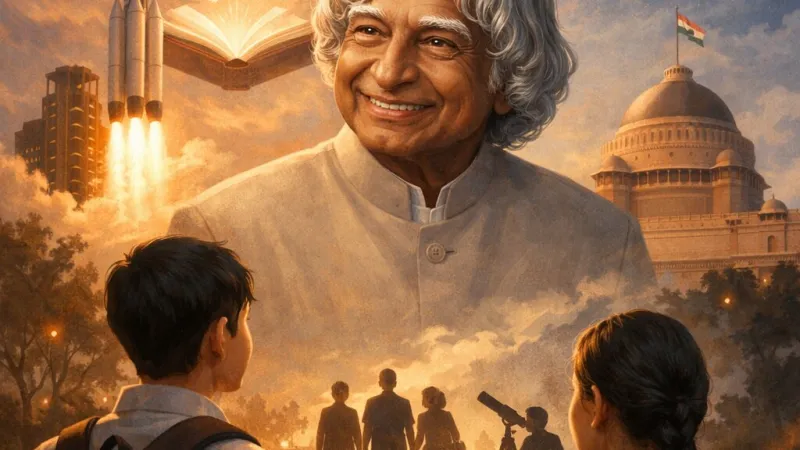
Dr. Avul Pakir Jainulabdeen Abdul Kalam stands as one of the most cherished and respected figures in contemporary Indian history. His life reflects a powerful blend of scientific prowess, selfless public service, and an unshakeable commitment to inspiring future generations. Remembered fondly as the ‘Missile Man of India’ and later revered as the ‘People’s President’, Dr. Kalam’s journey from a small coastal town in Tamil Nadu to Rashtrapati Bhavan is not just a tale of personal success but a testament to the transformative power of education, discipline, and vision. His story has become a beacon of hope for students and dreamers across India, proving that with hard work and determination, any goal, however distant, can be achieved. Kalam’s enduring legacy rests not only in his technological innovations, but also in his ability to ignite young minds, urging them to dream, think, and strive for their nation’s progress.
Early Life and Background
Dr. Kalam was born on 15th October 1931 in Rameswaram, a sacred town in Tamil Nadu, known more for its centuries-old temples and pilgrims than as the birthplace of a future President. Coming from a poor Tamil Muslim family, his father Jainulabdeen was an imam at the local mosque and a boat owner, while his mother Ashiamma was a devout housewife who instilled in him values of compassion and integrity. The cultural tapestry of Rameswaram, with its harmonious blend of religions and traditions, deeply influenced Kalam’s outlook on life.From a young age, Kalam displayed a keen curiosity and an eagerness to learn. Economic hardship, however, was a constant companion. He would often supplement his family’s income by distributing newspapers early in the morning before heading to school. Such experiences not only grounded him in reality but also cultivated a sense of responsibility and empathy towards others.
Kalam’s early education took place in Ramanathapuram Schwartz Higher Secondary School, where he excelled, particularly in mathematics and science. He would reminisce about spending long hours poring over his textbooks, sometimes by the light of a dim kerosene lamp due to frequent power cuts. Ever since his school days, he possessed a fascination with the mysteries of flight, once saying that watching birds soar above the waves first sparked his dream to touch the sky. Though he dreamed of becoming a fighter pilot and narrowly missed selection in the Indian Air Force, this setback ultimately led him to the path of engineering—a decision that would shape not only his destiny, but that of the nation as well.
Academic and Scientific Career
After completing his schooling, Kalam joined Saint Joseph’s College, Tiruchirappalli, and pursued physics, later enrolling at the prestigious Madras Institute of Technology (MIT) for a degree in aeronautical engineering. The rigorous academic environment at MIT exposed him to new ideas and cemented his resolve to contribute to India’s scientific advancement.Upon graduation, Dr. Kalam started his career at the Defence Research and Development Organisation (DRDO). In those early years, he worked on small hovercraft prototypes and learned the importance of teamwork and innovation, often under adverse conditions and limited resources. However, his true calling came when he moved to the Indian Space Research Organisation (ISRO) in 1969, where he spearheaded India's efforts to develop indigenous satellite launch vehicles. As Project Director of SLV-III, India’s first satellite launch vehicle, he played a crucial role in launching Rohini Satellite into orbit in 1980, a moment etched in Indian scientific history.
Kalam’s pivotal contribution to missile technology earned him the moniker ‘Missile Man’. He was instrumental in developing a range of strategic missiles, including Agni and Prithvi, which bolstered India’s defense capabilities. Later, as the Chief Scientific Adviser to the Prime Minister, he supervised India’s Pokhran-II nuclear tests in 1998—an event that established India’s technological self-reliance and strategic deterrence.
Not confined to defense technology alone, Dr. Kalam also ventured into medical innovation. Working alongside cardiologist Dr. Soma Raju, he helped develop the ‘Kalam-Raju Stent’, a low-cost coronary stent that made life-saving treatment more affordable for ordinary Indians—a reflection of his belief that technology should touch and transform every life.
Presidency: Leadership Beyond Science
In 2002, Dr. Kalam was elected as the 11th President of India, a rare instance of near-unanimous support from all political parties. His tenure marked a departure from the conventional image of the presidency. Exhibiting rare humility, he opened the gates of Rashtrapati Bhavan to students, scientists, and ordinary citizens, choosing not to hide behind protocol but to actively engage with the public, especially the youth. His simplicity, vegetarian lifestyle, and spiritual practices combined seamlessly with the duties of high office.He launched several initiatives focused on empowering students, promoting scientific inquiry, and supporting rural development. Programmes like PURA (Providing Urban Amenities in Rural Areas) reflected his vision for holistic, inclusive growth. On matters of religion and spirituality, Dr. Kalam was a true Indian—he could recite verses from the Quran and the Bhagavad Gita with equal fluency, earning respect from all quarters in the diverse mosaic of Indian society.
Throughout his five-year term, he remained a ‘teacher-president’, often taking time to interact directly with the youth, sharing his life story and encouraging scientific temper and ethical values.
Literary Contributions and Inspirational Thought
Beyond science and politics, Dr. Kalam was a prolific writer, weaving together personal stories, philosophical insights, and visionary ideas in his books. His autobiography, *Wings of Fire*, written in collaboration with Arun Tiwari, has inspired generations of students to pursue their dreams, despite obstacles. The stories of his childhood struggles and scientific breakthroughs resonate with countless young readers, who see in them the possibility of transcending their own limitations.Other works like *Ignited Minds*, *India 2020*, and *My Journey: Transforming Dreams into Actions* further display his unwavering optimism about India's future and his faith in the power of the youth. His common theme—“Dare to dream, and strive to realize that dream”—has been echoed in motivational sessions in schools and colleges all over the country.
Apart from prose, Dr. Kalam occasionally penned poetry, using verse to convey his passion for science as well as his hope for a peaceful world. His literary journey ensured that his thoughts permeated both academic syllabi and public consciousness, with many schools including excerpts from his books in their curriculum.
Values and Personality Traits
Dr. Kalam’s magnetic personality was built on pillars of simplicity, purity, and unwavering integrity. Despite attaining the highest offices in the nation, he never detached from his simple roots. He remained approachable—often spotted in modest attire, carrying only one suitcase, and expressing warm, genuine interest in others.Resilience was another defining trait. Kalam endured memorable failures; for instance, the early unsuccessful attempts at satellite launches or his initial rejection as an Air Force pilot. Rather than giving up, he used setbacks as stepping stones, stating, “If you fail, never give up because F.A.I.L. means ‘First Attempt In Learning.’” His respect for all religions made him an embodiment of India’s secular ethos. Even in the final days of his life, he was surrounded by books and students, always eager to mentor the next generation.
Legacy and Impact on Contemporary India
Dr. Kalam’s legacy is visible in modern India’s strides in science, education, and public ethics. Institutions such as the Dr. A.P.J. Abdul Kalam Technical University in Lucknow and numerous scholarships, awards, and government projects bear his name. His birthday, October 15th, is celebrated as “World Students’ Day”—a fitting tribute for a lifelong mentor.Even after his passing, Kalam’s vision continues to guide policy-makers, educators, and scientists. Stories of his interactions—like signing autographs for children after long lectures, or the advice he shared with toppers of board exams—are recounted in Indian classrooms to this day. For many, he represents the golden standard of public life: honest, patriotic, and compassionate.
Conclusion
From the narrow lanes of Rameswaram to the grandeur of Rashtrapati Bhavan, Dr. A.P.J. Abdul Kalam’s life exemplifies the limitless potential within every Indian. His journey as a scientist, leader, author, and teacher is a powerful reminder that true greatness lies in lifting others and serving the nation selflessly. In a world often overshadowed by cynicism, his life story rekindles faith in the values of perseverance, humility, and vision.As students, we have much to learn from Kalam—his tireless pursuit of knowledge, his resilience in the face of failure, and above all, his undying belief that every dream, no matter how humble its origin, has the power to touch the sky. “You have to dream before your dreams can come true,” he once said. Today, his life continues to ignite the minds and hearts of millions who aspire to be, like him, architects of a brighter tomorrow.
Rate:
Log in to rate the work.
Log in