10 Lines on Intolerance: Understanding Its Meaning and Effects
This work has been verified by our teacher: 8.04.2026 at 18:16
Type of homework: Essay Writing
Added: 7.04.2026 at 15:00
Summary:
Explore 10 lines on intolerance to understand its meaning, effects, and importance in Indian society for your homework and essay writing. 📚
10 Lines on Intolerance – A Deep Dive into Its Meaning and Impact
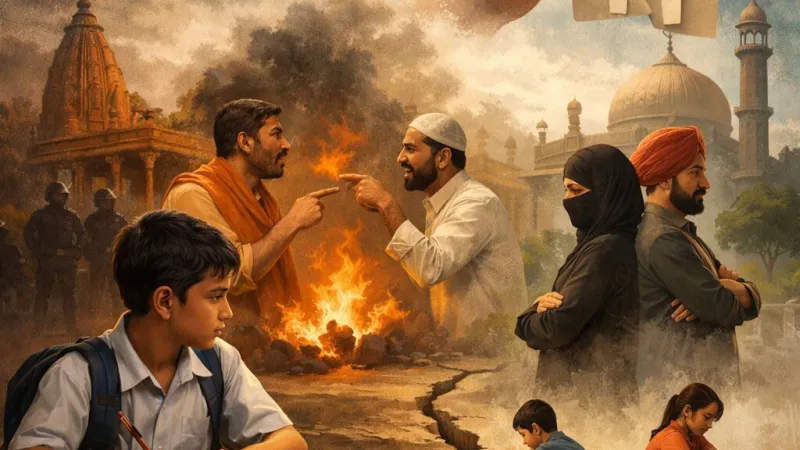
Intolerance, though often mentioned casually in daily conversations, carries a weight far beyond its dictionary definition. At its core, intolerance refers to the unwillingness to accept opinions, beliefs, or lifestyles different from one’s own. In the Indian context, this concept holds particular significance given our long-standing ethos of “unity in diversity.” India’s foundational values as a secular and democratic republic are deeply tied to the ideals of mutual respect and coexistence. Yet, the shadows of intolerance—manifesting in various shapes and forms—have continued to challenge the very fabric of our society. As we navigate the complexities of a modern and pluralistic nation, addressing and overcoming intolerance is not just a necessity, but an urgent responsibility.
---
I. Conceptualising Intolerance
To fully grasp the implications of intolerance, it is vital to explore it from psychological as well as societal perspectives. Intolerance often stems from a fear of the unfamiliar, leading to prejudices, stereotypes, and even hostility against those perceived as “other.” Unlike disagreements that can end in peaceful dialogue, intolerance breeds antagonism by refusing to even entertain different viewpoints or practices.In India, intolerance can take on several forms. Religious intolerance has occasionally marred the country, even though our Constitution allows freedom of religious practice. Caste-based intolerance remains a constant concern, reflected in discriminatory attitudes towards Dalits and other historically marginalised communities. Ethnic and linguistic intolerance surface in regional tensions, such as the debates over language policies or regional identity. Let us not forget gender intolerance, which manifests in countless restrictions and violence against women and the LGBTQIA+ community. Lastly, political intolerance curbs democratic processes, seen when opposing opinions invite personal attacks or even violence, undermining the vibrancy of Indian democracy.
---
II. Historical Roots of Intolerance in India
Tracing intolerance through Indian history reveals its persistent, evolving presence. Even in ancient times, rigid caste systems and social hierarchies led to exclusion and discrimination, as depicted in the stories of social reformers like Sant Ravidas and Narayana Guru, who challenged these divisions through their teachings.The arrival of foreign powers left its mark as well. For example, religious tensions were sometimes exacerbated during Mughal rule, though figures like Akbar also championed syncretism. The British, through their infamous “divide and rule” policy, further deepened communal rifts, as seen in the tragic partition of Bengal and fomenting of communal politics.
Undoubtedly, the horror of Partition in 1947 stands out as one of the darkest chapters in our history—a stark reminder of the devastation intolerance can wreak. The mass violence and displacement accompanying this event continue to echo through generations. Even after Independence, India has grappling with communal riots (such as anti-Sikh violence in 1984, Gujarat in 2002), caste-based atrocities, and regional agitations—each a painful testament to the enduring struggles against intolerance.
---
III. Causes of Intolerance
Understanding intolerance requires looking at its root causes. On the societal and cultural level, ignorance and lack of exposure to other communities often breed suspicion and fear. Deep-seated social conditioning, whether in the form of rigid caste norms or patriarchal values, further entrench intolerance.Political and economic factors play a huge role as well. Politicians at times manipulate religious, caste, or linguistic identities to secure votes, stoking divisions for electoral gains. Economic inequalities add fuel to the fire, as competition for limited resources can escalate into inter-group rivalry and resentment.
The rise in digital technology and media has accelerated the spread of intolerance. Social media platforms, while powerful tools for connection, can also be breeding grounds for misinformation and hate. Fake news frequently triggers real-world violence, as evidenced by mob lynchings over rumours circulated on WhatsApp.
Psychologically, intolerance often emerges from personal insecurities—fear of losing cultural or social identity, or concerns about status in a rapidly changing world. These anxieties can lead people to scapegoat minorities, blaming them for economic or societal issues, instead of seeking inclusive solutions.
---
IV. Consequences of Intolerance on Society
Unchecked intolerance tears at the threads holding society together. Social harmony suffers—communities become fragmented, and trust is replaced with suspicion. This erosion is visible when mixed localities segregate or when friendships are broken by divisive rhetoric.Violence is an extreme, but far too frequent, consequence. Be it communal riots, caste-based violence, or attacks on individuals from marginal groups, the physical and emotional toll is immense. Real-life stories abound, such as the Bhima Koregaon violence or village-level ostracisation of Dalit families, illustrating how intolerance can lead to traumas lasting generations.
National progress is stymied when intolerance diverts energies away from development towards managing conflict. Investor confidence and global reputation also take a hit. A society perceived as intolerant faces difficulties in forging international partnerships and attracting tourism or investment.
On an individual level, victims of intolerance endure alienation, trauma, and mental health issues. They may feel unsafe within their own country, undermining the sense of belonging central to India's idea of citizenship.
---
V. Role of Institutions and Society in Combating Intolerance
Yet, all hope is not lost. India’s Constitution offers a robust framework to combat intolerance. Promising freedom of speech, religion, and equality before the law, the Constitution echoes the dreams of our freedom fighters and social reformers like Dr. B.R. Ambedkar and Jawaharlal Nehru, who envisioned an inclusive India. Laws such as the Prevention of Atrocities Act and anti-communal violence bills exist to safeguard vulnerable communities.Government initiatives like “Ek Bharat, Shreshtha Bharat” and the National Integration Council foster unity. Strict enforcement against hate crimes and prompt action against those spreading hate are essential steps.
Education also plays a transformative role. Incorporating lessons on empathy, critical thinking, and secular values from early years can uproot biases before they take deep root. Several schools conduct interfaith assemblies and cultural exchange programmes to foster mutual respect.
The media, too, wields tremendous influence. Responsible journalism that avoids sensationalism and fact-checks content can help contain the fires of intolerance, rather than fan them.
Civil society organisations, from the Peace India Movement to youth collectives, have championed the cause of inclusivity. It is equally important for individuals to practice tolerance in daily life—rejecting false narratives, celebrating festivals across communities, and standing up against discrimination when they see it.
---
VI. Practical Measures to Promote Tolerance
Concrete steps are needed to cultivate a spirit of tolerance. Dialogue and understanding must be encouraged through community meetings, collaborative public events, and joint celebrations of diverse festivals, such as Ganesh Chaturthi, Christmas, Eid, and Baisakhi.Inclusive policies such as reservations for marginalised communities attempt to rectify historical injustices and promote equity.
Technology, when used wisely—such as in positive storytelling campaigns or online education platforms—can counter the spread of malice and build bridges of understanding.
Leaders in all walks of life—politics, cinema, sports, or education—bear a special responsibility. When a leader like Mahatma Gandhi advocated for communal harmony and non-violence, his words inspired millions, both in his time and today.
Finally, media literacy needs to be a key part of education. Teaching students and citizens to critically assess the information they encounter online will blunt the effectiveness of hate-mongering propaganda.
---
Conclusion
To sum up, intolerance in India is a multi-layered problem, rooted in history and perpetuated by social, economic, and psychological factors. Its consequences threaten not just individuals, but the unity and progress of the entire nation. However, by drawing upon constitutional safeguards, embracing educational reforms, holding our leaders and media accountable, and by each individual taking small but meaningful steps, we can fight against intolerance. Tolerance is not weakness; it is the strength that allows a nation to stand tall amidst its diversity. If we aspire towards the India dreamt of in our Constitution’s Preamble—justice, liberty, equality, and fraternity—then nurturing tolerance is not an option, but an obligation. Let us therefore pledge, as citizens and as students, to reject all forms of intolerance and build an India where every identity is celebrated, and every voice is respected.---
Additional Tips for Students Writing on Intolerance
- Refer to examples from contemporary news, such as the celebration of Eid by Hindu families and vice versa, as instances of harmony. - Always mention constitutional values like secularism and fraternity, which are stated in the Preamble. - Share positive stories: for instance, the way citizens united during the Kerala floods, transcending all religious and caste boundaries. - Adopt a tone of empathy and perspective-taking rather than blame, highlighting solutions over problems. - Structure your essay clearly with strong introductions, elaborated arguments, and thoughtful conclusions.By deeply engaging with the subject of intolerance, you not only enrich your essay-writing skill but also contribute, in a small way, to building a more just and harmonious Indian society.
Rate:
Log in to rate the work.
Log in