Short Essay on Family: Meaning and Importance for Indian Students
This work has been verified by our teacher: 11.04.2026 at 18:10
Type of homework: Essay Writing
Added: 9.04.2026 at 6:01
Summary:
Explore the meaning and importance of family in India through this short essay, highlighting values, traditions, and the unique roles of Indian families.
10 Lines on Family: An Essay for Indian Students
Family is a word that holds deep meaning in every culture, and in India, it sits at the core of individual identity and societal harmony. Though the idea of writing '10 lines on family' seems simple, in truth, family cannot be captured in only ten statements or sentences. It is a world in itself, shaped by love, tradition, struggle, and shared dreams. In this essay, I will explore family from an Indian perspective, discussing its varied forms, the values it nurtures, and the indispensable role it plays in our lives and in shaping our society.---
: Understanding Family in the Indian Context
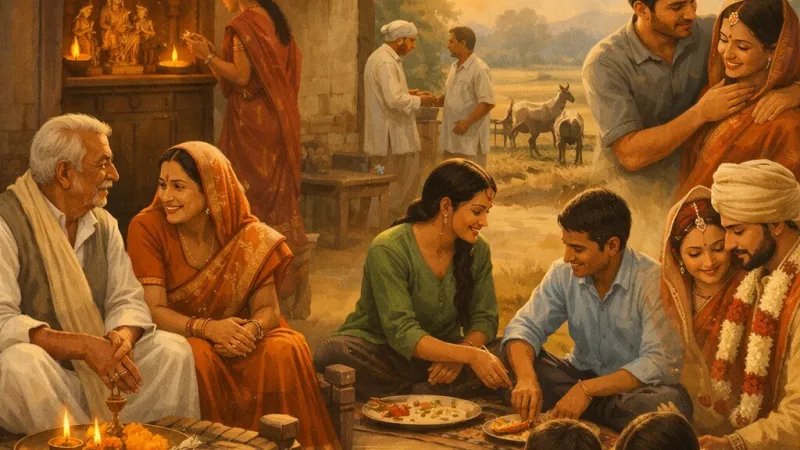
A family, in its essence, is more than just people related by blood. Here in India, it is often described as a circle of support, trust, and care that includes not only parents but also siblings, grandparents, uncles, aunts, and cousins. Whether it is a joint family bustling with many voices across generations, or a small nuclear unit facing the world together, every family is a unique blend of personalities, relationships, and traditions.
In our country, the family is not just a social unit but the first school where every individual learns the values and customs that define Indian life. Educational thinkers like Dr. S. Radhakrishnan have emphasised the family’s role in transmitting our rich heritage and moral values from one generation to the next. Whether one is born in the crowded gullies of Banaras or the wide lanes of Bengaluru, one's family forms the very roots of existence.
---
Types of Indian Families: Diversity in Unity
The Joint Family: Tradition and Togetherness
The joint family system has been one of the cornerstones of Indian society for centuries. Living together, often under one roof, are grandparents, parents, children, sometimes uncles, aunts, and cousins. This blend of generations brings a sense of community, where responsibilities are shared and support is always close at hand. For example, in stories like Premchand’s *Godaan*, the joint family setup forms the backdrop for the characters' triumphs and tribulations.There are unique joys in such households—the collective laughter during festivals like Diwali or Pongal, the passing down of rituals and recipes, and the security of always having an elder to seek advice from. At the same time, compromises and adjustments are inevitable when so many personalities live together. Disagreements arise, but love and mutual respect help resolve them.
The Nuclear Family: Independence and Modernity
With urbanisation and changing aspirations, the nuclear family—comprising only parents and their children—has become common, particularly in cities like Mumbai or Delhi. It allows for greater autonomy and privacy. Decisions can be made quickly, and each member may pursue personal goals with fewer constraints. For instance, many young professionals find it easier to focus on their careers in a nuclear setup.However, the challenges also stand out. When difficulties arise, such as illness or financial stress, immediate support from relatives is not instantly available. Children may also miss out on growing up with cousins or grandparents by their side. Yet, the nuclear family teaches self-reliance and adaptability, preparing its members for life’s various challenges.
Changing Trends and Single-Parent Families
India today is witnessing a variety of new family structures—single-parent families, childless couples, and families where the elderly live independently. These changes reflect shifting social attitudes and the influence of modern lifestyles. Nonetheless, the emotional bond of family remains vital, regardless of its shape or size.---
The Pillars of Family Life: Roles and Responsibilities
Parents: The First Teachers
Parents occupy a revered position in Indian homes. As the old Sanskrit saying goes, "Mata Pita Guru Daivam"—Mother, Father, Teacher, God. Parents not only provide for the family's needs but also teach values like respect, honesty, and empathy. Through their words and actions, they show what it means to fulfil one's duties and to face hardships with dignity. The endless sacrifices made by parents, often without any expectation in return, are at the heart of countless stories in Indian literature, such as those told by Rabindranath Tagore.Elders: Keepers of Wisdom
Grandparents and older relatives are the living libraries of the family. With stories from their own lives, they connect the present generation to the past, making culture and tradition come alive. In many Indian families, grandparents play a major role in raising children, especially when both parents are at work. Their gentle guidance offers emotional security and moral strength.Siblings: Companionship and Support
Bonds among siblings are like those between best friends, sometimes rivals, but always allies when it matters. In festivals like Raksha Bandhan, where a sister ties a rakhi on her brother’s wrist, we see the importance given to sibling bonds. These relationships foster cooperation, sharing, and healthy competition.Children: Learners and Future Bearers
Children learn from observing their elders. As they grow, they gradually take up responsibilities and contribute to the family's happiness. Obedience and respect for elders are values taught from early childhood in Indian homes, forming the foundation of strong character.---
Lessons and Values from Family
Building Blocks of Character
Families are the first places where children learn the difference between right and wrong. Values like honesty, responsibility, and kindness are taught not just through lectures but through daily actions—helping with household chores, showing respect for guests, and resolving conflicts peacefully. The wisdom of proverbs like "Unity is strength" or Kabir’s couplets echo in Indian homes, reinforcing the importance of togetherness.Emotional Anchors
During difficult times—be it a poor exam result, illness, or financial trouble—family members provide comfort and support. In my own life, when I could not get selected for a school team, it was my family who motivated me to try again. Celebrating successes together multiplies joy, while sharing burdens halves the pain.Discipline and Cooperation
From early morning routines to religious rituals, discipline and order are trained within the family space. Joint decisions during festivals, weddings, or even simple Sunday lunches teach us the value of cooperation. In stories like Sudha Murthy’s *Wise and Otherwise*, we see how a family’s encouragement can shape a person’s path.---
Family’s Place in Society
Foundation of Society
Strong families produce responsible citizens. It is said in the Upanishads: “Vasudhaiva Kutumbakam”—the whole world is one family. If every household respects and loves its members, it radiates peace and integrity into the larger society.Festivals and Traditions
India is a land of festivals, and most celebrations—Holi, Eid, Christmas, Onam—revolve around family gatherings. These occasions bind generations, and every ritual performed together becomes a memory that shapes identity.Facing Challenges Together
Families face many storms—quarrels, misunderstanding, money problems. But the ability to forgive, compromise, and support each other makes the family unbreakable. Even during the lockdowns of the COVID-19 pandemic, families across the nation came together, caring for elders and helping neighbours—proving that resilience starts at home.---
Conclusion: Cherishing the Gift of Family
To summarise, the family is both a shelter and a launchpad. It shapes our memories, character, and dreams. No matter how the world outside changes, the warmth and strength received from family remain unmatchable. A united and caring family is not just a source of personal happiness but also the secret to a harmonious society and nation.Every Indian child grows up surrounded by stories and songs that praise family bonds. As students, let us always appreciate the love, traditions, and sacrifices that make our families special. In the words of Sant Tulsidas, “Parivarik prem se badhkar kuch nahi”—there is nothing greater than the love of family. Let us value, respect, and uphold the unity of our families, for in doing so, we nurture not just ourselves but all of India.
---
*This essay embodies the Indian ethos where family is the root from which every flower of society blooms. These '10 lines on family', when explored deeply, reveal a universe of love, values, and enduring connections that form the heart of Indian life.*
Rate:
Log in to rate the work.
Log in