Key Insights on Guru Nanak Jayanti: History, Celebrations & Significance
This work has been verified by our teacher: 22.04.2026 at 16:28
Type of homework: Essay Writing
Added: 20.04.2026 at 16:09
Summary:
Discover key insights on Guru Nanak Jayanti, its history, celebrations, and significance to understand the spiritual teachings and cultural impact of this important Sikh festival.
Guru Nanak Jayanti: An In-Depth Reflection on Its Significance, Celebration, and Guiding Philosophy
India is a land of vibrant traditions, where every festival is infused with history, spirituality, and a unique sense of belonging. Among these, Guru Nanak Jayanti, also known as Gurpurab, stands out not just as a major Sikh festival, but as a day when people of all backgrounds come together to remember the ideals of harmony, service, and truth. The birth anniversary of Guru Nanak Dev Ji, the founder of Sikhism, carries deep meaning and continues to inspire millions even centuries after his birth. This essay deeply explores the history of Guru Nanak Dev Ji, the importance of Guru Nanak Jayanti, the varied ways it is celebrated, and its lasting relevance in contemporary society.---
Historical Roots of Guru Nanak Dev Ji
To truly appreciate Guru Nanak Jayanti, one must first understand the extraordinary life of Guru Nanak Dev Ji himself. Born on the 15th of April, 1469, in Rai-Bhoi-di Talwandi—now known as Nankana Sahib in Pakistan—Guru Nanak belonged to a simple Hindu family. His father, Mehta Kalu (Kalyan Chand Das), worked as an official in the local revenue administration, while his mother, Mata Tripta, was known for her warmth and humility. Guru Nanak’s elder sister, Bebe Nanki, is often remembered for recognising his spiritual light before anyone else did.From his childhood, Nanak exhibited a questioning mind and a deep sense of spirituality. Stories from the Janamsakhis recount that he preferred quiet meditation over play, often astonishing elders with profound questions about God and the nature of life. Even in his teenage years, when employed under Daulat Khan Lodi, a local noble, Guru Nanak was known for his honesty and dedication—yet he remained indifferent to material riches. Anecdotes, such as his miraculous disappearance into the river Bain and subsequent declaration of “Na koi Hindu, na Musalman,” (there is no Hindu, no Muslim) became turning points in his mission. It was after this enlightenment that Guru Nanak embarked on extensive Udasis (travels), spreading the message of unity and compassion across the subcontinent and beyond.
Guru Nanak’s teachings, advocating for the oneness of God and equality among all people, set the foundational principles of Sikhism. With poetry and hymns later enshrined in the Guru Granth Sahib, he transformed the religious landscape of medieval India that was often plagued by superstition, orthodoxy, and social divisions.
---
Spiritual and Philosophical Essence of Guru Nanak Jayanti
The essence of Guru Nanak Jayanti lies not only in celebrating a birth anniversary but in rekindling the torch of spiritual wisdom that Guru Nanak lit hundreds of years ago. Each year, this festival offers a moment to collectively revisit the ideals that he stood for—values that transcend regional and religious boundaries.Guru Nanak’s doctrine revolved around Ek Onkar, the concept that there is only one, all-pervading God. He vocally opposed the rigidities of caste, ritualism, and the narrow discriminations prevailing in Indian society. Instead, he emphasised three golden principles: Naam Japna (meditating on God's name), Kirat Karni (earning an honest living), and Vand Chakna (sharing with and helping others). These tenets are not restricted to religious practice but serve as universal guides for ethical living.
Moreover, Guru Nanak often spoke about the necessity of a Guru in one’s spiritual life to dispel ignorance and illuminate the path. This belief endures in Sikhism, where the Guru Granth Sahib is considered the perpetual Guru after the lineage of ten human Gurus ended. Many of the hymns composed by Guru Nanak himself form the philosophical core of this holy scripture, revered not only in Punjab’s Gurudwaras but in Sikh communities across the globe.
---
The Timing and Symbolism of Celebration
Unlike fixed-date festivals, Guru Nanak Jayanti follows the lunar calendar and usually falls on the full moon day (Purnima) of the Kartik month, generally between October and November. The exact date can slightly vary, owing to the lunar calculations inherent in the Nanakshahi calendar. The luminous full moon has special significance in Sikh and broader Indian culture, symbolising purity, spiritual awakening, and completeness—qualities that mirror Guru Nanak’s teachings.Though the festival’s core remains constant, the manner and timing of celebrations occasionally differ due to regional customs or diaspora preferences. In Punjab and Haryana, where Sikhism has deep roots, the festival is marked by grandeur, but in other Indian states and even abroad—from London to Vancouver—devotees infuse their own cultural flavours, reaffirming the universality of Guru Nanak’s message.
---
Rituals, Traditions, and Festive Revelry
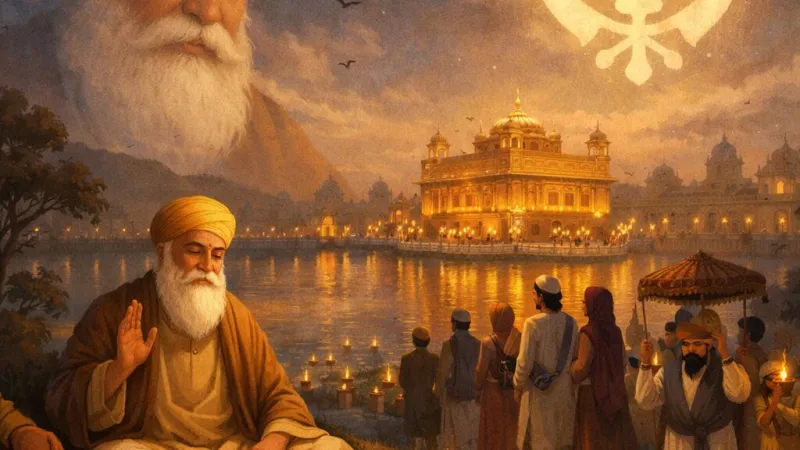
Guru Nanak Jayanti unfolds as a vibrant spectacle of devotion, music, and community bonding. The day usually begins with Prabhat Pheris—serene, early morning processions through neighborhoods, where devotees sing shabads (hymns) from Gurbani. These pheris create an atmosphere of peace and collective spirituality, recalling the tradition of singing and contemplation that Guru Nanak himself cherished during his days of travel.A central aspect of the celebration is visiting the Gurudwara, especially significant sites like the Golden Temple (Sri Harmandir Sahib) in Amritsar, where the energy of faith is palpable. One of the key rituals is the Akhand Path—an uninterrupted reading of the Guru Granth Sahib lasting 48 hours. This act, performed by sevadars (volunteers), is more than a ritual; it is a meditative engagement with the Guru’s word, open to participation from anyone, regardless of creed.
A festival highlight is the langar, or community kitchen—a tradition started by Guru Nanak himself. Here, people from all walks of life sit together as equals and share a simple, nutritious meal. Whether millionaire or mendicant, everyone is welcome. Such an arrangement, still meticulously practised at every Gurudwara, symbolises not only charity but the most profound assertion of equality and fraternity.
Festivities also include cultural performances, recitals of gurbani kirtan, and spectacular displays of Gatka—a Sikh martial art that fuses physical skill with spiritual discipline. Homes and Gurudwaras come alive with gleaming lamps and colourful decorations, embodying the joy and gratitude felt by the devotees.
---
Social and Cultural Impact
The impact of Guru Nanak Jayanti radiates well beyond religious observances. It reinforces Sikh values—of courage, humility, and selfless service—binding global Sikh communities in solidarity. The festival often witnesses charity initiatives, such as organising blood donation drives, distributing essentials to the poor, and offering free medical camps. This ethos of Seva (service) not only benefits the needy but fosters a culture of empathy and cooperation among all Indians.In schools and colleges throughout the country, special assemblies, storytelling sessions, and interfaith dialogues are organised to familiarise students with Guru Nanak’s philosophy. His timeless words like “Vich duniya sev kamaiye, ta dargeh baisan paaiye” (In this world, earn by serving, and you shall be honoured in God’s court), find resonance in textbooks and moral science lessons. The inclusion of such themes in curricula helps in nurturing tolerant, ethical citizens—an aspiration shared by both parents and teachers in India’s diverse educational system.
---
The Timeless Teachings of Guru Nanak in Contemporary Society
Guru Nanak Dev Ji’s life and teachings are not relics of a bygone era. Even today, they serve as a moral compass, especially in a world beset with divisiveness, materialism, and prejudice. His call for universal brotherhood echoes in efforts to bridge communal divides, reminding us that beneath different labels, we are all children of the same One Light.His guidance to lead an honest, righteous life remains as relevant in the modern workspace as it was in the medieval bazaar. Values like truthfulness, humility, and self-discipline are ideals that every society needs, and which every teacher strives to impart to their students. Whenever we confront discrimination, be it caste-based, religious, or economic, Guru Nanak’s teachings provide the intellectual and emotional foundation to stand up for justice—echoing the Indian Constitutional values of equality and fraternity.
Above all, Guru Nanak’s recognition of the Guru—of the necessity of a spiritual guide—can be interpreted today as seeking mentorship, learning, and wisdom amidst the noise and confusion of contemporary life.
---
Conclusion
Guru Nanak Jayanti is far more than just a yearly festival. It is a living tradition, a collective thanksgiving, and a reaffirmation of values that bind not just Sikhs but all of India together. Its rituals—steeped in history and meaning—encourage service, reflection, and harmony. Guru Nanak’s teachings continue to shine, offering answers to modern challenges and inspiring countless people to pursue truth, equality, and compassion.As we celebrate Guru Nanak Jayanti, let us remember not only the milestones of his life but also the deeper messages he left behind. Festivals like these remind us of our shared humanity and collective responsibilities. It is the duty of every generation to nurture and propagate these ideals—so that their light, much like the full moon on Kartik Purnima, continues to brighten lives across the world.
Rate:
Log in to rate the work.
Log in