Ambedkar Jayanti: Celebrating the Legacy of India's Social Reformer
This work has been verified by our teacher: 24.04.2026 at 18:44
Type of homework: Essay Writing
Added: 21.04.2026 at 15:50
Summary:
Discover Ambedkar Jayanti’s legacy and learn how Dr. Ambedkar’s social reform efforts shaped India’s fight for equality and justice for all. 📚
Ambedkar Jayanti: Remembering the Champion of Social Justice
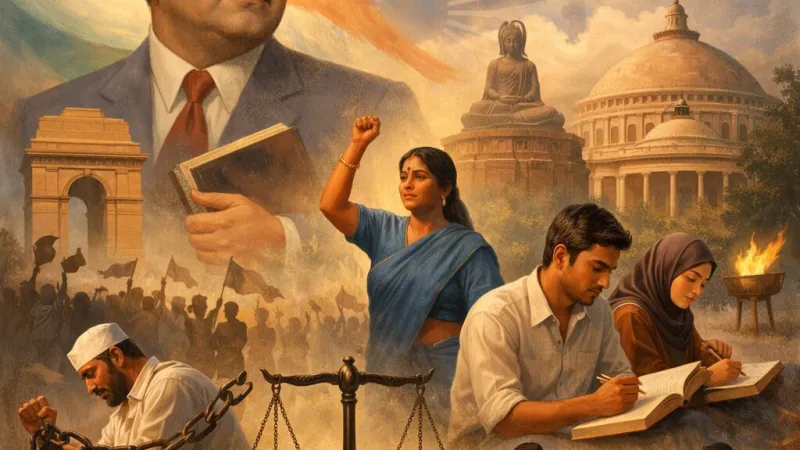
Ambedkar Jayanti is not just a government holiday or an occasion for garlanded statues; it is a vibrant celebration of resilience, social reform, and the enduring dream of equality in India. Every year on the 14th of April, the nation pauses to honour Dr. Bhimrao Ramji Ambedkar, popularly known as Babasaheb, whose life’s journey from oppression to becoming the guiding light behind our Constitution continues to inspire millions. In a country grappling with deep-seated issues of caste, social inequality, and injustice, observing Ambedkar Jayanti serves as a powerful reminder of an ongoing struggle for dignity, rights, and justice for all.Dr. B.R. Ambedkar: Journey from Margins to Mainstream
Early Life and Social Background
Born on 14th April 1891 in the cantonment town of Mhow (present-day Dr Ambedkar Nagar) in Madhya Pradesh, Babasaheb came from the Mahar community, which at the time was considered “untouchable” in the rigid caste structure of India. The shadows of untouchability followed him right from childhood—segregated in school, denied of water by teachers, and forced to sit away from upper-caste children even as he longed for equal treatment. These bitter experiences, which he recounts in his autobiographical account "Waiting for a Visa," fuelled within him a burning desire to fight discrimination.Educational Journey: Triumph Over Adversity
Despite the harsh obstacles, Ambedkar’s thirst for knowledge was unquenchable. Defying social norms and with the support of some progressive patrons like Maharaja Sayajirao Gaekwad of Baroda, he pursued higher education at the University of Bombay, then soared to international academic heights by studying at Columbia University in New York and the London School of Economics. He earned doctorates in economics and law—an extraordinary accomplishment for anyone, but particularly for someone from a background repeatedly forced to justify their very right to learn.Professional Contributions and Activism
Ambedkar was not merely an academic; he was a relentless advocate for the rights of the oppressed. As a lawyer, he fought landmark cases on social justice. As a member of the Viceroy’s Executive Council and later as independent India’s first Law Minister, he was pivotal in shaping policies that protected the rights of the socially and economically backward. His leadership of mass movements like the Mahad Satyagraha (for the right to access water tanks) and his campaigns against the practice of untouchability became legendary, drawing lakhs of followers. He was also an early champion of women’s rights, advocating for gender equality in legal reforms.The Significance of Ambedkar Jayanti
Tribute to a Visionary
Ambedkar Jayanti is more than a birthday celebration; it is a collective homage to someone who dared to imagine a new social order. Recognising Ambedkar as the chief architect of the Indian Constitution, the day is a salute to his vision of India as a land governed by justice, equality, and fraternity. When the first copy of the Constitution was handed over, Ambedkar famously warned against the “grammar of anarchy” and called for the transition from “one-person, one-vote” to “one-person, one-value,” underscoring how democracy must necessarily be social as well as political.A Celebration of Constitutional Values
The entire spirit of Ambedkar Jayanti is anchored in the core values enshrined in our Constitution: justice, liberty, equality, and fraternity. Article 17 abolishing untouchability; reservation policies enabling participation of Scheduled Castes, Scheduled Tribes, and Other Backward Classes; and constitutional safeguards for minorities all bear his indelible stamp. As Indian society continues evolving, these provisions remain lifelines for millions, a fact that is underscored every Ambedkar Jayanti through wide discussions and reflections on our collective progress.Inspiration for Social Change
Ambedkar Jayanti rekindles hope for those still battling social discrimination. It motivates activists, thinkers, and ordinary citizens to persist in their efforts for a more inclusive and egalitarian society. In contemporary India, where caste-based crimes and inequalities still make headlines, this annual commemoration is a crucial rallying point for protest and progress. It also emphasises Ambedkar’s mantra: “Educate, Agitate, Organise.”Observing Ambedkar Jayanti: Celebrations Across India
Official and Governmental Events
Since 2015, Ambedkar Jayanti has been officially marked as a public holiday in many Indian States. The President, Prime Minister, and various dignitaries pay floral tributes at Parliament House, the statue of Ambedkar at Dr Ambedkar International Centre, and at Chaitya Bhumi in Mumbai, where Babasaheb was cremated. Various state governments also hold special recognitions and community events in honour of his legacy.Community and Cultural Programmes
Across the nation, particularly in Maharashtra, Uttar Pradesh, and Tamil Nadu, spectacular processions and public rallies fill the streets. Statues of Babasaheb are washed, decorated, and garlanded, and devotees from all walks of life participate in processions, singing songs and slogans hailing his work. Cultural programmes—ranging from folk music to street plays based on episodes from Ambedkar’s life—are staged to reinforce his message.Public meetings, symposiums, and seminars are conducted wherein scholars and social workers discuss Ambedkar’s thoughts on caste, democracy, and social reform. The Dalit Panther movement and other grassroots organisations use the occasion to highlight current issues affecting marginalised groups.
Academic and Educational Initiatives
In schools and colleges all over India, Ambedkar Jayanti is a red-letter day. Students participate in essay writing, debates, quizzes, and cultural events that explore themes from Ambedkar’s life and philosophy. Educational institutions release research articles, organise book fairs, and screen documentaries such as “Samvidhan: The Making of the Constitution,” making students aware of the hard-won freedoms they now enjoy.Special Observance by Minority and Buddhist Communities
Following Ambedkar’s own mass conversion to Buddhism at Nagpur in 1956 in protest against caste oppression, Ambedkar Jayanti has also become an important religious and cultural occasion for the neo-Buddhist and minority communities in India. On this day, Buddhist chants, special prayers, and ceremonies are observed across Maharashtra, Uttar Pradesh, and other regions with a substantial Buddhist population. The event is not just about ritual; it is about reinforcing a shared resolve to reject oppression and reclaim dignity.Global Recognition
Outside India too, the resonance of Ambedkar Jayanti is growing. Indian diaspora communities celebrate the day in the UK, US, Canada, and Sri Lanka, among other countries. These observances often include panel discussions, documentary screenings, and cultural programmes, highlighting the global relevance of Ambedkar’s message for human rights and social justice.Ambedkar’s Legacy: Enduring and Evolving
Constitutional and Social Impact
Doctor Ambedkar’s real legacy lies not in statues or slogans, but in the living document of the Constitution and the spirit of social reform it inspires. Articles on fundamental rights, abolition of untouchability, safeguards for minorities, and affirmative action policies continue to shape modern India’s fight for equality.Inspiration for Movements and Policy
Many grassroots organisations and campaigns—like the Dalit Shoshan Mukti Manch, the Bahujan Samaj movement, and countless women’s and labour rights movements—draw direct inspiration from Ambedkar’s principles. The slogan “Jai Bhim” itself has grown into a battle cry against all forms of social injustice.The Role of Education
Ambedkar firmly believed in the transformative power of education. Numerous scholarships, universities, and research foundations bear his name, serving lakhs of students from less privileged sections—like Dr. Ambedkar National Merit Scholarship Scheme—thus making higher education accessible to those who might otherwise have remained unlettered.Challenges and the Road Ahead
Yet, the journey is far from over. According to recent reports, crimes against Dalits remain worryingly high, and social prejudices still fester in many parts of the country. In this context, Ambedkar Jayanti isn’t a mere commemoration, but a clarion call for students, activists, and policymakers to rededicate themselves to fighting discrimination—be it on the basis of caste, gender, or religion.Conclusion
In conclusion, Ambedkar Jayanti is not merely a ceremonial day, but a living force pointing us towards a more just and humane society. It is a day to remember Babasaheb’s remarkable journey from a child facing prejudice to the “Father of the Indian Constitution”—a journey marked by knowledge, struggle, and unyielding courage. From grand official events to the creative expressions of street plays, and from academic debates to personal stories of hope, Ambedkar Jayanti is woven into the moral fabric of India.For us students, it's a day to pledge ourselves anew to the cause of equality and social justice. It is a reminder that education is the first step towards emancipation—a message that is more relevant now than ever before. Let us not allow Ambedkar Jayanti to become a mere annual ritual, but use it as a springboard for real change. Only when we live Ambedkar’s values in our schools, homes, and communities, can we hope to build India into the egalitarian society he envisioned.
Rate:
Log in to rate the work.
Log in