Effective Self Introduction Tips for Experienced Teacher Interviews
This work has been verified by our teacher: 12.04.2026 at 10:41
Type of homework: Letter
Added: 10.04.2026 at 14:33
Summary:
Discover effective self introduction tips for experienced teacher interviews to confidently showcase your skills and secure your teaching role in India.
Self Introduction for Interview for Experienced Teacher
: The Purpose of Self Introduction in a Teacher’s InterviewTeachers play a foundational role in shaping not just academics but also the very outlook that students carry forward in life. In Indian schools, the interview for an experienced teaching post is not merely a formal checkpoint but a platform where a teacher can communicate their unique identity, professional strengths, and teaching philosophy. The value of a well-prepared self introduction in this setting cannot be overstated – it sets the tone for the entire interaction, helps build trust with the interview panel (often comprising the principal, senior teachers, and sometimes a school management representative), and is crucial in demonstrating suitability for the job.
Crafting a self introduction for this scenario demands a careful synthesis of professionalism and personal warmth. It is important to avoid sounding rehearsed, instead aiming to sound genuine, approachable, and confident. Indian educational traditions place value on humility, clarity, and respect, so these should subtly inform the style of introduction as well. At the same time, it is essential to foreground one's credentials and unique contributions so that the panel can clearly recognise the potential the candidate brings to the institution.
---
Personal Background and Educational Qualifications
My name is Anjali Sharma, and I come from the historical city of Jaipur, Rajasthan. Home has always been where education received immense respect, and my family, rooted in cultural values, inspired my early inclination towards teaching. My late grandfather was a headmaster, whose stories of his students’ success would often light up our evenings, which sowed the seeds of my passion for this noble profession.Academically, I completed my M.A. in English Literature from the University of Rajasthan, followed by a Bachelor of Education (B.Ed.) from the same institution, graduating with honours. Recognising the importance of continuous professional improvement, I also successfully cleared the CBSE Central Teacher Eligibility Test (CTET) and completed a Diploma in Educational Technology from IGNOU. These qualifications not only broadened my pedagogical approach but also prepared me to cater to India’s diverse learning environments – urban, semi-urban, and rural.
---
Professional Experience Overview
Throughout my professional journey of twelve years, I have served in both CBSE and State Board affiliated schools. My initial years were spent teaching at Jai Shree Public School, Ajmer, which gave me exposure to the unique challenges of teaching in a semi-urban context. Later, I worked at Vidya Sagar International School, Jaipur, a reputed CBSE school, where I served as Senior English Faculty.My teaching experience covers classes VI to XII, allowing me to understand the developmental transitions students face as they move from middle school to senior secondary. While English has been my primary subject, I have also had the opportunity to teach Social Science to classes VI–VIII and coach students for elocution and debate competitions. Apart from classroom teaching, I took on the roles of class co-ordinator and literary activity in-charge, which involved curriculum planning, mentoring junior staff, and overseeing co-curricular initiatives.
I have been actively engaged in a number of teacher training workshops conducted by CBSE and school-level orientation programmes, which have helped keep my methods aligned with the latest educational trends and policies, such as the NEP 2020.
---
Key Strengths and Professional Qualities
One of my core strengths lies in effective classroom management. Having handled classes of over 45 students, my approach involves a blend of fairness, empathy, and authority. I believe that discipline is best nurtured through mutual respect and consistent routines. I have implemented strategies such as rotational group leadership and peer mentoring, inspired partly by Rabindranath Tagore's vision of cooperative learning as seen at Santiniketan.Communication, both with students and stakeholders, is another area where I have invested significant effort. Be it individually knowing students’ backgrounds to better understand their academic needs, or maintaining regular, constructive communication with parents during PTMs, I have always sought to foster open and positive relationships. I was entrusted with handling adolescent counselling sessions with our school counsellor and have resolved several parent-student-school triads effectively.
Continuous self-improvement is essential for any teacher. I regularly enrol for online webinars, recently completing a workshop on ‘Integrating Digital Literacy in English Classrooms’ by the British Council India. My willingness to explore new teaching technologies, from SMART boards to Kahoot quizzes and Google Classroom, has helped me maintain the relevance of my lessons and engage students with varying interests and learning abilities.
Finally, being organised – from lesson planning to conducting assessments on time and maintaining cumulative records – is something my colleagues and supervisors have often complimented. I remain flexible, adapting my teaching methods to suit student feedback; for instance, when my class scored unexpectedly low in a unit test, I initiated additional remedial sessions and integrated more visual aids before the next assessment, which led to notable improvement.
---
Teaching Philosophy and Methods
I firmly believe that education in India must be holistic, touching not only the intellect but also the heart and societal consciousness. Drawing inspiration from Swami Vivekananda, who asserted that “education is the manifestation of the perfection already in man,” I see my classroom as a space where each learner’s strengths are recognised, built upon, and celebrated. My goal is not only to develop linguistic competence in my students but also to nurture curiosity, self-confidence, and ethical reasoning.I have found that combining traditional chalk-and-talk methods with digital tools – such as presentations, educational videos, and interactive quizzes – caters to the varied learning needs typical of an Indian classroom. Group work, peer teaching, and activities such as dramatisation, debates, and role-plays have proved particularly effective for language learning, helping even shy students find their voice.
For inclusive education, I try to give special attention to students who lag behind, giving them tailored assignments and encouraging peer support. Equally, gifted students are provided with extension tasks – for example, leading a school magazine committee or participating in literary olympiads. I believe that imparting values like respect and empathy is as important as textbook knowledge; therefore, classroom discussions regularly include current events and social issues, promoting responsible citizenship.
---
Achievements and Recognitions
Over the years, I have been fortunate to receive appreciation both formally and informally. I was named ‘Outstanding Teacher of the Year’ by Vidya Sagar International School in 2019 for exceptional board exam results, where my batch of class X students achieved a school record in English. I have received letters of appreciation from parents who noticed positive changes in their children’s attitude toward language and learning.Among initiatives I have led, I hold dear the annual ‘Hindi-English Bhasha Sammelan’—a language festival encouraging inter-school participation—which increased both enrolment and enthusiasm for language programmes. I also introduced a reading challenge for classes IX–XII where students reviewed Indian authors, which not only fostered a culture of reading but was adopted by our school library as an annual feature.
Perhaps the most gratifying recognition has come from former students who, now in professional courses or jobs, still reach out to share their accomplishments, attributing their success in communication skills or public speaking to my classes.
---
Motivation for Applying and Suitability for the Position
I am particularly interested in the position at St. Mary’s Senior Secondary School because your mission of nurturing socially responsible and academically excellent individuals resonates with my own vision of education. The school’s focus on integrating technology with traditional values, along with vibrant extracurricular activities, aligns closely with the teaching environment where I can contribute meaningfully.I bring tested experience in teaching English at secondary and senior secondary levels as per the CBSE syllabus, along with a track record in curriculum development and student engagement. My familiarity with blended learning and use of educational technology will allow me to smoothly integrate into your smart classrooms and actively participate in teacher capacity building.
Moreover, I am eager to extend my contribution beyond the classroom, whether by mentoring students for literary activities, helping organise school events, or offering community outreach programmes like language and life-skills workshops for underprivileged children, something I am passionate about since my days volunteering for Jaipur Reads NGO.
---
Conclusion
In summary, my journey as an educator has been shaped by an unwavering commitment to holistic development and academic excellence, underscored by continuous learning and empathy. As I seek to join your esteemed institution, I am confident that my blend of experience, passion, and innovative strategies will help uphold and advance your school’s vision for its students.Thank you for the opportunity to introduce myself. I look forward to discussing how my skills and experiences can align with your school’s needs and would be happy to answer any further questions you may have.
---
Additional Tips for Delivering the Self Introduction in the Interview
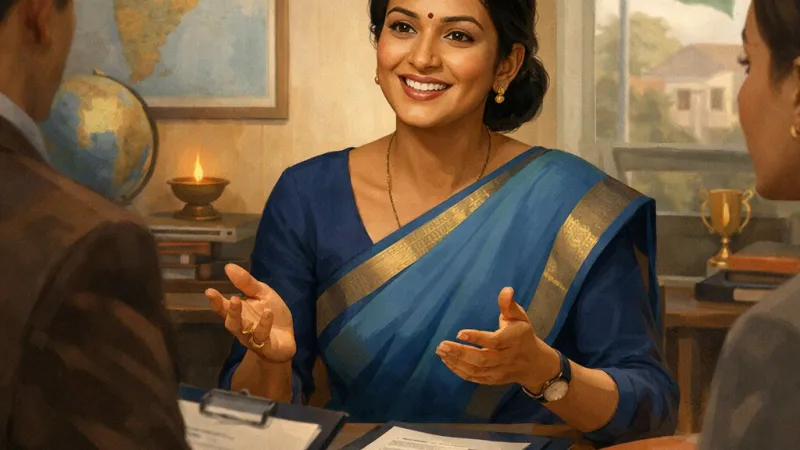
When presenting oneself in an interview, it is important to establish eye contact, smile, and use open gestures to convey approachability and confidence. Speaking at a moderate pace, articulating ideas clearly, and modulating voice as per the context – for example, pausing to emphasise key points – creates a strong impression.Preparation is key: rehearse the introduction, but aim to sound spontaneous rather than mechanical. Anticipate follow-up questions, such as explaining how you handled a tough classroom situation or integrated a new teaching tool. Be ready to tailor your introduction based on the time available and prioritise aspects most relevant to the specific position or institution.
Above all, authenticity goes a long way in building a connection with the panel, reflecting the true spirit of teaching in India – a blend of knowledge, compassion, adaptability, and lifelong learning.
Rate:
Log in to rate the work.
Log in