Top 10 Key Facts About Muharram and Its Importance in India
This work has been verified by our teacher: 23.04.2026 at 12:08
Type of homework: Essay Writing
Added: 22.04.2026 at 8:25
Summary:
Explore the top 10 key facts about Muharram and its importance in India, learning its religious, historical, and cultural significance for students.
10 Lines on Muharram: Understanding Its Deep Significance in Indian Context
The Islamic calendar stands apart from the one most commonly used in India, the Gregorian calendar, as it follows the lunar cycle. Among all its months, Muharram holds a special place. Marking the beginning of the Islamic year, Muharram is considered a sacred month within Islam, much like how Chaitra marks the start of the Hindu calendar, but with a distinct spiritual and historical weight. Beyond being simply the first month, Muharram is a time of deep significance, reflection, and cultural expression, especially for Indian Muslims. This essay delves into the importance of Muharram – tracing its religious meaning, historical legacy, and cultural presence in Indian life.
---
I. Understanding the Islamic Calendar and Muharram
India is a land of diverse traditions, each rooted in its own system of timekeeping. The Islamic (Hijri) calendar, used by Muslims all across the world and in India, is lunar-based. Unlike the solar Gregorian calendar, whose months are fixed, the Islamic months are determined by the sighting of the new moon, causing Islamic dates to shift each year when mapped onto the Gregorian system. Therefore, occasions like Eid-ul-Fitr and Muharram are not fixed as per the "English calendar"; instead, they come earlier each subsequent year by about ten days.Muharram holds a unique place as the inaugural month of the Islamic year. Out of the twelve months, four are considered "haram" or sacred, and Muharram is one among them. The word "Muharram" itself comes from the Arabic root "haram," indicating that which is forbidden – in this context, fighting and bloodshed were prohibited as a mark of respect for the month. While the sacredness of other religious months is often associated with celebration and joy, Muharram stands apart, tied as it is to a profound historical tragedy, yet enveloped in an aura of sanctity, peace, and contemplation.
---
II. Religious and Spiritual Significance of Muharram
Among Muslims, Muharram is regarded as the second holiest month after Ramadan. In India, where the echoes of Islamic traditions mix with local customs, the gravity of Muharram’s spirituality is widely observed. Unlike other festive periods, violence and aggression are expressly forbidden during this time – a reminder of the Islamic ethos of peace and self-restraint.Central to the importance of Muharram is the day of 'Ashura', which falls on the tenth day. This date has different connotations for the two main sects of Muslims: Sunni and Shia. For Sunni Muslims, Ashura is a day to fast, as endorsed by Prophet Muhammad. According to Islamic tradition, the Prophet learnt that Jews observed a fast on this day commemorating Prophet Moses’ deliverance from the tyranny of Pharaoh. Prophet Muhammad recommended Muslims to fast in gratitude and remembrance, making this day one of thanksgiving.
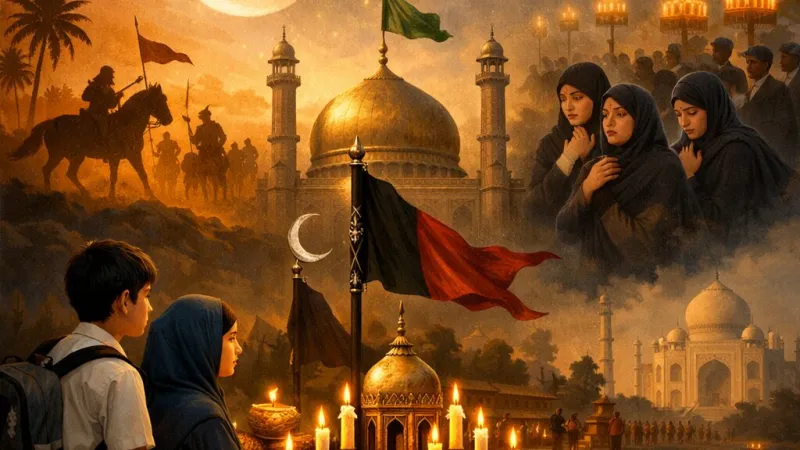
For Shia Muslims, Ashura bears a much more somber significance. It marks the martyrdom of Imam Hussain, the grandson of Prophet Muhammad, at the hands of the oppressive ruler Yazid, during the Battle of Karbala in 680 AD. Hussain’s stand represents unyielding faith, moral courage, and resistance against tyranny. In Shia-majority regions of India such as Lucknow or Hyderabad, Muharram is observed with mourning rituals, recitations of elegiac poetry (like 'marsiya' and 'noha'), and processions. Practices such as chest-beating (matam), wearing black, and participating in community gatherings (majlis) symbolise solidarity with Hussain’s suffering and the larger battle for justice.
---
III. Historical Context: The Battle of Karbala
The history of Muharram cannot be described without recounting the tragedy of Karbala. In the early years of the Islamic state, after the death of Prophet Muhammad, disputes arose over leadership. Yazid’s claim to the caliphate was challenged by Imam Hussain, who refused to pledge allegiance to a ruler he perceived as unjust. In response, Hussain, along with his family and companions, marched to Karbala.There, on the banks of the river Euphrates, Hussain was besieged without water, alongside his close relatives and companions. Despite overwhelming odds, Hussain and his followers refused to compromise their principles. On the tenth day of Muharram, they were killed in a massacre that would forever shape the moral imagination of Islam. The ethos of Karbala – standing firm for justice over power, regardless of outcome – has become a pulsing ideal not only within Islam but in wider Indian narratives of dharma (righteousness) and truth.
For centuries, the story of Karbala has been kept alive in Indian poetry, theatre, and even popular folk traditions. Writers like Mir Anis and Mirza Dabeer from Lucknow penned countless elegies, shaping the emotional vocabulary of Indian Urdu and rekindling the flame of Hussain’s sacrifice in generations of listeners and readers.
---
IV. Muharram Observances and Practices in India
India’s rich tapestry of Muslim communities—Shia, Sunni, Bohra, and others—contributes to a vibrant mosaic of Muharram observances. In Sunni-majority regions, the main act of devotion is fasting on both the ninth and tenth of Muharram, reflecting a focus on piety and gratitude as taught by the Prophet Muhammad. In Shia communities, especially in places such as Lucknow, Hyderabad, and parts of Kashmir, the month is marked more by public expressions of grief and remembrance.Shia Muslims conduct majestic processions with 'tazias'—replicas of Imam Hussain’s shrine made from wood and paper, often elaborately decorated. Community gatherings, where stories of Karbala are recited, evoke both tears and lessons. People dress in black to express mourning, sometimes refraining from celebratory activities like marriage or music until the tenth day passes.
A unique feature of Muharram in India is the intermingling of communities. In some regions, Hindus and people of other faiths participate in processions or help with the construction of tazias, demonstrating a spirit of mutual respect and shared heritage. In places like Lucknow, non-Muslims have been known to contribute to the arranging of "Imambara" events or offer 'nazr' (votive offerings), drawing inspiration from the themes of sacrifice and justice.
India recognises Muharram as a public holiday, allowing people the time for reflection, worship, and public observance. However, modern times bring debates on practices such as self-flagellation. While some argue in favour of it as an intense expression of devotion and solidarity, others—both within and outside the Islamic community—raise concerns over its impact and seek to channel the spirit of Karbala towards social work like blood donation camps or community kitchens (langars), reflecting a positive transformation of sacrifice into service.
---
V. Muharram’s Broader Socio-Religious Message
While Muharram’s rituals may differ between communities and regions, its underlying themes have profound universal appeal. The story of Karbala is not just a Muslim memory; it is an archetype of standing against persecution, defending justice, and making sacrifices for greater good. Values like truth, courage, selflessness, and resistance to tyranny are not confined to any one religion, and that is why people across faiths in India find resonance with Hussain’s martyrdom.For many, Muharram becomes an occasion to revisit questions of morality and social responsibility. Just as Mahatma Gandhi drew inspiration from the story of Karbala during India’s struggle for independence, so too do modern activists find in Hussain’s stance a call to conscience—a reminder that every generation must wrestle with its own Yazids. In a pluralistic society like India, Muharram teaches lessons in tolerance, empathy, and peaceful coexistence.
---
Conclusion
Muharram stands as a bridge from past to present, uniting history, faith, and culture in a single thread. Its religious, historical, and cultural facets come together most vibrantly in the Indian landscape, where diversity of observance reflects the inclusiveness of Indian society itself. Whether through mourning, fasting, poetry, or public service, the month calls for introspection and upholding of timeless values. Muharram is not just a day or a ritual; it is a call to our innermost humanity, urging us to remember the cost of justice and the sanctity of sacrifice. In an era of change, may the peaceful and unifying spirit of Muharram continue to inspire Indians to strive for truth, compassion, and interfaith harmony.---
10 Key Points Summarising Muharram
1. Muharram marks the beginning of the Islamic year in the lunar Hijri calendar. 2. It is one of four sacred months in Islam, during which violence is strictly forbidden. 3. The name "Muharram" implies forbidden acts, particularly warfare, highlighting its sanctity. 4. Ashura, the tenth day of Muharram, is of great religious significance for both Sunni and Shia Muslims. 5. Sunnis observe fasting on Ashura, commemorating events linked to Prophet Moses. 6. For Shias, Ashura is a day of mourning remembering Imam Hussain’s martyrdom at Karbala. 7. The tragedy of Karbala symbolises resistance against tyranny and the importance of justice. 8. In India, Muharram is observed with varied practices, from fasting to elaborate “tazia” processions and recitations of poetic tributes. 9. Muharram promotes values of sacrifice, peace, and interfaith harmony, with people of multiple communities sometimes participating together. 10. Above all, Muharram’s message is timeless: standing for truth, practicing empathy, and remembering the courage of those who stood for the right, whatever the cost.---
In conclusion, Muharram’s significance transcends boundaries—religious, historical, and cultural—serving as both a beacon of ethical ideals and a bridge of unity in the diverse tapestry of Indian society.
Rate:
Log in to rate the work.
Log in