How a Cashless India Is Reshaping Digital Payments and Economy
This work has been verified by our teacher: 26.03.2026 at 14:10
Type of homework: Essay Writing
Added: 24.03.2026 at 5:55
Summary:
Explore how a cashless India is transforming digital payments and the economy, enhancing transparency, inclusion, and efficiency for students to understand.
Essay on Cashless India: Transforming a Nation for the Digital Age
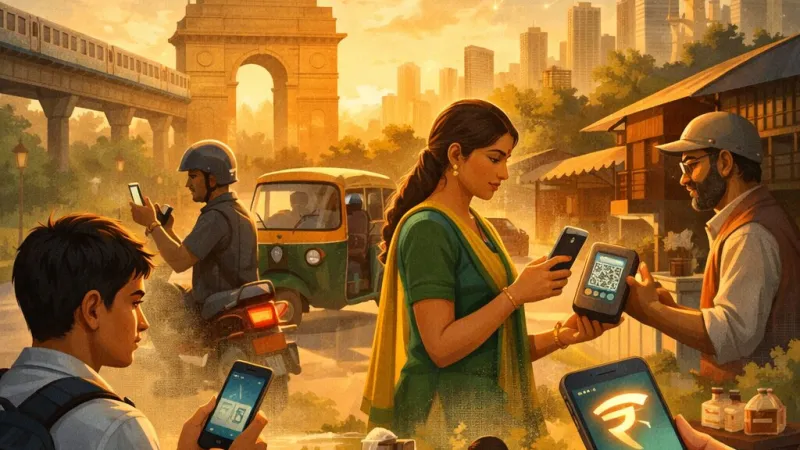
In a country as vast and varied as India, money exchanges hands every second in villages, towns, mandis, and bustling city markets. Traditionally, these transactions were mostly conducted with paper notes and coins. However, in recent years, there has been a sweeping shift in the way Indians pay and receive money, heralded by the vision of ‘Cashless India’. At its core, a cashless India means an economy where financial transactions are performed digitally, with minimal reliance on physical currency. This transformation is seen in the growing popularity of payment platforms, mobile wallets, UPI apps, and card payments, enabling everything from grocery purchases to utility bill payments to commute fares to be settled through a tap or scan.
The push towards digital payments is not just about technological advancement; it is fundamental to India’s evolving economy. It aims to increase efficiency, combat corruption, encourage financial inclusion, and bring transparency to monetary exchanges. Recognising this significance, the government has launched several initiatives, from incentivising digital payments to strengthening infrastructure. In this essay, I will delve into the importance of a cashless India, analyse the hurdles on its route, examine its impact during pivotal times like the COVID-19 pandemic, and envision what the future holds for this ambitious journey.
---
Historical and Socio-Economic Context
Long before the digital revolution, India was a landscape dominated by cash. At local kirana stores, weekly haats, or even for large purchases, people were accustomed to paying and receiving in rupees and paise. For many, especially in rural areas, this was a matter not just of habit, but necessity. Illiteracy, lack of access to banking, and the comfort of anonymity made cash king.However, this dependence on cash brought its own set of challenges. Fake currency rackets would periodically make headlines, and stories of theft or cash-based corruption were common. The inability to trace cash flow facilitated unaccounted money, popularly referred to as ‘black money’, hampering the nation’s growth.
A defining moment came in November 2016, when the Government of India demonetised ₹500 and ₹1000 notes overnight. The announcement by Prime Minister Narendra Modi was like a jolt of electricity through the system. Suddenly, millions across the country had to look for alternative ways to pay. This event, combined with the rapid increase in mobile phone usage and affordable internet access (thanks to telecom revolutions like Jio), provided a unique push to digital payments.
Yet, India is incredibly diverse, and this has affected adoption rates. While educated urban populations took quickly to mobile wallets and UPI, rural adoption has lagged, often due to less reliable internet, lower literacy, and lack of familiarity with technology. Awareness and adaptability vary significantly by region, age, gender, and socio-economic status, making the path to a fully cashless society both challenging and fascinating.
---
Mechanisms and Tools Facilitating a Cashless India
The backbone of India’s cashless journey is its remarkable digital payment infrastructure. Foremost among these technologies is the Unified Payments Interface (UPI), launched by the National Payments Corporation of India (NPCI), which allows instant money transfers between bank accounts through mobile phones. UPI’s true genius lies in its simplicity—users only need a Virtual Payment Address (VPA) or a mobile number, doing away with cumbersome bank details.Popular apps like Paytm, PhonePe, Google Pay, and Bharat Interface for Money (BHIM) have brought UPI and wallet-based payments to the masses. Nowadays, even the smallest tea stall or fruit vendor can display a QR code, enabling customers to pay seamlessly. Card payments and internet banking also form vital parts of this ecosystem, with contactless and chip-enabled debit and credit cards providing further convenience.
The government has also played a key role by building digital infrastructure and encouraging adoption. The National Digital Payments Mission works to improve digital payment literacy and create user-friendly systems. Aadhaar-enabled payment services allow residents to access banking with just a fingerprint, bridging the gap for those without conventional documents.
With increasing digitisation, security becomes crucial. Banks and fintech apps employ encryption, two-factor authentication, and biometrics to prevent unauthorised access. Massive campaigns, such as “RBI Kehta Hai,” raise awareness about cyber fraud, phishing, and safety tips, highlighting the importance of vigilance in the digital age.
---
Advantages of Moving Towards a Cashless Economy
The move towards a cashless India is not just a technological shift; it promises profound advantages impacting society and the economy.Convenience is perhaps the most immediate benefit. From paying for a metro ride in Delhi with a swipe on Paytm, to transferring birthday gift money instantly to a friend in Kerala, digital payments save time and effort. Queueing at the bank, filling out forms, or counting cash—a familiar ordeal—is virtually eliminated.
Transparency and accountability increase dramatically. Digital payment trails make it difficult to hide illicit transactions, reducing avenues for black money and tax evasion. Recent reports by the Reserve Bank of India highlight that digital transactions are more easily auditable, helping authorities curb financial irregularities and fake currency circulation.
Financial inclusion is another critical upside. Millions who were earlier outside the formal banking sector—daily wage earners, domestic workers, or street-side vendors—now have access to digital wallets and basic banking. The Jan Dhan Yojana pradhan mantri scheme and direct benefit transfers (DBT) through Aadhaar have ensured subsidies and payments reach the intended without middlemen, fostering trust and hope among the underserved.
Moreover, a digital economy helps formalise previously informal sectors (like small businesses and artisans), providing them with better access to credit and government schemes. This, in turn, supports entrepreneurship and the burgeoning fintech startup scene, contributing to GDP growth.
Interestingly, the cashless mode also has public health implications. During the COVID-19 pandemic, contactless payments reduced the risk of virus transmission, making “scan and pay” not just a matter of convenience, but also of community safety.
---
Challenges and Obstacles in Realising a Fully Cashless India
While the vision of a cashless India is inspiring, the road is filled with real-world obstacles.The digital divide is prominent. According to various NSSO and Niti Aayog surveys, a significant segment, especially in rural India, lacks access to smartphones or reliable internet. Women and elderly populations are often left behind due to affordability and social norms.
Digital literacy remains a formidable barrier. Complex menus or language limitations in apps can intimidate those unfamiliar with English or technology. Senior citizens, who are more comfortable with cash, find the digital payment world alien. Mass education and user-friendly designs in vernacular languages are urgently needed.
Infrastructure deficiencies—frequent power cuts, patchy connectivity, and lack of Point-of-Sale terminals—prevent smooth adoption in many areas. Small traders often hesitate to invest in such technology due to cost concerns or limited customer demand.
Security is another critical issue. High-profile cases of hacking, phishing, or KYC fraud have made many wary of trusting digital platforms. Even reputed banks and payment apps regularly remind users not to share OTPs or PIN numbers. However, a trust deficit continues to persist, particularly among the less-tech-savvy.
Cultural inertia is also strong. Cash offers anonymity, is accepted everywhere, and is viewed by many as tangible and trustworthy. For festivals or family occasions, cash gifts are still preferred. Overcoming these deeply ingrained habits will take time and concerted effort.
---
Case Study: Impact of Cashless Transactions during the COVID-19 Pandemic
The coronavirus pandemic tested every society, challenging established norms of business and daily life. Social distancing and lockdowns accelerated digital adoption like never before. In cities like Mumbai and Bengaluru, vegetable and milk vendors started accepting Paytm or Google Pay, sometimes out of necessity rather than choice. Pharmacies, grocery stores, and even auto-rickshaw drivers went cashless to reassure customers of safe transactions.The number of UPI transactions soared, with daily figures crossing the 200-million mark in 2021. Government advisories explicitly recommended cashless payments for contactless deliveries and essential services.
Yet, the transition was far from smooth for all. Daily wage earners and those in the informal sector, lacking access to smartphones or bank accounts, faced difficulties in receiving wages or aid. Many digital novices experienced hurdles, ranging from technical glitches to digital fraud. These challenges underlined the need for inclusive infrastructure, simple user education, and supportive government policies.
Still, the pandemic left a lasting legacy: post-2020, digital payment adoption has remained high, implying lasting change in consumer behaviour.
---
Future Prospects and Strategic Recommendations
Looking ahead, the dream of a cashless India requires more than just technology—it demands inclusive planning and continuous evolution.First, infrastructure must reach the last mile. Collaboration between government and private telecom operators is crucial to extend affordable internet to the remotest villages. Solar-powered ATMs and offline UPI solutions can address challenges of power and connectivity.
Second, financial and digital literacy needs strong reinforcement. Community-based workshops, women’s self-help group training, and school curricula that include digital financial skills can empower marginalised groups. Programmes like “Digital Saksharta Abhiyan” must be expanded with measurable targets.
Third, innovation should be fostered. Local fintech startups developing solutions in Hindi, Tamil, Bengali, or Assamese, or creating ultra-simple UPI apps, must be encouraged through grants and hackathons.
Fourth, security and trust must be ongoing priorities. Regular cybersecurity audits, prompt redressal for victims of digital fraud, and continuous user awareness campaigns in local languages are essential. Lessons from incidents like the Cosmos Bank cyberattack or recent phishing scams must guide policy and product design.
Lastly, policy support will speed up adoption. Tax rebate schemes, GST discounts for digital transactions, and subsidies for digital infrastructure in small businesses can serve as incentives.
---
Conclusion
Cashless India is more than a policy; it is a movement with the potential to revolutionise our economic landscape. As digital payments become woven into daily life, they promise convenience, transparency, and progress for all sections of society. The journey, however, is far from over—challenges of inclusion, awareness, and security remain, demanding dedication from every stakeholder: the government, technology companies, teachers, families, and citizens.As the poet Harivansh Rai Bachchan said, “Manzil milegi, bhatak kar hi sahi; gumrah toh woh hain jo ghar se nikle hi nahi.” The destination will come, even if the path is winding; the real mistake is not trying at all. With collective effort and constant innovation, India can truly become a model for digital economies emerging from rich history and immense diversity. The future—a transparent, inclusive, and thriving digital India—is ours to build.
Rate:
Log in to rate the work.
Log in