The Midnight Visitor: Class 10 NCERT English Chapter 3 MCQs with Answers
This work has been verified by our teacher: 2.05.2026 at 18:17
Type of homework: Essay Writing
Added: 29.04.2026 at 9:28
Summary:
Explore The Midnight Visitor Class 10 NCERT English Chapter 3 MCQs with answers to master key concepts, improve comprehension, and boost exam confidence.
The Midnight Visitor MCQs with Answers NCERT Class 10 English Chapter 3
‘The Midnight Visitor’ is one of the most gripping chapters in the Class 10 NCERT English textbook, cherished by students for its combination of suspense, clever storytelling, and memorable characters. Written by Robert Arthur, this story is a prime example of how intelligence and presence of mind outshine brute force. As Indian students preparing for CBSE board exams, paying close attention to the story’s structure, character arcs, language use, and embedded themes is essential—not only for scoring well in MCQs but also for imbibing lifelong lessons on wit and composure. With intrigue seeping from every line, ‘The Midnight Visitor’ offers much more than just entertainment; it serves as an excellent guide to narrative study, comprehension skills, and the art of deduction, echoing the appeal of classic Indian detective fiction such as those starring Byomkesh Bakshi or Feluda.
Background and Setting
The events of ‘The Midnight Visitor’ unfold in a small but memorable Paris hotel room—a foreign, sophisticated backdrop that instantly sets the tone for espionage. Hotels, as seen in both Indian cinema and literature, often evoke a mix of secrecy and urgency; think of countless Hindi suspense dramas where narrowly-lit corridors and midnight knocks elevate the tension. Here too, the midnight hour heightens the sense of vulnerability, with the window and the locked door as silent witnesses to the clandestine affairs inside. The cultural setting in Paris makes the protagonist, Ausable, stand out as a stranger to his surroundings, reflecting the isolation often experienced by outsiders—just as many Indian students feel when they move to new environments for education or work.Further, if one considers the wider backdrop, the period seems laced with Cold War anxieties, not too dissimilar from what India experienced during its own tryst with intelligence agencies and foreign spies. The spy-versus-spy motif is universal; its resonance in Indian literature, such as in the stories of “Colonel Vinod” by Surender Mohan Pathak, is strong and relatable.
Plot Overview and Structure
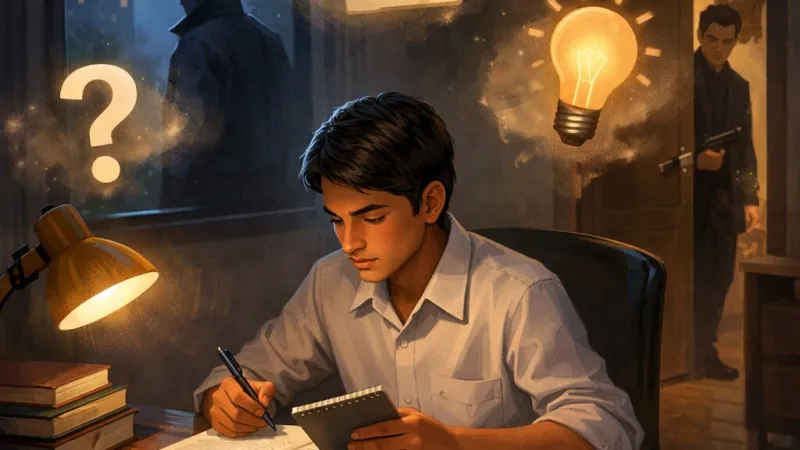
The narrative kicks off with Fowler, a writer, meeting the seemingly lacklustre spy Ausable. The simplicity of this introduction belies the storm brewing beneath. Soon enough, suspense blooms with the sudden appearance of Max, a rival agent who bursts in with a revolver, demanding sensitive papers. The intensity of the confrontation peaks when Ausable keeps a cool head, inventing the fictitious story of a balcony outside the window and the arrival of the police—classic red herrings that echo the cunning of Indian folk tales, such as those from the “Vikram aur Betaal” collection, where wit is always paramount.A key moment arrives when Max, believing Ausable’s story, tries to escape through the window—only to meet his doom. In this denouement, the plot circles back neatly, showing how fear and arrogance can defeat even a seemingly dominant adversary.
Throughout, the dialogue is brisk, filled with irony and humour, effortlessly providing both character insight and advancing the suspense. For instance, Ausable’s almost bored demeanour is a mask, behind which a razor-sharp mind is constantly at work. The pacing oscillates between moments of calm description and rapid action, much like many scenes in Satyajit Ray’s Feluda mysteries.
Character Analysis
Ausable
Ausable stands out sharply against the cinematic image of a secret agent. He is described as heavy, clumsy, and lacking the physical glamour one might expect—echoing the wisdom of countless Indian stories that celebrate substance over style. Despite his unimpressive appearance, he is calm, naturally witty, and responds with deliberate calculation, turning every disadvantage to his benefit. In many ways, Ausable embodies the quintessential “chatur” (clever) hero, reminiscent of Birbal from Mughal folklore or Tenali Rama from South Indian tales, who always emerge victorious with intelligence and strategy. His use of irony and misdirection is not mere flair; it is born out of necessity and years of hard-earned experience.Max
In striking contrast, Max is brash and aggressive—the prototype of a villain who relies on muscle and intimidation, not brains. His overconfidence blinds him to the subtle web crafted by Ausable, resulting in his undoing. Like villains in many Indian plays, his downfall is the direct outcome of underestimating the underdog and lacking patience.Supporting Characters
Fowler, the visiting writer, acts as a stand-in for the reader, expressing surprise at Ausable’s unconventional methods. His perspective is crucial: he enters with preconceived notions of what a spy should be, only to have these notions shattered. This transformation mirrors every learner’s journey from textbook learning to practical understanding. The “waiter” Henry, mentioned in Ausable’s story to deceive Max, never actually appears—this clever technique of including invisible characters is sometimes used in Indian TV serials and plays to fuel misunderstandings and drive the plot.Themes and Moral Lessons
Appearance versus Reality
Perhaps the most profound theme is the contrast between appearance and reality. Ausable, far from being a hero in the traditional sense, completely upends Max’s expectations—and perhaps those of the reader. This reminds us of the famous proverb found in Indian wisdom, “Dikhave pe mat jao, apni akal lagao” (Don’t go by appearances, use your own intellect). As Indian society often grapples with stereotypes and quick judgements, this lesson feels both immediate and valuable.Ingenuity and Quick Thinking
Ausable’s swift creation of the “balcony” story and his ability to anticipate Max’s reactions offer a masterclass in the power of quick thinking. Indian educational culture, with its stress on “jugad” or innovative shortcuts, finds validation in Ausable’s strategy. The message for students is clear: presence of mind can transform even the weakest situation into an advantage.Good versus Evil
The underlying message of the victory of good over evil, of cleverness over force, is universal and everlasting—mirrored in age-old epics like the Mahabharata, where Krishna’s wit often turns the tide against more powerful foes. The story also gently explores the moral grey areas of espionage, without glorifying violence.Courage and Composure
Ausable’s self-control under threat is instructive. His confidence, despite a loaded gun pointed at him, is a powerful lesson in courage. In exam halls across India, where nerves are tested, such composure is a quality to be envied and emulated.Humour Amidst Tension
The story manages to lighten tension with sly humour, making it both enjoyable and memorable. Indian authors, from R.K. Narayan to Ruskin Bond, are known for similar use of gentle humour to address serious situations.Language and Literary Devices
The story is easy to read yet rich in narrative tricks. The third-person narration, focused mainly on Ausable, allows readers to be both spectators and participants—much like watching a theatre performance, a mode beloved in Indian literature.Irony and symbolism are everywhere. The “midnight” embodies secrecy and threat, while the window and imaginary balcony operate as both literal escape routes and metaphors for the dangers of assumption. New words like “espionage” and “wheezily” expand the reader’s vocabulary, and descriptive phrases—e.g., “a fox-faced man”—make Max more vivid.
Importance of MCQs in Exam Preparation
For Indian students, MCQs (Multiple Choice Questions) are critical tools for both assessment and revision. They help reinforce fine details of the story—plot twists, word meanings, character traits, and even nuances in the author’s style. Typically, MCQs may range from direct questions such as “Who was Max?” or “What did Ausable invent to fool Max?” to more interpretive ones like identifying the underlying theme or deciphering vocabulary from context.Tips for MCQ Success: - Read carefully: Skim the passage for details before attempting MCQs. - Elimination method: Rule out options that are clearly incorrect. - Relate to context: Relate questions to the story, avoiding guesswork. - Short summaries: After each reading, jot down key events to aid memory.
Regular practice with sample papers and quizzes not only cements story details but also strengthens the ability to analyse and interpret similar texts.
Critical Reception and Adaptations
‘The Midnight Visitor’ enjoys immense popularity amongst students due to its brevity and high entertainment value. Its suspenseful plot and accessible language make it an ideal candidate for dramatizations—many Indian schools stage it as a short play during annual functions. The story’s universal appeal ensures it would fit seamlessly into a Bengali or Hindi television serial, attracting young readers to the genre of mysteries and thrillers.Conclusion
To sum up, ‘The Midnight Visitor’ stands distinguished by its clever structure, masterful use of suspense, and compelling protagonists. It does not merely entertain; it teaches us about the significance of intelligence, the dangers of overconfidence, and the enduring relevance of first impressions. For Indian students, practicing MCQs on this story sharpens both comprehension and vocabulary, while exposing them to the artful weaving of drama and wit in literature.As you seek to excel in your exams, remember: the story’s ultimate lesson is that presence of mind and courage triumph over brute force—insights as valuable in real life as in the examination hall. Treat MCQs as tools for self-discovery, not mere roadblocks; allow the stories you study to enrich your worldview and literary sensitivity.
Additional Learning Tips for Students
- Make a vocabulary list: Write down new words and their meanings. - Mind-map events: Create simple diagrams to trace the plot. - Group study: Discuss the story with classmates for diverse perspectives. - Practice writing: Attempt answers to questions in your own words. - Use varied resources: Access NCERT solutions, online MCQ quizzes, and school notes for a comprehensive understanding.In conclusion, ‘The Midnight Visitor’ remains an evergreen favourite in the Indian English syllabus, rewarding deep reading and critical thought. Embrace its suspense, learn from its characters, and let each MCQ become a stepping stone to mastering both literature and life.
Rate:
Log in to rate the work.
Log in