Hola Mohalla: Tradition, History and Celebrations in Sikh Culture
This work has been verified by our teacher: 17.05.2026 at 15:08
Type of homework: Essay Writing
Added: 15.05.2026 at 15:43
Summary:
Explore Hola Mohalla’s tradition, history, and celebrations in Sikh culture to understand its significance, origins, and vibrant annual festivities in India.
A Comprehensive Exploration of Hola Mohalla: Tradition, Significance, and Celebration
Introduction
Among the many vibrant festivals of India, Hola Mohalla holds a distinctive place, particularly within the Sikh community. Celebrated annually with unmatched enthusiasm and grandeur, Hola Mohalla is not just a religious gathering but a powerful showcase of Sikh martial tradition, community spirit, and cultural pride. Its echoing drums, colourful processions, and stirring prayers reverberate mainly through Punjab, creating an atmosphere steeped in history and faith. Rooted in centuries-old traditions, this festival is a living testament to the enduring values and valour instilled by the Sikh Gurus.The festival was introduced by Guru Gobind Singh, the tenth Sikh Guru, at the turn of the 18th century. Conceived to invigorate the martial spirit among Sikhs during troubled times, Hola Mohalla also aims to reinforce brotherhood and readiness to defend righteousness. This essay seeks to delve deep into the festival’s origin, meaning, and celebrations, while also exploring its contemporary relevance and the challenges it now faces.
Historical Background of Hola Mohalla
To truly appreciate Hola Mohalla, one must understand the circumstances of its birth. It was the eve of Vaisakhi in the year 1699 when Guru Gobind Singh laid the foundation of the Khalsa Panth at Anandpur Sahib. Facing repeated oppression under the Mughal regime, Sikhs needed solidarity, courage, and unwavering faith. Recognizing this necessity, Guru Gobind Singh started Hola Mohalla the very next year. He wished to prepare his followers not merely for spiritual advancement, but also for the practical realities of defending their faith and community.The term "Hola Mohalla" carries deep significance. "Hola" finds its roots in "Holi," but while Holi is known for its playfulness associated with colour and mirth, "Hola" is considered masculine—symbolizing strength and fortitude. "Mohalla," on the other hand, is believed to originate from an Arabic word meaning a parade, procession, or organized column. Thus, Hola Mohalla came to represent a collective display of martial discipline and readiness, unique in both name and essence.
Unlike Holi, which is celebrated more for joy and colour, Hola Mohalla adds a distinct Sikh flavour, intertwining physical skill with spiritual reflection—a dual legacy of the Khalsa. This deep-rooted festival is also closely linked with Vaisakhi, yet it stands apart in its martial focus, symbolizing the Sikh resolve against tyranny.
Timing and Calendar Significance
Hola Mohalla is celebrated each year during the lunar month of Chett, on the second day, which typically falls in March. The Nanakshahi calendar, adopted by Sikhs to regulate their religious observances, identifies this occasion just after or sometimes overlapping with Holi, the popular Hindu festival of colours. However, while both festivals come together on the calendar, their rituals and spirit differ vastly.The festival stretches officially across three days, but preparations and pilgrimages begin much earlier. Devotees, many of whom travel hundreds of kilometres, converge at the holy town of Anandpur Sahib days in advance. These days are filled not only with religious activities, but also preparation for the breath-taking displays of skill and courage.
The timing, just after Holi, signifies the movement from celebration to contemplation. The lunar calendar’s relevance in Sikh practices is not merely technical; it symbolizes how the faith embraces cosmic cycles, reflecting the unity of physical and spiritual life.
Cultural and Religious Significance
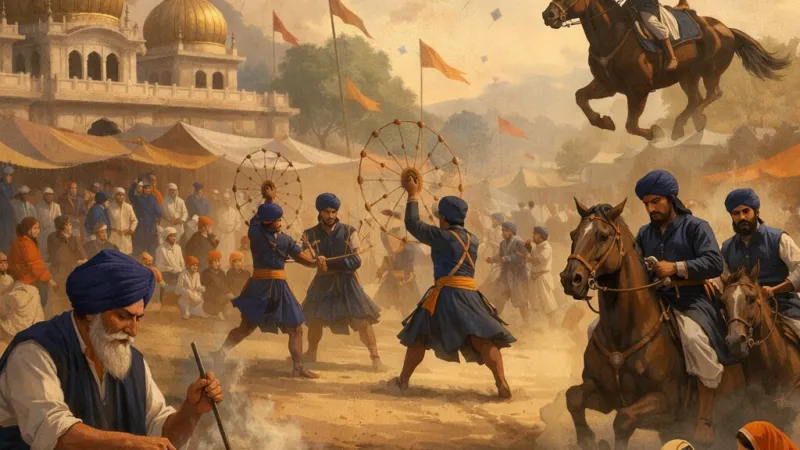
At its very heart, Hola Mohalla embodies the ideals of martial prowess, communal unity, and devotion. This is no ordinary festival of merriment—it is a living lesson in discipline, courage, and service. Echoing the example of Guru Gobind Singh, who transformed farmers into fearless warriors, Hola Mohalla invokes the memory of Sikh valour in the face of adversity.Central to the festival is the remembrance of the Khalsa—the sovereign brotherhood of initiated Sikhs born on Vaisakhi in 1699. The Nihangs, known for their distinctive blue robes and radiant turbans often decorated with small steel quoits and other traditional weapons, lead the ceremonies. Their very presence is a reminder of the sacrifices made by the Gurus and their followers.
Religious rituals begin with ardent prayers and the soulful rendering of Gurbani Kirtan in Gurudwaras. Discourses on the teachings of Sikhism, especially the principles of equality, justice, and courage, are delivered to remind participants of their rich heritage. The community comes together, transcending barriers of caste and economic status, to renew their bonds and collective sense of identity.
Traditional and Contemporary Celebrations
A hallmark of Hola Mohalla is the series of electrifying processions led by Nihang warriors. Dressed in traditional attire and armed with swords, spears, and shields, these warriors perform mock battles—referred to as ‘Shastar Vidya’—showcasing age-old Sikh martial arts such as Gatka. The sight of horses galloping, riders executing rapid manoeuvres, and weapons whirling fearlessly in skilled hands is both awe-inspiring and educational.Yet, the festival is not confined to martial displays. Anandpur Sahib, the epicentre of these celebrations, becomes a throbbing heart of cultural activity. Devotional singing, recitation of poetry in praise of Guru Gobind Singh and the Khalsa, and recitals of heroic deeds evoke a sense of pride and reflection. Community kitchens, or langars, serve free meals to all, regardless of background, upholding Sikh traditions of service and egalitarianism.
Fairs spring up around the Gurudwaras, selling handicrafts, traditional weapons, sweetmeats, and ethnic attire. Amusement activities for children and intellectual debates add more layers to the festival, ensuring every participant finds a way to connect with the occasion.
Inclusivity is a marking feature—people from all walks of life, including tourists, non-Sikhs, and those from the Punjabi diaspora, participate with the same gusto. Foreign visitors often express amazement at the palpable energy and profound hospitality on display.
Government Recognition and Public Holiday
Given its importance, Hola Mohalla is declared an official public holiday in Punjab, with many Sikh-majority regions across India also following suit. The Government of India and the Punjab State Government extend support not only by providing security and logistics but also in encouraging preservation of the region’s unique crafts and martial traditions. Media coverage and state sponsorship have gradually transformed Hola Mohalla into an attraction for tourists, scholars, and spiritual seekers from across the globe.Through this support, traditions that might have faded—such as authentic Gatka performances or crafting of traditional weapons—find avenues for revival and respect. The festival thus serves as a living history lesson and a showcase of Sikh heritage on the global stage.
Contemporary Relevance and Challenges
In modern times, the spirit of Hola Mohalla continues to inspire. While traditional martial arts are in danger of being forgotten elsewhere, in Punjab, they thrive—thanks in large part to their presence at Hola Mohalla. Young Sikhs, both boys and girls, are encouraged to participate in Gatka demonstrations, ensuring skills and values are passed down generations.Yet, the festival faces challenges. The increasing presence of commercial stalls, packaged foods, and entertainment not rooted in Sikh tradition has raised concerns about the dilution of spiritual focus. Some elders lament that the educational message and the solemnity of the event occasionally take a back seat to spectacle.
There are also ongoing efforts to make the festival more inclusive, both in terms of gender and social background. Once dominated by male warriors, martial displays today are gradually opening up to women and girls—reflecting the original egalitarian tenets of Sikhism. Preserving authenticity amid evolving social realities, and negotiating the demands of tourism, continue to be an area of active debate within the community.
Conclusion
Hola Mohalla is not just a festival; it is a living, breathing institution—both a celebration and a reminder. Through martial displays, prayers, community service, and cultural gatherings, the festival reinforces the timeless Sikh ideals of courage, discipline, and brotherhood. From Anandpur Sahib to diaspora communities across oceans, Hola Mohalla remains a vibrant thread binding Sikhs to their faith and to each other.While rooted in a history of adversity and triumph, the festival moves confidently into the future—adapting, evolving, yet always returning to its central purpose. In a country as diverse as India, Hola Mohalla stands out as a shining example of unity in diversity, preserving a unique culture while inviting others to experience its joys.
Additional Tips for Essay Writing on Hola Mohalla
When writing about Hola Mohalla, strive to evoke the festival’s lively sights and sounds: the clash of swords in Gatka, the rhythmic beat of drums, the dazzling colours of Nihang attire, and the communal warmth of shared meals. Narrate stories of Guru Gobind Singh’s relentless spirit or the first Khalsa initiation for emotional depth.Comparisons with other Sikh occasions—like the harvest-based Vaisakhi, or the birth anniversaries of the Gurus—highlight why Hola Mohalla stands out for its martial demonstrations. Remember to clarify Sikh terms such as ‘Nihang’ (order of traditional Sikh warriors), ‘Gatka’ (a style of martial art), and ‘Khalsa’ (community of initiated Sikhs) to make the essay accessible.
Geographically, while Anandpur Sahib is the festival’s nucleus, Hola Mohalla's reach stretches to wherever Sikh communities reside, from Ludhiana to London. So, one can conclude that Hola Mohalla is more than a festival—it's a living heritage, a call to courage, and a celebration of unity, proudly carried from one generation to the next.
Rate:
Log in to rate the work.
Log in