A Student’s Guide to Drawing Jasmine Flowers with Step-by-Step Tips
This work has been verified by our teacher: day before yesterday at 18:59
Type of homework: Essay Writing
Added: 26.05.2026 at 8:11
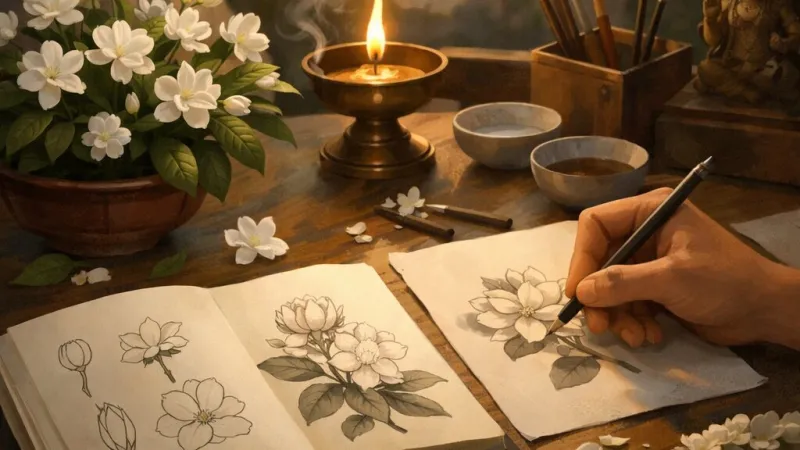
Summary:
Discover step-by-step tips to draw jasmine flowers beautifully. Learn key techniques and cultural insights to enhance your art skills for school projects. 🌼
Mastering the Art of Jasmine Flower Drawing: An Indian Student’s Guide
The gentle fragrance of jasmine, known as ‘mallige’ in Kannada, ‘mogra’ in Hindi, ‘mallipoo’ in Tamil, and by many other names across India, wafts through our homes, temples, and markets. These delicate, star-shaped blossoms are more than just flowers; they are woven into garlands, offertories, and even the hair braids of brides and classical dancers. No wonder, then, that jasmine has enthralled generations of students and artists, becoming a cherished subject for drawing and painting.
Drawing flowers, especially jasmine, holds a special place in the Indian education system. From primary school craft lessons to high school fine art projects, capturing the subtle elegance of these blooms develops both observational acuity and artistic skill. Learning to draw jasmine is much more than creating a pretty picture—it’s a step towards cultivating patience, a keen eye for detail, and an appreciation of the natural beauty rooted in our culture.
This essay aims to serve as a friendly, student-oriented guide to drawing jasmine flowers. Whether you are picking up a pencil for the first time or seeking new creative techniques, you will find practical steps, helpful tips, and inspiration to make your jasmine art both authentic and personal. Along the way, we’ll explore the flower’s characteristics, cultural stories, and ways you can use your drawings creatively.
---
Understanding the Jasmine Flower
Before you draw jasmine, it helps to pause and really notice the flower’s unique characteristics—just as artists like Raja Ravi Varma closely observed their natural subjects before creating masterpieces.Botanical Features
Jasmine is a climbing or trailing shrub with slender, glossy green leaves and clusters of small, white or yellow flowers. In India, common species include Jasminum sambac (beloved for its intense fragrance and rounded petals), Jasminum grandiflorum (noted for its larger blooms), and Jasminum auriculatum.The flower typically consists of 5 to 9 narrow, pointed petals radiating symmetrically from a tiny, barely visible central core or stigma. Jasmine leaves are lance-shaped and smooth-edged with delicate veins. The stem is slender and often slightly curved to support the drooping clusters.
Visual Characteristics for Drawing
When drawing jasmine, observe these points:- Petal count and shape: Most have 5–7 petals, long and slender, slightly pointed at the ends, and overlapping gently. - Symmetry: The petals are arranged in an almost-perfect star or wheel, but slight natural irregularities make each bloom unique. - Leaf detail: Jasmine’s leaves, though often overlooked, add authenticity. Their central vein and gentle curve provide contrast with the petals.
Symbolism and Cultural Context
Jasmine is more than a botanical curiosity in India:- Festivals & Rituals: It’s a key ingredient in poojas and weddings, representing purity, beauty, and divine blessings. - Daily Life: Strands of mogra are woven into women’s hair, a custom immortalised in classical Tamil and Telugu poetry. - Art and Literature: From the temple sculptures in South India to the miniature paintings of Rajasthan, jasmine’s motifs abound, symbolising grace and serenity.
Understanding this cultural context enriches your drawing, giving it a story and purpose—just as Rabindranath Tagore infused his art with spiritual meaning.
---
Preparing to Draw the Jasmine Flower
Materials Needed
Successful drawing begins with gathering the right materials:- Essentials: - Pencils: Use a combination (HB for outlines, 2B for shading, and 4B for darker tones). - Eraser and sharpener. - Drawing paper—preferably lightly textured for smoother blending.
- Optional materials: - Coloured pencils or watercolours, if you wish to experiment with colour. - Fine liners or pens for bold outlines or adding intricate details.
Setting Up Your Workspace
A tidy, well-lit space fosters better focus. Sit at a sturdy table near a window or under a bright lamp. Keep your reference—a real jasmine bloom, a photograph, or even an illustrated botanical book—close at hand. This echoes the ‘Gurukul’ style of learning, where students observed the world around them as part of their lessons.Observation Techniques
Don’t start with the pencil—start with your eyes! Examine how the petals overlap, where light and shadow fall, which way the leaves curl. Use a ‘frame’ made with your fingers to isolate one flower and study its composition. Note the shapes, relative sizes, and unique quirks of your chosen specimen. As S.H. Raza once said, “See what you paint, and paint what you see.”---
Step-by-Step Process to Draw a Jasmine Flower
1. Basic Outline and Shapes
Begin with the primary shapes: lightly sketch a circle to define the flower’s overall size. Inside, mark a smaller dot or circle for the core. From the center, draw guiding lines radiating outward to indicate where each petal will go—like slices of a pizza.2. Refining the Petal Shapes
Now, sketch the petals over your guidelines. Each jasmine petal is elongated, slightly tapering and curved. Remember, in nature, petals overlap instead of lying flat, and their ends aren’t identical—allow a few to fold slightly or bend to one side, reflecting real life.3. Adding Leaves and Stem
Extend a graceful, slender stem down from the flower’s base. Jasmine leaves grow in pairs along the stem; sketch a few, curving them away naturally. Use a light touch to draw the main vein and side veins of each leaf for added realism.4. Shading Techniques for Realism
Now comes the magic—turning your outline into a lifelike bloom:- Shadows and Light: Identify parts which are beneath other petals or leaves—these will be darker. Use hatching (parallel lines) or soft circular shading with your 2B/4B pencil. - Blending: Use a blending stump, tissue, or your fingertip to softly blur some areas, making the petals look delicate and rounded. - Highlights: Preserve some white paper at the tips and outer edges of petals to mimic the way light hits them naturally.
5. Final Touches
Clean up your drawing by erasing unnecessary guidelines. To enhance your artwork, consider:- Going over the main outlines with a sharp pencil or fineliner for a polished look. - Adding a light wash of yellow or green for the pollen and stem, if using colours. - Drawing a few jasmine buds, vine tendrils, or a soft background wash to give context—a style often seen on hand-painted sarees or traditional wall murals.
---
Common Challenges and How to Overcome Them
Capturing Symmetry and Proportion
Drawing each petal the same size and spacing can be tricky. Lightly marking your guideline circle and ‘spokes’ helps, as does continually comparing the lengths and angles as you work. Don’t be afraid to erase and adjust—R.K. Laxman’s early sketches often went through many corrections before becoming the finished ‘Common Man’.Making Petals Look Natural
Avoid making petals too stiff or identically shaped; nature thrives on miniature imperfections! Let petals twist or fold gently. Study a real flower often to refresh your sense of natural curves.Blending Without Smudging
Use clean tissue or a blending stick for soft shading. Prevent accidental smudges by placing an extra sheet of paper under your drawing hand—a must for left-handers!---
Exploring Different Styles of Jasmine Flower Drawing
Realistic Style
Botanical artists like B. Venkatappa faithfully captured every vein and shadow. For realism, work slowly, layer pencil strokes, and observe closely.Simple Line Drawing
A single, clean line can also evoke jasmine’s elegance. Try drawing a stylised outline without shading, as seen in Madhubani and Warli folk art.Stylised and Abstract Interpretations
Experiment with geometric arrangements, bold colours, or flowing lines. Modern Indian artists such as Jamini Roy reimagined traditional forms; you can too!Digital Drawing
Apps like Autodesk Sketchbook or ProCreate let you draw jasmine on tablets or mobiles—great for young artists keen on blending tradition with technology.---
Practical Applications and Creative Uses
Jasmine flower drawings have many uses beyond the art notebook:- Decorative Projects: Craft greeting cards, decorate rakhi plates, or design bookmarks. Many students turn such drawings into Rangoli designs during Onam, Ugadi, or housewarming ceremonies. - School Assignments: Jazz up Biology projects, environmental awareness posters, or festival charts with hand-drawn jasmine. - Personal Gifting: A custom-drawn jasmine motif on a diary or letter brings warmth to Teacher’s Day or Raksha Bandhan presents.
---
Conclusion
Drawing jasmine flowers may start as a simple exercise in pencil control, but it soon becomes much more—a lesson in close observation, a window into Indian traditions, and an outlet for creative and intellectual growth. By following a careful process, making thoughtful observations, and practising regularly, every student can master this beautiful art.Art teachers often say, “Practice doesn’t make perfect; practice makes progress.” So, draw often, absorb inspiration from the gardens, festive garlands, or the jasmine-sellers in your city. Share your sketches with friends or display them proudly at home. And once you’re comfortable drawing jasmine, why not try the marigold, lotus, or hibiscus next?
In this journey from observing to creating, may each new drawing bring you closer to appreciating not only art but also the remarkable beauty that India’s flowers bring into daily life.
---
Rate:
Log in to rate the work.
Log in