Top 10 Facts About Gangaur Festival and Its Cultural Significance
This work has been verified by our teacher: today at 14:40
Type of homework: Essay Writing
Added: day before yesterday at 14:15
Summary:
Discover the top 10 facts about Gangaur Festival and its cultural significance, exploring traditions, rituals, and why it matters in Indian heritage. 🌸
Gangaur Festival: 10 Lines Explored in Depth
Festivals in India are not just about rituals and celebrations; they carry centuries of tradition, stories of devotion, and deep-rooted values passed down through generations. Among the multitude of festivals celebrated in India, Gangaur holds a special place, especially in the vibrant deserts of Rajasthan. This essay delves into ten lines on the Gangaur festival, discovering layers of meaning and cultural wealth behind each aspect. By exploring these points in detail, the essay aims to foster understanding of this festival’s enduring relevance among India’s young learners.---
The Heartland of Gangaur: Where and How Is It Celebrated?
Gangaur finds its soul in the royal state of Rajasthan, renowned for its majestic forts, colourful attire, and unwavering dedication to tradition. Cities like Jaipur, Udaipur, Jodhpur, and small villages alike witness an outpouring of enthusiasm as Gangaur approaches. The sight of women dressed in vibrant odhnis and leheriyas, singing folk melodies in courtyards, and children playfully imitating rituals brings every corner alive. Yet, Gangaur is not confined to Rajasthan’s borders alone. Its echoes are felt in parts of Madhya Pradesh, Gujarat, and even as far as West Bengal and Telangana, adapting to local flavours but retaining its core spirit. For example, in Madhya Pradesh, certain tribal communities blend their own rituals with Gangaur, underlining its power to unify diverse identities.---
Decoding Gangaur: The Name and the Divine Union
The name “Gangaur” is laden with meaning. The word is a beautiful combination: “Gan” refers to Lord Shiva, the divine ascetic and protector of the cosmos, while “Gaur” means Goddess Gauri or Parvati, embodiment of beauty, love, and conjugal harmony. This profound symbolism is reflected in the festival itself—celebrating the unquestioning love between Shiva and Parvati, offering guidance for married couples and hope for young girls. In a land where epics like the Ramayana and Mahabharata shape moral understanding, this festival’s etymology serves as a reminder of the sanctity and strength found in marital devotion.---
The Seasons of Celebration: When Does Gangaur Happen?
The festival is intertwined with nature’s rhythms, unrolling with the arrival of Chaitra, the first month of the Hindu lunar calendar, which corresponds to February-March. Weaving through the start of spring, Gangaur stretches over 16 to 18 days, casting a spell of festivity and faith. The timing is rich in significance, as spring is universally celebrated in Indian culture as a period of renewal, hope, and blossoming beauty. Just as Holi announces the end of winter with vibrant colours, Gangaur heralds new beginnings for families, especially for married women looking to strengthen their marital bonds and for young girls stepping into womanhood.---
The Pillars of Participation: Who Celebrates Gangaur and Why?
One of the festival’s most enchanting features is the central role played by women, who are the torchbearers of tradition on this occasion. Married women pray fervently for the well-being and long lives of their husbands, their fasts and rituals echoing devotion similar to Sita’s loyalty in the Ramayana. Unmarried girls join their elders, seeking the blessings of Gauri for a loving and virtuous life partner. This act of collective prayer not only fosters unity among women of all ages but also deepens affection within families. The tradition of mothers guiding their daughters through each ritual is a living testament to the passage of wisdom between generations.---
Rituals Embellished with Colour and Craft
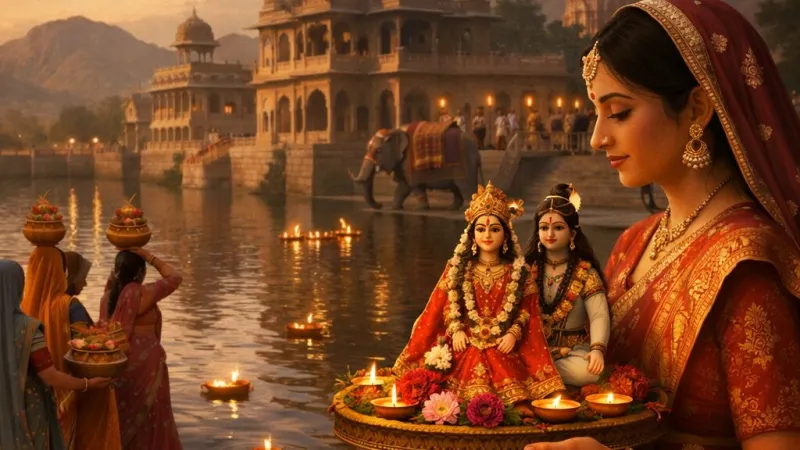
The festival is replete with artistic expression. Women mould and adorn beautifully crafted idols of Gauri and Isar (Parvati and Shiva), traditionally made from clay or wood, and decorated with bold vermilion, brilliant bangles, and colourful drapes. These idols occupy pride of place in the aangan (courtyard) throughout the festival period, watched over with reverence and care. Each day, women offer fresh flowers, green grass, and sweets to the deities. The rituals culminate in processions where idols are carried gracefully on heads, accompanied by folk songs and the rhythmic beat of dholaks, painting a picture reminiscent of a Rajasthani miniature brought to life.---
Fasting, Songs, and Sacred Stories
Gangaur’s beauty is as much in its sounds and silences—a delicate blend of penance and celebration. Women observe ritual fasts, refraining from even a drop of water on certain days, their minds and hearts focused on prayer. Evenings resound with geet (songs) sung in melodious voices, narrating the legendary reunion of Gauri with Isar. These folk songs, passed down orally, are repositories of Rajasthan’s oral heritage, comparable to the way Bhakti poets once used verses to express divine longing. Children gather around their elders to listen to stories, reinforcing ancestral ties. In villages, you can often come across small groups rehearsing traditional dances like Ghoomar, adding rhythm and motion to the spiritual narrative.---
The Grand Finale: Processions and Nature’s Embrace
On the final day, events reach a crescendo. Idol-laden processions wind their way through streets towards lakes or well-kept gardens, recreating Gauri’s mythical journey to her marital home. There is a spirit of camaraderie, with neighbours joining hands to sprinkle gulal, share sweets, and bid farewell to the deities by immersing the idols in water. The symbolism is rich: as Gauri returns to Shiva, married women bless their families, and nature is invoked as a witness to these prayers for prosperity. In Jaipur, the royal family traditionally leads a spectacular procession, with elephants, camels, and horses in ceremonial finery—a breathtaking example of folk pageantry connecting past and present.---
Gangaur as Keeper of Cultural Identity
Gangaur is more than a festive obligation; it is a living thread in the cultural fabric of Rajasthan and adjoining states. The festival embodies ideals of loyalty, mutual respect, and collective harmony. In the era of rapid modernisation, festivals like Gangaur safeguard regional customs, resisting the tide of urban alienation. Gauri’s return serves almost as a metaphor for the return to roots, to family, and to values that are becoming endangered in the age of screens and skyscrapers. As elders retell stories and children join rituals with curiosity, the festival becomes a channel for preserving intangible heritage. This is akin to tying a rakhi—not merely an act, but a renewal of ancient promises.---
Local Flavours and Regional Festivities
No celebration in India is ever complete without sumptuous food and local artistry. During Gangaur, special sweets like ghewar and mawa kachoris are lovingly prepared in Rajasthani kitchens, their mouth-watering aroma mingling with the air of festivity. In Shekhawati or Marwar regions, unique folk dances light up courtyards. The festival is also an occasion for the display of traditional crafts like bandhani sarees, colourful bangles, and intricate mehendi. Local variations can be seen in the way processions are organised, in the length of the fasting period, or in the songs sung—yet, all these underscore unity in diversity, a cherished value in the Indian ethos.---
Conclusion: The Modern Relevance of Gangaur
To sum up, Gangaur is not just a ritual but a celebration of timeless virtues—love, fidelity, and hope—expressed through a tapestry of art, devotion, and community gathering. As modern life hurries ahead, festivals like Gangaur gently remind us to pause, celebrate our relationships, reconnect with nature, and draw from the wellspring of cultural wisdom. For young students, understanding Gangaur is an opportunity to appreciate the splendour and depth of Indian traditions and perhaps find ways to keep them alive in their own lives.---
Let us cherish such festivals, for in celebrating them, we celebrate the best of who we are—rooted, colourful, and full of faith.
Frequently Asked Questions about AI Learning
Answers curated by our academic expert team
What are the top 10 facts about Gangaur Festival and its cultural significance?
Gangaur Festival honors Lord Shiva and Goddess Gauri, is mainly celebrated in Rajasthan, involves women performing rituals for marital happiness, and highlights spring’s optimism and India’s cultural unity.
Where is Gangaur Festival celebrated and what makes it special?
Gangaur Festival is mainly celebrated in Rajasthan but also in parts of Madhya Pradesh, Gujarat, West Bengal, and Telangana, known for vibrant attire, folk songs, and its ability to unite diverse cultures.
What is the meaning behind the name Gangaur Festival?
The name 'Gangaur' combines 'Gan' for Lord Shiva and 'Gaur' for Goddess Parvati, symbolizing divine marital union and devotion, guiding values for couples and families.
When does Gangaur Festival take place according to the Hindu calendar?
Gangaur Festival is celebrated during Chaitra, the first month of the Hindu lunar calendar, usually in February-March, marking the arrival of spring and new beginnings.
How do women participate in Gangaur Festival rituals?
Married women fast and pray for their husbands’ well-being; unmarried girls seek blessings for an ideal partner, with rituals passed down from mothers to daughters, strengthening family bonds and tradition.
Rate:
Log in to rate the work.
Log in