Kashi Vishwanath Temple Corridor, Varanasi: 10 Key Lines on History & Impact
This work has been verified by our teacher: 12.02.2026 at 13:54
Type of homework: Essay Writing
Added: 10.02.2026 at 8:52
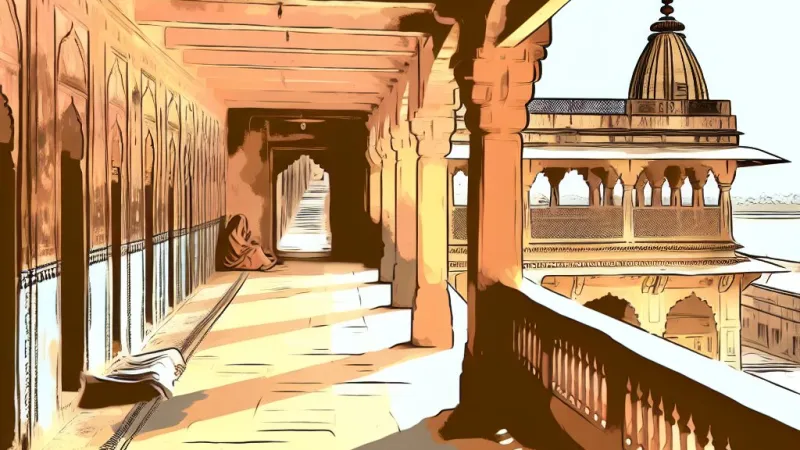
Summary:
Explore the history and cultural impact of Kashi Vishwanath Temple Corridor in Varanasi. Learn key facts perfect for your homework or essay writing. 📚
10 Lines on Kashi Vishwanath Temple Corridor
*A Comprehensive Study of the Kashi Vishwanath Temple Corridor: Architecture, Impact, and Cultural Significance*---
Introduction
Varanasi, also known as Kashi or Banaras, is rightly called the eternal city of India—it pulses with spiritual energy, is woven with legends, and holds an unparalleled place in the nation’s collective consciousness. For centuries, its winding lanes, sacred ghats along the Ganga, and multitude of shrines have invited seekers and devotees from every corner of the country. Among its holiest sites stands the Kashi Vishwanath Temple, revered as one of the twelve Jyotirlingas and a beacon for Lord Shiva’s devotees. In recent years, the development of the Kashi Vishwanath Temple Corridor has redefined pilgrimage in Varanasi, blending ancient sanctity with modern accessibility. This essay delves into the history of the temple, the conception and execution of the corridor, its wide-ranging cultural and social impact, and the broader implications for Indian heritage and spirituality.---
Background and Historical Context
Kashi’s identity is inseparable from the Ganga, the ghats, and its ceaseless worship. As the “oldest living city,” referenced even in Puranic lore and travel accounts of scholars like Xuanzang and Alberuni, Varanasi is a repository of India’s spiritual and scholarly traditions. The city harbours around eighty-eight ghats, each with its own myth and significance—Harishchandra for last rites, Dashashwamedh for grand aartis, and Lalita Ghat, intrinsically linked with the Kashi Vishwanath shrine.The Kashi Vishwanath Temple itself traces its turbulent history across centuries, having faced numerous cycles of destruction and reconstruction. The present structure was commissioned in the late eighteenth century by Queen Ahilyabai Holkar of Indore, whose dedication is still celebrated among devotees. Over the ages, powerful patrons ranging from Mughal emperor Akbar (whose minister Raja Todar Mal facilitated temple restoration) to regional Maratha rulers have contributed to the temple’s endurance. The temple’s location, in a congested, labyrinthine section of Varanasi, posed significant challenges, with daily throngs of devotees, especially during festivals like Maha Shivaratri, leading to chaotic bottlenecks. For elderly pilgrims, differently-abled persons, and those unfamiliar with the maze-like neighbourhood, visiting the shrine was often a daunting ordeal.
---
Conceptualisation of the Kashi Vishwanath Temple Corridor
Recognising these age-old hardships, the vision behind the Kashi Vishwanath Temple Corridor emerged: to connect the temple seamlessly with the ghats, particularly Lalita Ghat, thereby streamlining the path for pilgrims from the Ganga’s edge to Lord Shiva’s sanctum. This concept was rooted not only in physical transformation but also in enhancing the spiritual experience—traditionally, many Hindus consider bathing in the Ganga before darshan as highly meritorious. The corridor is thus more than a pathway; it is an effort to align devotional practices with modern-day sensibilities, ensuring heritage conservation while introducing state-of-the-art amenities.For the planners, the challenge lay in respecting the city’s ancient fabric. Their aim was not simply to build broad walkways, but to reclaim and highlight the layered history of Kashi—incorporating old shrines, sacred trees, and historic wells within a new, thoughtfully designed public space.
---
Architecture and Design Features
Spanning over 5 lakh square feet, the Kashi Vishwanath Temple Corridor is a transformative urban intervention. At its heart is a wide, landscaped promenade stretching roughly 400 metres from the Ganga to the temple. The project was brought to life under the guidance of architect Bimal Patel, whose philosophy favoured a respectful blend of traditional motifs, locally sourced sandstone and granite, and modern infrastructure. His team not only created smooth, broadened passages but also introduced escalators, ramps, and bridges to ensure unfettered access to the elderly and specially abled—previously a major bottleneck during rush hours.Remarkably, the corridor is not just new construction. More than twenty ancient temples and shrines, long hidden behind encroached buildings, were uncovered and restored as part of the redevelopment. Sacred elements such as the Gyan Vapi well, shrines like Annapurna Mandir and the shrines of Vishnu, Nirvikar Shiva, and Ganga Devi now stand harmoniously within the campus. Alongside security installations—including comprehensive CCTV coverage—there is a focus on aesthetics: the grounds bloom with indigenous trees, intricate jalis, and sculptures inspired by mythological themes.
---
Construction Timeline and Investment
The project was green-lit in 2019, with an ambitious schedule and strong governmental backing, including direct monitoring by the Prime Minister, Shri Narendra Modi, a Lok Sabha MP from Varanasi himself. Despite hurdles posed by the global COVID-19 pandemic, work continued steadily, with the first phase inaugurated amidst considerable fanfare in December 2021. The total cost hovered around ₹339 crore, a significant investment reflecting the corridor’s national value. A hallmark of the process was the rehabilitation and compensation of nearly 1,400 families and shopkeepers whose properties made way for the public good—a sensitive move that drew both acclaim and critiques, depending on individual circumstances.---
Cultural and Social Impact
The corridor’s immediate influence was dramatic. Where once chaotic lanes barely allowed the passage of a single palanquin, today an estimated 50,000 devotees can walk in comfort and relative tranquillity, even on festival days. Elderly visitors and pilgrims with disabilities report unprecedented ease, with ramps and elevators offering dignified access never imagined before.Beyond pilgrim comfort, the corridor is a boon to tourism: Varanasi, already a key circuit for the “Incredible India” campaign, has seen a surge in footfall—including international guests. This uptick means more income for local traders, boatmen, flower-sellers, and hoteliers, stimulating economic renewal in a city famed for its silks and street food. The restoration of hidden temples and the beautification of spaces have had an educative impact as well, making Varanasi’s spiritual inheritance visible and tangible to younger generations.
Symbolically, the project underscores India’s commitment to cherishing its ancient roots while projecting spiritual and cultural pride on the world stage. The Prime Minister’s deep involvement—seen during his ritual dip in the Ganga and temple aarti participation on inauguration day—sent a powerful message of national unity centred around timeless heritage.
---
Challenges and Criticisms
No transformation of this scale is free from debates. Some religious scholars and older residents express unease that large-scale modernisation might dilute the “sacred chaos” that forms the heart of Varanasi—challenging notions of authenticity and spiritual intimacy in favour of tourist-friendly spectacle. Concerns linger over the displacement of traditional neighbourhoods, where joint families had lived for generations, and the seeming loss of organic, lived-in history.Additionally, environmentalists urge caution: the expansion, if unchecked, could put increased pressure on the riverfront ecosystem, already threatened by pollution and excessive human activity. The balance between keeping the corridor functional and ensuring Ganga’s health remains an ongoing task.
---
Comparative Analysis
India has seen other ambitious projects—like the modern complexes at Somnath, Akshardham, or Vaishno Devi—but the Kashi Vishwanath Corridor is unique in its context. Unlike new constructions, it was tasked with rehabilitating ancient temples and integrating them within a maze-like historical urban environment. Internationally, lessons can be drawn from cities like Lumbini (the birthplace of Lord Buddha) or Jerusalem, where modern crowd management coexists with centuries-old traditions. In each case, sensitive handling of history and living culture is paramount.---
Future Prospects and Recommendations
Looking ahead, the corridor could set an example for integrating spiritual tourism with sustainable urban planning. There is scope for further connecting the temple area with other ancient landmarks like Kal Bhairav Mandir or Sankat Mochan Hanuman Temple, forming a holistic “Sacred Circuit.” Digital guides and app-based crowd management, common at Tirupati or the Ajanta-Ellora caves, could further enhance pilgrim experience. However, it is vital that future expansions are driven by continuous dialogue with the local community, to preserve intangible heritage—like the oral histories, street music, and artisanal crafts that form the soul of old Kashi.Sustainable initiatives—like waste management, plastic bans, and afforestation on the ghats—should be promoted so that spiritual upliftment goes hand in hand with ecological welfare.
---
Conclusion
The Kashi Vishwanath Temple Corridor is not merely an infrastructural project—it is a statement of India’s ability to honour tradition while embracing change. By transforming the pilgrim’s journey from the Ganga to Lord Vishwanath’s shrine, it weaves together Varanasi’s legendary past and its vibrant, living present. Its impact is visible in the comfort of the elderly visitor, the curiosity of the young tourist, and the proud gaze of the local vendor. While challenges remain, the project kindles hope that India’s unique spiritual landscape will endure, thriving harmoniously in a modern age. Visiting Varanasi today is to witness this confluence first-hand—a testimony to the city’s undying spirit and the nation’s cultural continuity.---
(Optional) Glossary
- Ghat: Steps leading down to the river, used for prayers, bathing, and rituals. - Puja: Religious worship or offering. - Corridor: In this context, a spacious walkway connecting the temple complex to the ghats.---
*May the timeless city of Varanasi continue to inspire and welcome souls from every walk of life, its lanes echoing with prayers, stories, and the gentle flow of the Ganga, as tradition and progress walk hand in hand.*
Rate:
Log in to rate the work.
Log in