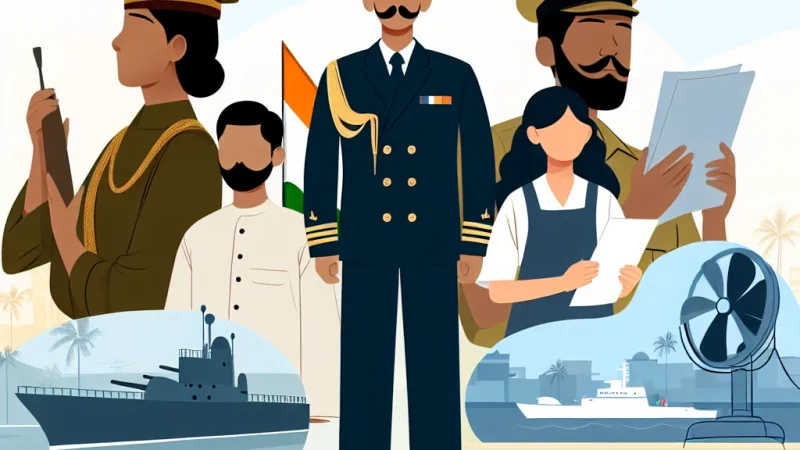
Navy Day: Honouring India's Naval Heroes and 1971 Victory
This work has been verified by our teacher: 21.01.2026 at 3:08
Type of homework: History Essay
Added: 17.01.2026 at 18:13
Summary:
Learn Navy Day: India's naval heroes and the 1971 victory, with history, modern roles, civic significance and student activities for essays and projects.
4 December — A Day to Honour India’s Maritime Guardians
The vastness of the sea has always both inspired and challenged India, a nation with over 7,500 kilometres of coastline, bustling harbours, and a history steeped in maritime trade. Yet, few pause to reflect on the vigilant men and women who silently ensure these lifelines are safe. Navy Day, observed each year on 4 December, is a solemn tribute to the valour of the Indian Navy. Far beyond ceremonial homage, it marks the memory of a remarkable naval victory while raising awareness of the Navy’s ongoing role in defending, serving, and shaping an independent nation’s destiny.Historical Origins: Why 4 December?
India’s naval history stretches far back, with evidence of seafaring in the Indus Valley Civilisation and the famous Chola expeditions across Southeast Asia. However, Navy Day as celebrated today has its roots in the dramatic events of December 1971, during the Indo-Pakistani War. At the time, a young nation was fighting on two fronts, and command of the seas was a crucial advantage.On the night of 4 December 1971, the Indian Navy launched Operation Trident against the Karachi Harbour, the main base of the Pakistani Navy. Using a squadron of missile boats equipped with the then newly-inducted Soviet-built Styx missiles, Indian naval forces struck Karachi’s oil storage tanks and harbour installations, destroying enemy ships and crippling logistic capabilities. As recorded in numerous accounts, including by the Navy itself, INS Nipat, INS Nirghat, and INS Veer were among the main participants. The attack achieved complete surprise, inflicting considerable losses without a single Indian casualty that night. This operation not only demonstrated innovative tactics but also established the Indian Navy as a decisive force in the conflict, leading to the annual commemoration on this date.
Operation Trident’s success was followed by Operation Python—another strike on Karachi a few days later. Together, they highlighted the significance of sea power and transformed military doctrine in the Indian Ocean region. The memory of those brave sailors and officers is today immortalised at the National War Memorial and at naval institutions across the country. Their courage is a reminder that peace is often the result of prepared vigilance rather than mere absence of war.
Contemporary Roles: The Modern Indian Navy
Fortress at Sea: Defence and Deterrence
Since Independence, the Indian Navy has evolved from a small, British-inherited fleet to a multi-dimensional force. Its foremost duty remains the defence of our maritime frontiers. With the Arabian Sea, Bay of Bengal, and Indian Ocean of strategic importance, the Navy ensures continuous patrol, surveillance, and deterrence against potential threats—be it from hostile navies or non-state actors. Today’s navy employs advanced platforms including aircraft carriers like INS Vikramaditya and missile destroyers, as well as submarines that form a credible second-strike capability under India’s nuclear doctrine.Security and Stability: Maritime Policing and Beyond
Naval tasks go far beyond wartime deployment. Indian Naval ships regularly participate in anti-piracy patrols in the Gulf of Aden, and have intercepted illegal arms, narcotics, and carried out rescue operations of hijacked merchant vessels. Exercises such as “Malabar” and “Varuna” with partner navies from the Indo-Pacific and beyond enhance India’s maritime cooperation and help foster regional stability. These peacetime roles illustrate the Navy’s adaptability, serving both as a shield and a diplomatic bridge.Humanitarian Assistance: Service in Crisis
India's long coastline and island territories are especially prone to natural disasters—be it cyclones, floods, or tsunamis. When calamity strikes, the Navy has often been first to respond, executing mass evacuations, search-and-rescue operations, and delivering critical aid, as seen during the 2004 tsunami or more recently during cyclonic storms along the east coast. Naval helicopters and landing crafts become lifelines for millions, reflecting the Navy’s commitment to humanitarian assistance and disaster relief (often abbreviated as HADR in naval parlance).Building the Blue Economy
A lesser-known but crucial component of the Navy’s role is its support for the “blue economy”—the sustainable management of marine resources for economic growth. This includes hydrographic surveys for safe navigation, scientific expeditions, environmental protection, and safeguarding fisherfolk. Fishermen across Gujarat, Odisha, Tamil Nadu, and the Andaman & Nicobar Islands have benefited from the Navy's regular advisories and crisis alerts.Diplomacy and Outreach
Naval diplomacy has become increasingly significant. India has, over the years, sent ships on goodwill visits, conducted joint exercises with neighbouring navies, and provided training or relief supplies to countries as distant as Mozambique and the Maldives. This “soft power” dimension strengthens India’s global standing, earning respect and trust in an uncertain world.Observing Navy Day: A Living Tradition
Navy Day begins with formal ceremonies at memorials such as the “Gaurav Stambh” in Mumbai and the National War Memorial in New Delhi, where wreaths are laid and bugles sound the Last Post, honouring those lost in the line of duty. Senior naval officers, veterans, and civilian dignitaries deliver addresses highlighting both historic victories and present-day challenges.In the week leading up to Navy Day, “Navy Week” celebrations bloom across India’s coastal cities—Kochi, Visakhapatnam, Mumbai, Chennai, and others. Dockyards and naval bases open their usually-restricted gates to the public for exhibitions, guided tours, and hands-on displays of ships, submarines, and naval aviation assets. School and college students crowd these venues, marvelling at mock rescue missions and interacting with naval engineers and sailors.
For those far from the coast, local events include essay and poster competitions, model-ship building, and skits. Many cities broadcast special documentaries or showcase naval films on Doordarshan and other media. In the digital age, social media posts, quizzes, and virtual tours make Navy Day a truly national event.
Why Navy Day Matters: Educational and Civic Significance
First, Navy Day instils a vital awareness among citizens—especially the youth—about the importance of maritime security, a topic often overlooked in textbooks fixated on land wars. It sparks classroom debates about global trade, resource management, and the future of naval science. By spotlighting naval careers, it invites students across India to dream beyond the stereotypical choices and consider service afloat.Second, the day is a lesson in gratitude. It bridges the civilian–military divide, fostering respect and critical understanding for those who serve under difficult, sometimes hostile, conditions far from public gaze. In schools, speeches by veterans or family members of serving sailors add a personal, emotional dimension that textbooks alone cannot deliver.
Ways to Participate: School and Community Involvement
Celebrating Navy Day meaningfully involves participation rather than passive observance. Here are several ways schools, colleges, and communities across India can take part:- Invite a veteran or officer: A talk or informal Q&A can humanise the Navy’s role and inspire students. - Creative competitions: Organise poster-making or essay contests on topics such as “The Role of the Indian Navy in Disaster Relief” or “Why Sea Power Matters to India”. - Model-ship displays and skits: Hands-on activities help internalise the concepts, and skits based on true stories can bring sailors’ sacrifices to life. - Debates and quizzes: Topics might examine the balance between economic development and security, or the impact of technological change on naval operations. - Community activities: A beach clean-up connects environmental stewardship to the wider maritime domain. Blood donation drives in collaboration with naval hospitals or local units also underline service and solidarity. - Personal learning: Students can visit maritime museums (like the INS Kurusura Submarine Museum in Visakhapatnam), watch navy-related documentaries, or read memoirs by Indian naval leaders like Admiral Arun Prakash.
Challenges Ahead: The Growing Importance of Maritime Security
India’s maritime landscape is shifting. Emerging technologies—such as unmanned underwater vehicles, advanced anti-ship missiles, and artificial intelligence—pose both opportunities and new threats. Securing 1,200 islands and vast Exclusive Economic Zones, as well as protecting critical undersea cables, demands vigilance and resources.Climate change has made humanitarian challenges at sea more frequent. Illegal fishing, pollution, and potential resource disputes add layers of complexity. Navy Day is, thus, not only a reminder of past glory but a call for the public to support continued modernisation, research, and long-term investment in maritime capabilities.
Conclusion
Navy Day is much more than a one-day ceremonial salute. It is a living thread tying India’s ancient seafaring traditions to its modern aspirations and responsibilities on the global stage. To commemorate 4 December is to honour the bravery of those who went into harm’s way and to recognise the vital, multifaceted service the Indian Navy continues to provide. For students, teachers, and citizens, it is an invitation to learn, participate, and ensure that the story of India’s maritime guardians is never forgotten.Navy Day is not merely a date on the calendar; it is an invitation for every citizen to understand and value the oceans that shape our future. Let us remember, reflect, and renew our commitment to maritime awareness and national unity—not just on 4 December, but every day of the year.
Rate:
Log in to rate the work.
Log in