Class 8 Honeydew: The Great Stone Face II — Summary, Explanation & Analysis
This work has been verified by our teacher: 17.01.2026 at 15:31
Type of homework: Summary
Added: 17.01.2026 at 15:05
Summary:
Learn Class 8 Honeydew The Great Stone Face II summary, explanation and analysis to understand Ernest's humility, themes, characters and exam tips for CBSE.
The Great Stone Face — II
*Class 8 CBSE English Honeydew: Chapter Summary, Explanation and Analysis*Legends often kindle hopes of a remarkable saviour, shaping the expectations of generations. In Nathaniel Hawthorne’s “The Great Stone Face — II,” the fulfillment of such a legend unfolds quietly, not through flamboyant achievement but in the steadfast life of an ordinary villager. This story, set in the tranquil valley overshadowed by a mysterious stone formation, gently explores what true greatness really means—proposing that it lies in selfless living and humble wisdom rather than in fame or poetic imagination.
Context and Background
“The Great Stone Face — II” is a direct continuation of the first part, where the subtle presence of the stone face has become woven into valley legend. The valley folk believe a prophecy: someone bearing a close resemblance to the gentle, noble visage of the stone face would one day arise as their greatest blessing. In the earlier part, heartfelt expectation attached itself to various famous men who returned to the valley, but each—wealthy Mr. Gathergold and valiant General Blood-and-Thunder—fell short of the stone face’s silent nobility. Against this background, the second part resumes with Ernest, now an old man, at the centre of the valley’s quiet hopes.Summary of Events
Ernest’s Present Life
As the years flowed gently through the valley, Ernest had grown from a thoughtful boy into a grey-haired, mild-mannered old man. His reputation was built not on grand achievements but on a long record of kindness, honesty, and sincerity. He spent his days among the humbler folk, working modestly and giving freely of his time and advice. Even prominent figures came from afar to seek his counsel, drawn by the sense of genuine goodness that seemed to emanate from him. Yet, at heart, Ernest always wore his humility with ease, feeling sure that the person the prophecy spoke of could not be himself.Arrival of the Poet
Change sweeps the valley with the return of a celebrated poet, once a valley child but now renowned across distant lands. The poet, unlike previous “great men,” boasts of no military glory or fabulous wealth; instead, his fame rests on the haunting lyrics he has penned about the Stone Face and its place in his imagination. The valley welcomes him with pride—this is, after all, a man whose words have given them a kind of immortality. However, behind the applause, the poet wonders if his written greatness measures up to the real, moral stature suggested by the ancient prophecy.Ernest Meets the Poet
When the poet seeks out Ernest, their meeting is simple and unadorned. There is no fanfare, only the warm hospitality common in Indian villages—much like the guest-welcoming tradition (atithi devo bhava) seen across our country. The poet, though lauded, is awed by the natural wisdom and calm dignity of Ernest. Their conversations touch on poetry, life, and the legend itself. As they talk, the poet is struck by an uncomfortable truth: his verses, beautiful as they are, do not reflect the lived reality that Ernest embodies. He recognises, perhaps for the first time, that greatness lies not just in inspiring words but in selfless deeds.Fulfilment of the Prophecy
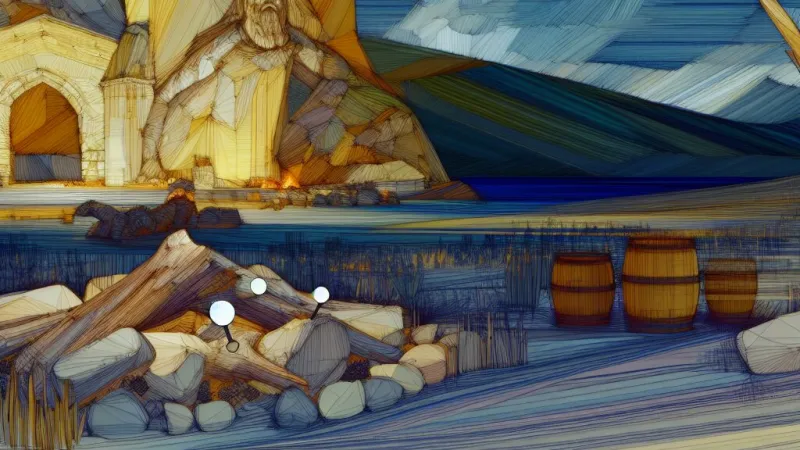
As evening settles, a crowd gathers at the community meeting place to listen to Ernest speak. His words, unlike the florid poetry of the guest, are marked by directness and sincerity—simple expressions flowing from a life lived in service of others. The poet, moved by the atmosphere, glances at the Great Stone Face before turning back to Ernest. In the fading sunlight, a striking resemblance emerges between Ernest’s features and the stony visage overlooking the valley. Others notice too, and a hush envelops the crowd: it seems that the prophecy has indeed come to pass. Yet, in his unwavering humility, Ernest himself doubts that he is the “chosen one,” declaring that he still awaits someone greater.Character Study
Ernest
At the heart of the story lies Ernest—an everyman whose life is his message. Quiet, gentle, and deeply caring, he listens more than he speaks, and when he does speak, his words carry the weight of experience. Ernest’s moral fibre is never in doubt. For example, he does not claim the prophecy or seek public acclaim. Instead, he finds satisfaction in helping others, offering advice to troubled villagers, and leading by silent example. In many ways, he mirrors the ideal of a village elder in Indian stories—like the wise panchayat head whose decisions benefit all without seeking personal gain.The Poet
The poet offers a foil to Ernest. Articulate, sensitive, and respected, he represents the world of creativity and dreams. While his poetry breathes life into the legend, his imagination alone cannot actualise the qualities the Stone Face signifies. He is honest enough to admit that his poems often outstrip his actions. This self-awareness highlights the central tension: the difference between aspiring to goodness and actually living it.Villagers and the Stone Face
The villagers, while simple, are not passive; they form the collective conscience of the valley and keep the legend alive. Their yearning and hope for the prophecy to come true mirrors the way Indian communities often rally around moral stories or the examples of humble leaders, such as Mahatma Gandhi’s simplicity inspiring millions. The Stone Face itself becomes a living symbol: a blank, impassive standard of virtue, inspiring all to strive for something higher.Major Themes and Ideas
True Greatness: The chapter repeatedly asserts that consistent, everyday moral behaviour outshines sudden flashes of brilliance or external glory. Unlike celebrated personalities who achieve greatness in a single field, Ernest’s steady goodness touches lives.Prophecy and Expectation: Hawthorne probes how legends shape our expectations and how communities try to interpret fulfilment—sometimes missing quiet greatness while waiting for grand gestures.
Art Versus Life: The poet’s verses elevate ideals, but it is Ernest’s unpretentious actions that give substance to these ideals, showing that art is most powerful when lived.
Humility and Contentment: Above all, Ernest’s humility becomes the chapter’s moral centre. He does not grasp for greatness or authority, teaching the value of self-effacement.
Literary Devices and Style
The story’s literary richness lies mainly in its symbolism and contrasts. The Great Stone Face is more than a rocky shape; it stands for the highest form of human character, quietly watching over generations. There’s gentle irony in the villagers’ repeated misjudgements—seeking greatness in wealth, war, or words, rather than in lived goodness right among them. The tone is meditative and reflective, much like a wise elder telling a story by the fireside, and the narrative uses third-person omniscience, allowing us to see the thoughts of both poet and Ernest.Moral Lessons and Relevance
The lesson for students is clear and timeless: Genuine success comes not from admiration but from honesty, helpfulness, and continuous inner growth—values prized in every Indian home or classroom. In scholar’s life, quietly helping a classmate, remaining honest in exams, or contributing to community service reflects Ernest’s spirit far more than giving impressive speeches. The story thus reminds us that everyday actions are what finally shape our character.Comparison With Part I
Part I set the wheels of prophecy in motion, making us question the criteria for true greatness. Part II gently answers: it is goodness lived quietly, not flashy success, that finally fulfils the valley’s hopes.Useful Vocabulary
- Prophecy: a future prediction; e.g., grandmother’s prophecy that I’d score well if I worked hard. - Humble/Humility: being modest; e.g., teachers respect humble students. - Likeness: similarity; e.g., my cousin has a likeness to my father. - Boast: speak with pride; e.g., some boast about their marks. - Valley: area between hills. - Marvel: something wonderful; e.g., the Taj Mahal is a marvel. - Character: moral qualities; e.g., honesty shapes character. - Shepherd-like: rural and simple; e.g., sheep farmers live shepherd-like lives. - Imagery: descriptive language; e.g., “lush green fields” is imagery. - Fulfilment: making true; e.g., working hard brings fulfilment of goals.Tips for Writing Exams
- For short (30–40 words) answers, state the main fact and a supporting example. - For medium (80–100 words), add a line of context and a conclusion. - For long (150–200 words), organize the answer into intro, plot, characters, themes, conclusion. - Manage time by planning your key points before writing. - Use linking words: however, moreover, consequently. - Quote only if absolutely needed; otherwise, paraphrase neatly.Anticipated Questions and Approaches
1. Summary: Mention prophecy, Ernest’s life, poet’s arrival, meeting, final recognition, and Ernest’s humility. 2. Describe Ernest: Focus on his old age, wisdom, helpfulness, humility, and how villagers respect him. 3. Contrasting Ernest and the Poet: Ernest acts, poet dreams; Ernest is humble, poet is reflective; Ernest is fulfilled, poet searches. 4. Moral of the story: Goodness and humility triumph over fame; Ernest’s example is the best lesson. 5. Why Ernest still hopes for a greater man: Because true humility means never seeing oneself as perfect.Model Conclusion
To conclude, “The Great Stone Face — II” urges us to seek greatness in daily conduct, not in applause or renown. It gently champions the belief that sincere, self-effacing good deeds ultimately outweigh the fame gained from words or wealth. Like the silent stone face, real virtue endures, inspiring all who look upon it.---
Last Word: In an age where popularity often outshines quiet merit, Ernest’s example stands as a guiding light for students in India, reminding us that a life of purpose counts for far more than the echo of passing applause.
Rate:
Log in to rate the work.
Log in