Krishna Janmashtami: 10 Simple Lines on the Festival's Significance
This work has been verified by our teacher: 29.01.2026 at 13:27
Type of homework: Essay Writing
Added: 26.01.2026 at 13:15
Summary:
Discover 10 simple lines on Krishna Janmashtami explaining the festival’s significance, history, and cultural importance for primary students in India.
10 Lines on Krishna Janmashtami
In the vast and colourful tapestry of Indian festivals, Krishna Janmashtami stands out as a joyous occasion that pulses with devotion and celebration. This vibrant festival, dedicated to the birth of Lord Krishna, is cherished not only for its religious significance but also for the way it weaves communities together in love, faith, and festivity. Across India, from the bustling alleyways of Mathura to the serene ghats of Vrindavan, and in countless homes and temples, Janmashtami is celebrated with unique customs, melodious bhajans, and a spirit of unity. In this essay, I will share ten simple yet important facts about Krishna Janmashtami and delve into how this festival is much more than a celebration—it is a living reminder of the values and stories that shape Indian culture.
Historical and Mythological Background
To understand Janmashtami, one must turn to the heart of Indian mythology. Lord Krishna, widely regarded as the eighth avatar of Lord Vishnu, was born in Mathura to Devaki and Vasudev. His birth was not an ordinary event, but one shrouded in mystery and divine intervention. According to ancient scriptures, Devaki’s brother Kansa was a cruel king who feared a prophecy that her child would be his end. To protect Krishna, his father Vasudev carried the newborn across the turbulent Yamuna river to Gokul, where Krishna was lovingly raised by his foster parents, Nand Baba and Yashoda.The childhood of Krishna is a treasure trove of enchanting tales—stealing butter from neighbouring homes, playing the flute under the shade of kadamba trees, and charming everyone with his mischievous leelas. But beyond these playful acts, Krishna grew to embody courage, wisdom, and righteousness. He stood firmly against Kansa’s tyranny, and his actions continue to inspire millions.
10 Key Facts About Krishna Janmashtami
1. Krishna Janmashtami is a much-awaited Hindu festival that celebrates the divine birth of Lord Krishna each year. Across towns, villages, and cities, preparations begin days in advance, with a buzz of anticipation in the air.2. The festival marks the anniversary of Krishna's birth at midnight on the Ashtami (eighth day) of the dark fortnight in the month of Bhadrapada. This usually falls between August and September, according to the lunar calendar.
3. Lord Krishna is revered as the eighth avatar (incarnation) of Lord Vishnu, the preserver among the Hindu Trinity. In the Bhagavata Purana and Mahabharata, his role holds deep spiritual significance.
4. Krishna’s arrival was prophesied to vanquish evil, especially to end his uncle Kansa’s oppressive rule, and to restore Dharma (righteousness) in the world. His life symbolises the triumph of good over evil, an underlying theme celebrated on Janmashtami.
5. Throughout his life, Krishna wore many hats—a mischievous child, a beloved friend, a wise philosopher, a fearless warrior, and a divine guide. His teachings to Arjuna in the epic Mahabharata have become guiding principles for generations.
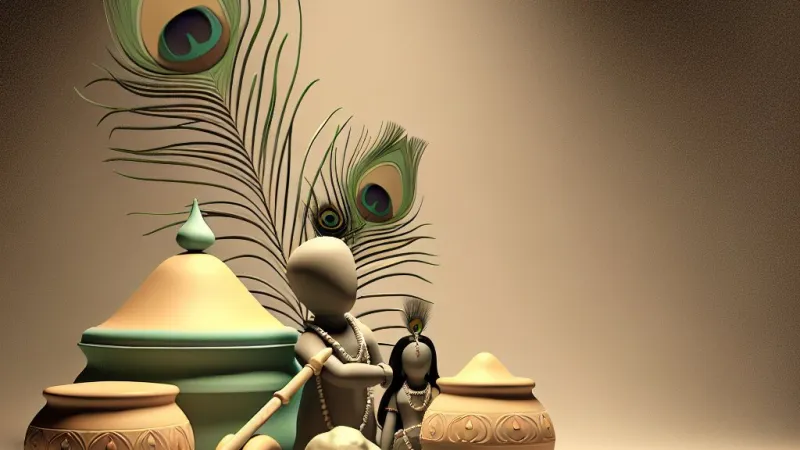
6. Krishna is instantly recognised by his melodious flute, his sparkling peacock feather, and his ever-joyful countenance. These symbols are lovingly depicted in countless paintings, sculptures, and songs.
7. He is renowned for defeating Kansa and liberating the people of Mathura from years of suffering. This dramatic episode forms the highlight of many Janmashtami plays (Rasa Lila) across India.
8. Krishna imparted the timeless wisdom of the Bhagavad Gita to Arjuna on the battlefield of Kurukshetra, teaching about duty, devotion, and righteousness. This sacred scripture remains a beacon to all those facing moral dilemmas.
9. On Janmashtami, temples overflow with devotees who sing, dance, and offer prayers in vibrant midnight vigils. The air is filled with the fragrance of fresh flowers, lit lamps, and sweet chants.
10. Fasting is a common form of devotion—many people abstain from grain, eating only fruits or special dishes until midnight, when celebrations reach their peak. This act is both an offering and a means to purify oneself in honour of Krishna.
Customs and Celebrations
Janmashtami is celebrated with much grandeur and devotion, with certain traditions unique to every region, reflecting the diversity of Indian society. The festival typically falls on the eighth day (Ashtami) of the waning moon in the month of Bhadrapada, which is eagerly looked forward to in the Hindu calendar. Devotees believe that Krishna was born at midnight, so festivities often continue late into the night.Fasting is an integral part of Janmashtami. Some devotees practice Nirjal fasts (abstaining even from water), while many opt for phalahar—meals consisting only of fruits and milk products. In places like Maharashtra and Gujarat, groups of young boys called ‘Govindas’ form human pyramids to break a hung earthen pot of curd or butter, reenacting Krishna’s fondness for makhan-chor (butter thief). This event, popularly known as ‘Dahi Handi,’ excites crowds and echoes the playful side of Krishna.
Temples and homes are beautifully decorated with flowers, banana leaves, and vibrant rangolis. Little idols of baby Krishna, often placed in cradles, are bathed (a ritual called abhishek), dressed in colourful clothes, and worshipped with great love. Bhajans and kirtans create a devotional ambience. In Mathura, Vrindavan, and Dwarka—the main towns associated with Krishna’s life—processions, jhankis (tableaux), and plays like Rasa Lila and Krishna Leela are performed, drawing devotees from all over the country.
Spiritual and Moral Teachings
Beyond celebration, Janmashtami is a reminder of the ageless wisdom that Krishna imparted. The message of good prevailing over evil is central—his victory over Kansa is celebrated as hope for justice and truth. The teachings of the Bhagavad Gita, especially Krishna’s call to Arjuna to perform his duty selflessly, echo every year on this day. These principles—karma (action), bhakti (devotion), and jnana (knowledge)—are foundational to Indian spiritual thought.Krishna also exemplifies values such as love (as seen with Radha and the Gopis of Vrindavan), compassion, friendship, and detachment from material desires. He teaches us to approach life with joy, to be unafraid in adversity, and to uphold truth. As Rabindranath Tagore once said, “Krishna’s flute is the call to arms and also the song of peace”—it symbolises that life can be both a battlefield and a celebration.
Cultural Influence
Janmashtami’s influence can be felt in every corner of India, not just in religious circles but also in its art, music, and literature. From Jayadeva’s ‘Geeta Govinda’ to the works of Surdas and Meera Bai, Krishna’s life has inspired poets, musicians, and dancers for centuries. In Kathak dance, Krishna’s playful episodes with Radha are beautifully depicted. From Maharashtra’s energetic Dahi Handi to South India’s colourful kolams (rangoli patterns) and special sweet dishes like seedai and murukku, each region brings its own flavour to the celebrations.The festival has also crossed borders; in places like London, New York, or Kuala Lumpur, Indian diaspora congregates at temples, singing Krishna bhajans and sharing traditional sweets, keeping cultural heritage alive for younger generations.
Conclusion
In essence, Krishna Janmashtami is not just a day of prayer and festivity, but a living celebration of ideals that cut across time and geography. From the stories narrated by our grandparents to the delicate cradles swung at midnight, the festival binds us to our roots, to our values, and to each other. It teaches us that just as darkness is dispelled by Krishna’s birth, our troubles and doubts can be replaced with hope, faith, and love.Let us therefore celebrate Janmashtami not only with rituals and sweets, but with a deeper understanding of its meaning. May we find inspiration in Krishna’s life to work for justice, cherish our friendships, and live with compassion. In doing so, we keep alive the spirit of Janmashtami in our hearts, year after year.
---
*Tips for Students:* - Use stories like Krishna stealing butter or the Dahi Handi festival to make your essay engaging. - Mention how your family or community celebrates Janmashtami for a personal touch. - Focus on the values Krishna stood for—love, courage, duty—which are timeless and relevant even today.
May the echoes of Krishna’s flute always guide us towards joy and righteousness!
Rate:
Log in to rate the work.
Log in