Progress vs Tradition: Shaping Humanity's Future in a Fast-Changing World
This work has been verified by our teacher: 14.02.2026 at 15:17
Type of homework: Essay Writing
Added: 13.02.2026 at 11:51
Summary:
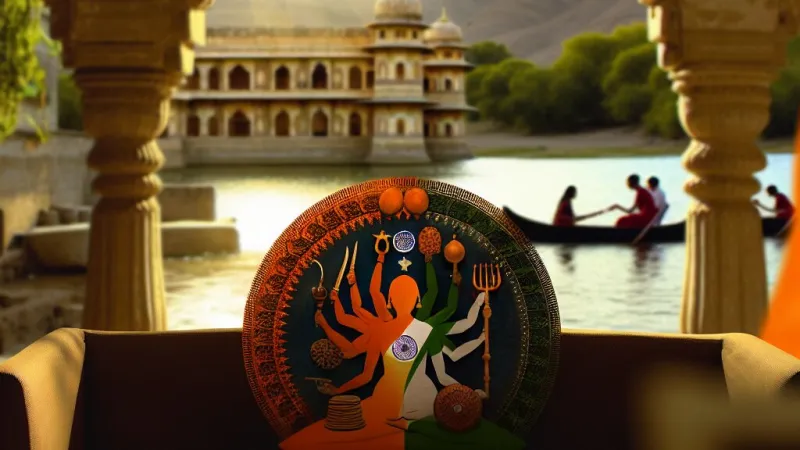
Explore the balance between progress and tradition shaping humanity’s future. Understand India's role in merging innovation with cultural values for lasting impact.
In a Rapidly Changing World, the Battle Between Progress and Preservation of Values Defines the Future of Humanity
Imagine waking up one morning to a world where artificial intelligence predicts your every need, drones deliver groceries to your doorstep, and virtual classrooms replace the very idea of school assemblies and chalkboards. Meanwhile, around you, news portals buzz about social movements rewriting age-old practices, while forests disappear to make room for sprawling megacities. The story of our age is, unmistakably, a story of change—swift, sweeping, and often without warning. This “era of acceleration,” as many thinkers describe it, places before us not just new tools but profound challenges to our sense of identity and belonging.
At its heart, two seemingly opposing forces engage in a subtle tug-of-war. Progress—our collective march toward innovation, efficiency, and prosperity—seems to promise solutions to every problem. Yet, values—the accumulated wisdom, ethics, and cultural treasures that have guided generations—form the quiet bedrock on which societies stand. The true test before modern humanity is not one of either-or, but of reconciliation: can we stride ahead without losing ourselves?
This essay examines this intricate balance. By drawing on philosophical insights, historical episodes, and the living example of Indian society, it seeks to demonstrate how the future will largely be shaped by our ability to marry ambition with conscience, innovation with rootedness.
---
I. The Dual Forces: Progress and Values
A. Understanding Progress
Throughout history, progress has been the story of breaking boundaries—be it in science, social structures, or the way we communicate. India’s own past is filled with such leaps, from Aryabhatta’s astronomical calculations in ancient times to ISRO’s recent lunar missions.At the individual and societal level, progress has meant improved health, communication, lifespan, and general well-being. For example, eradication of diseases like polio, literacy campaigns, and financial inclusion via technologies such as UPI have transformed lives across the urban–rural divide.
However, progress does not arrive without shadows. The “progress paradox” is a stubborn reality: while urbanisation builds airports and malls, it can uproot communities. While internet access brings knowledge, it also raises questions about data privacy and the spread of misinformation. Often, the question arises: whose progress is it anyway? Development that ignores equity can deepen social divides, as seen in the gaps between metropolitan and rural India.
B. The Role of Values
Values comprise those invisible threads holding together families, communities, and entire nations. Indian society thrives on a fabric woven with dharma (righteousness), ahimsa (non-violence), satya (truth), and karuna (compassion). These are not only moral codes but living, breathing realities—witness the tradition of joint family systems, festivals that unify diverse communities, and the respect accorded to teachers (gurus).Values act as anchors during tumult, providing a sense of purpose and belonging. In times of rapid transition—be it during the Green Revolution’s changing agriculture, or the liberalisation of the 1990s—communities have found meaning and stability in commonly held principles.
Still, unchecked rigidity can turn values into dogma, preventing necessary change. The challenge, therefore, is to distinguish what is essential (such as empathy or justice) from what is merely habitual (rituals that no longer serve).
C. The Paradoxical Relationship
Often, it seems that progress requires challenging and renegotiating old values, as witnessed in legal debates around gender equality or child marriages. Conversely, values sometimes resist progress when traditions become stumbling blocks to reform—consider the long and continuing struggle against caste-based discrimination in India.Yet, history teaches that the best progress occurs when it flows through the channel of enduring values. An ideal society allows for the evolution of practices without sacrificing its moral centre—a concept perhaps best summed up in Rabindranath Tagore’s plea for a “mind without fear” but “head held high.”
---
II. Lessons from History: Adaptation and Preservation
A. Civilisational Endurance Through Balance
Cultures that have managed to adapt while preserving core values often endure the tests of time. Japan’s Meiji era is celebrated for rapid industrialisation synchronised with a resurgence of Samurai ethics and Shinto spirituality. India, with her thousands of years of recorded civilisation, offers a compelling example. From Vedic times to Mughal courts to colonial subjugation, India’s mosaic has survived precisely because of its ability to integrate new influences while steadfastly holding onto certain eternal values. Festivals like Diwali, Eid, and Christmas, celebrated alongside each other, are tangible evidence of this customary pluralism.B. Cautionary Tales of Imbalance
The Industrial Revolution, while transforming Europe and much of the world, also brought immense suffering—factory drudgery, exploitative child labour, and environmental decay. Even in India, the Green Revolution’s promise of food security resulted in long-term soil degradation and distressed farmers. Societies that ignore the warning signs of progress unmoored from ethical considerations frequently pay the price in social unrest and collapsed institutions.Post-war reconstruction in Germany and Japan shows an alternative: harnessing technology and democracy rooted in cultural memory led to societies that champion both innovation and social well-being.
---
III. Indian Philosophical Approaches: A Heritage of Balance
A. The Doctrine of Sanatana Dharma
Sanatana Dharma, or the “eternal order,” sits at the heart of India’s philosophical legacy. Its main teaching—that while the world is ever-shifting, some principles remain changeless—has allowed Indian society to absorb shocks without fracturing. The Bhagavad Gita, for instance, argues not only for action, but for action in accordance with one’s ethical duties, unentangled by personal gain.This approach encourages change, but cautions that the manner and motivation for change must always align with larger dharmic goals.
B. Gradualism and the Middle Path
Notably, Indian thought rarely idealises blind zeal for reform or rigid conservatism. The Buddhist middle path (Madhyam Marg) and the cyclical understanding of time (yugas, or ages) illustrate an acceptance of change as natural, yet stress the importance of recommitting to core values in every era. This principle animates everything from the slow but assured political reforms in post-independence India to the measured introduction of economic liberalisation.C. Modern Relevance
In contemporary India, where start-ups and skyscrapers grow alongside centuries-old temples and sabhas, the principle of “unity in diversity” acts as a unifying value. Ayurveda and yoga, now embraced worldwide, are examples of ancient systems finding place in today’s health and wellness industries, even as scientific research verifies their benefits.---
IV. Challenges of Our Times
A. Environmental Crisis: An Ethical Reckoning
The climate emergency is perhaps the greatest test for the value of intergenerational justice. Ancient Indian texts venerate nature—rivers as goddesses, trees as sacred. Contemporary policy, such as the Namami Gange project or large-scale afforestation drives, partially draws inspiration from this heritage. Yet, to address the enormity of air pollution or vanishing biodiversity, progress must be yoked to values—a commitment to sustainability that echoes Tagore’s vision of “the Earth as a garden for shared humanity.”B. Technology: The Double-Edged Sword
The Digital India initiative makes services accessible to the remotest corners, bringing empowerment but also risk—surveillance, privacy loss, data misuse. Recent discussions around the Personal Data Protection Bill, the ethics of facial recognition, and artificial intelligence illustrate how technology must be governed by transparent, people-centric values, rather than market forces alone.C. Education: A Site for Synthesis
Education policy in India has, since the days of the Gurukul system, attempted to impart not just information but character. Today, under NEP 2020, there’s an explicit effort to “root” the curriculum in Indian ethos, promote experiential learning, and balance traditional knowledge with 21st-century skills. Debates continue about the right mix—how much Sanskrit or coding, how much moral science or robotics? The answer lies in fostering lifelong learners equipped both with technical competence and ethical compass.D. Culture and Globalisation
The global spread of Bollywood, regional cuisines, and yoga is a double-edged phenomenon—it celebrates diversity but risks dilution. Safeguarding intangible heritage, from handicrafts to oral storytelling, is essential not to trap these cultures in the past, but to ensure they remain a source of inspiration and innovation for the future.---
V. Strategies for Harmonising Progress with Values
A. Ethical and Inclusive Policymaking
The vision of “Sabka Saath, Sabka Vikas” (progress with all, for all) demands that economic policy, infrastructural development, and technological innovation are pursued with attention to the marginalised, the environment, and the dignity of all people—not just the privileged.B. Value-Led Education Reforms
Educational institutions must go beyond rote learning, emphasising critical thinking woven with empathy, pluralism, and civic consciousness. Inclusion of regional histories, folk traditions, and local languages—alongside coding and global best practices—will nurture citizens proud of their roots yet curious about the world.C. Regulating Technology with Humanity at the Centre
As India pioneers digital public goods (Aadhaar, UPI), robust ethical frameworks must protect individual rights and dignity. Civil society, technologists, and government must together outline how technology can enhance, rather than erode, societal trust.D. Reviving and Reinventing Culture
Policies supporting art, music, language, and science education need to treat heritage as a living, evolving resource. Communities must be invested with agency, allowing creative adaptation rather than passive preservation.---
Conclusion
As the tsunami of change sweeps through our time, the central battle is not of tradition versus modernity, but of thoughtless acceleration against meaningful, values-based advancement. History, philosophy, and present-day challenges all point to one lesson: enduring progress is that which draws nourishment from the roots yet seeks the light of new possibilities.India’s journey—its ability to assimilate, innovate, yet remain distinct—offers hope, but also a cautionary tale. Values are not obstacles to overcome, but foundations to build upon. They imbue our lives with purpose, shape our institutions, and ensure that progress does not come at the cost of human dignity or environmental catastrophe.
In the end, humanity’s brightest future will belong not to those who rush ahead forgetting the wisdom of the past, nor to those who shun all change, but to those who, like skilled musicians, learn to balance new notes with timeless harmonies. The task ahead is daunting, but it is also our greatest opportunity: to progress, not just faster, but wiser—and together.
Rate:
Log in to rate the work.
Log in