10 Short Lines on Mouse: Facts and Importance for Students
This work has been verified by our teacher: 23.02.2026 at 17:33
Type of homework: Essay Writing
Added: 20.02.2026 at 6:02
Summary:
Discover 10 short lines on mouse facts and importance for students. Learn about its biology, habits, and role in nature and society in India.
10 Lines on Mouse: The Small Creature With A Big Story
The word ‘mouse’ brings to mind an image of a small, quick, and clever animal that slips through the tiniest gaps and scurries away at the slightest movement. In the world of living creatures, the mouse may seem insignificant at first glance. However, in India and across the globe, this little mammal has carved an important place for itself — whether in natural habitats, scientific laboratories, our ancient myths, or even as a sometimes troublesome pest in homes and fields. This essay will explore how the mouse, tiny as it is, plays a surprisingly large role in both our environment and our society.
Biological and Physical Characteristics
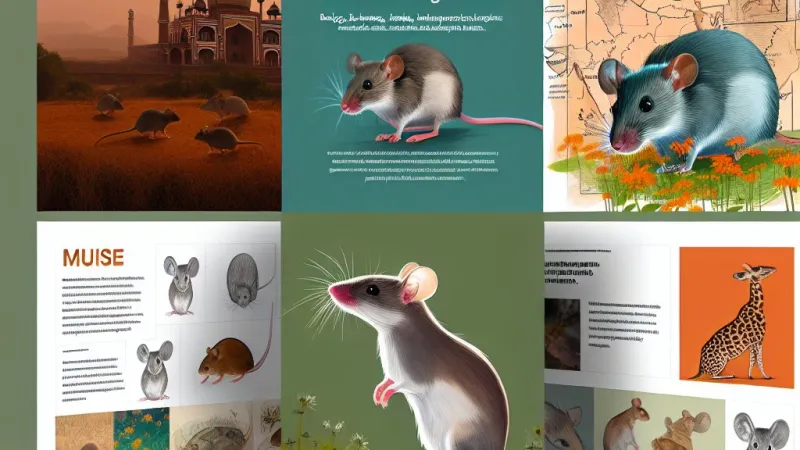
The common mouse belongs to the group of mammals known as rodents, which are famous for their continuously growing sharp front teeth. Scientists classify the mouse under the order “Rodentia,” and there are nearly 40 species identified globally. In India, apart from the familiar house mouse (Mus musculus), we can also find species like the field mouse and various forest-dwellers.Typically, a mouse is small in size—about 8 to 10 centimetres in length, and weighing around 20 to 40 grams, which is about as much as a slice of bread weighs. Its pointed snout, rounded ears, and long naked tail are unmistakable. The silky fur of a mouse may range in colour from grey and brown to white, forming a helpful camouflage in their habitat. Despite having rather poor eyesight, the mouse boasts a powerful sense of hearing and smell which guides it to food and away from threats.
Mice also stand out for their rapid life cycles. A mother mouse can give birth to litters of up to 12 babies every few weeks, thanks to a short 21-day gestation period. This high fertility is why a few mice in a home can soon become a major problem if left unchecked. Mice are nocturnal, meaning they come out mostly at night, which makes them difficult to spot during the daytime. Interestingly, they are very clean and spend a lot of time grooming themselves and keeping their burrows tidy.
Physically, mice are both agile and curious. They can jump up to 25 centimetres high, climb rough surfaces, and squeeze through holes as narrow as a rupee coin. These abilities make them outstanding survivors, whether in the wild or in urban settings.
Habitat and Distribution
Mice are among the most adaptable mammals on earth. They have managed to thrive on all continents except Antarctica. In India, they can be seen in wooded areas, grasslands, farms, and especially in cities. The house mouse, as its name suggests, is commonly found in human residences, godowns, and shops, while other species prefer fields, forests, and rocky crevices.What makes mice so successful is their extraordinary ability to adjust. Whether in the hot plains of Rajasthan, the humid fields of Kerala, or the cold hills of Himachal Pradesh, mice find ways to survive. They are excellent at making nests, using whatever materials are at hand—scraps of cloth, paper, hay, or dry leaves. A mouse’s home is a tangle of tunnels and small chambers, often hidden out of sight and cleverly stocked with stolen grains and seeds.
Diet and Feeding Habits
Mice are not picky eaters, a trait that adds to their adaptability. They favour seeds, grains, fruits, and vegetables—which is why they are such a menace in granaries and storerooms across rural and urban India. Farmers dread the sight of mouse burrows in crop fields, as these tiny rodents are capable of causing major damage to wheat, rice, and other staple harvests.However, nature is never one-sided. Mice, in their constant search for food, sometimes swallow the seeds of trees and drop them elsewhere, which helps in the dispersal of plants. They have also been caught eating small insects when nothing else is available, showing that survival matters more than menu preferences.
The Mouse and Human Society
The relationship between humans and mice is as old as settled civilisation. On the one hand, mice are notorious household pests, chewing wires, spoiling food, and making nests in our storage spaces. On the other, they have been silent partners in science and culture.In laboratories all over India, mice play a key role in research. Because their genes closely resemble humans (scientists say about 90% similarity), mice are used to study diseases, test medicines, and even search for cures to deadly conditions like cancer. The white laboratory mouse is thus a hero in its own way, making contributions that often go unrecognised by the world.
In our culture and religious traditions, mice carry a very different meaning. The famous “Mushak,” or mouse, is the trusted vahana (mount) of Lord Ganesha, one of the most worshipped deities in Hinduism. During Ganesh Chaturthi, idols of Ganesha across India show a small mouse respectfully at his feet, symbolising humility and the ability to overcome any obstacle, no matter how large it seems.
Mice have also scampered their way into popular stories, cartoon shows, and folk tales. From moral stories in Panchatantra to timeless characters like the clever mouse in Akbar-Birbal tales, these creatures have taught children in India lessons about caution, intelligence, and perseverance.
Some people also keep mice as pets. Fancy mice, with their soft fur and playful antics, attract animal lovers, although they require careful and clean handling.
Mice as Pests and Health Risks
Despite their positive roles, the presence of mice in homes or farms brings headaches for many. They are very resourceful when it comes to locating food—they can gnaw through containers, feed on stored grains, and even destroy books, clothes, and furniture. Their sharp teeth are constantly growing, driving them to chew on wood, plastic, and even electric wires, sometimes leading to dangerous short circuits or fires.Moreover, mice are potential carriers of several diseases that can pass on to humans and livestock. Illnesses like leptospirosis, rickettsial pox, and salmonella are associated with mouse droppings, urine, and the parasites they carry. In some parts of Indian villages, an unchecked mouse population has been linked to outbreaks of fevers or stomach infections. This is why cleanliness, regular inspection, and proper hygiene are so important in places where grain and food are stored.
Effective control involves keeping food sealed, plugging entry holes, setting traps, or using natural predators like cats. But it’s also vital to act humanely; poison baits can harm other animals and upset the delicate ecological balance.
Intelligence and Behavioural Adaptations
Mice might be small, but their brains are sharp. Experiments conducted in Indian universities have shown how quickly mice can learn to solve simple puzzles to find food. Their memory for navigating mazes is impressive, and they can recognise patterns and remember the location of food, shelter, and dangers.Socially, mice live in groups and communicate through squeaks and ultrasonic sounds, which are beyond human hearing. Within their tiny family units, they demonstrate affection, cooperation, and even warning signals about predators.
Their curiosity also drives them to explore new surroundings bravely. Left undisturbed, a mouse can map out an entire room in one night, searching for safe routes and hidden treats. This exploration is the reason they pop up in the most unexpected places.
Rate:
Log in to rate the work.
Log in