Brief Lines Highlighting Unsung Heroes of India’s Freedom Struggle
This work has been verified by our teacher: 7.04.2026 at 13:53
Type of homework: Essay Writing
Added: 6.04.2026 at 14:40
Summary:
Explore brief lines highlighting unsung heroes of India’s freedom struggle and learn about their courageous contributions beyond popular history.
10 Lines on Unsung Heroes of Freedom Struggle
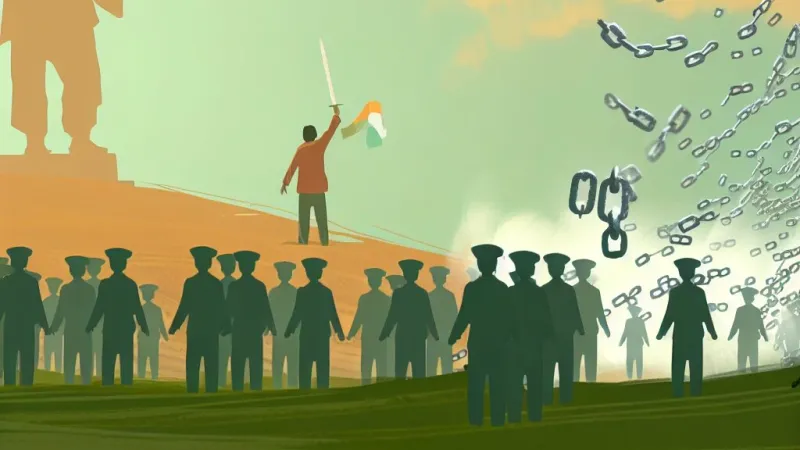
India’s journey to independence is one of the most inspiring chapters in world history. While it is common to recall figures like Mahatma Gandhi, Subhas Chandra Bose, and Pandit Nehru for their leadership, the struggle itself was a river fed by countless tributaries — the sacrifices and quiet courage of innumerable individuals, many of whose stories have not found a place in our mainstream history. These are the ‘unsung heroes’ — men and women who stood tall, even if their names never reached textbook pages or grand statues.
The term “unsung heroes” refers to those valiant souls who made immense contributions to the freedom cause yet remain mostly unrecognised or forgotten by posterity. Their work was not for fame but for the dream of a free India. Remembering them is not only about gratitude but about reconstructing the true tapestry of our freedom struggle. It is a lesson in humility, patriotism, and the idea that every Indian played a part, irrespective of their social standing or popularity.
Understanding the Concept of a Hero in the Freedom Movement
In Indian tradition, the concept of a hero has always been inseparable from sacrifice and selflessness. Legends from the Mahabharata and Ramayana remind us that true heroism lies in dharma, not self-propaganda. Similarly, the freedom struggle was built on the shoulders of people who braved bullets, jail, and social ostracism, often knowing that their deeds might never be celebrated.When we reflect on names like Bhagat Singh, Rani Laxmi Bai or Sardar Patel, we associate them with bravery and leadership. But many more acted in obscurity — rural schoolteachers, unknown poets, tribal leaders, women who hid revolutionaries, postmen relaying messages. Social hierarchies, lack of documentation, and the overwhelming presence of iconic leaders meant that small-scale or regional contributions often went unnoticed. For instance, tribal leaders or women operating on the outskirts of mainstream politics were rarely written about. Yet, their impact was profound.
The Wider Canvas of the Freedom Struggle
India’s independence did not come from one movement or one leader — it was a sprawling network of resistance. From peasant protests like the Indigo Rebellion in Bengal to the fiery spirit of the Santhal and Munda tribal uprisings; from the Gandhian methods of peaceful non-cooperation to the more aggressive approaches of secret revolutionary cells, the struggle adopted many forms.Ordinary Indians from all walks of life participated. Farmers left their fields to protest taxes, students dropped books to pick up placards, and poets used verse to awaken patriotic feelings. The songs of Vande Mataram and Sare Jahan Se Achha, the writings of Subramania Bharati and the folk performances in rural pockets, all became weapons. In this vast field, unsung heroes emerged — messengers, spy networks, local leaders, pamphlet distributors. Their discipline, sometimes under the threat of dire consequences, served as the invisible engine driving the movement forward.
Unsung Heroes: Profiles and Contributions
Let us look closely at a handful of these gems who went beyond recognition but lived for the nation:Matangini Hazra
A widow from Tamluk in West Bengal, Matangini Hazra was over sixty years old when she became an ardent participant in the Quit India Movement. Leading a procession towards Tamluk police station while chanting “Vande Mataram,” she continued advancing even after being fired upon by the police. Still holding the tricolour high, she refused to stop until her last breath. Her fearless sacrifice is a glowing example of how elderly women contributed actively and paid the ultimate price.Tara Rani
Equal in courage was Tara Rani of Saran, Bihar. She and her husband joined the Quit India Movement and led marches in their locality. When her husband was shot during a protest, Tara Rani tied his wounds with her sari and continued to lead the crowd, undeterred. Her devotion to the cause and her personal loss underline the resilience and spirit that fuelled the movement at every level.Peer Ali Khan
Few remember the name of Peer Ali Khan, a bookbinder by profession from Patna. In the 1857 rebellion, he went undercover to circulate pamphlets and strategy notes among fellow revolutionaries. British authorities executed him, but his bravery in spreading information under the guise of ordinary work made him a pioneer in covert resistance. His life tells us that not all nationalism is loud or public — some of the most important battles are fought in silence.Birsa Munda
In the tribal heartlands of Jharkhand, Birsa Munda ignited a fire against British exploitation and the destruction of Adivasi rights. Unlike the urban protestors, his was a struggle to reclaim forests, land, and identity. The ‘Ulgulan’ — uprising — he led, forced the British to introduce the Chotanagpur Tenancy Act for tribal land protection. His legacy is revered among tribals, but mainstream narratives have long sidelined his incredible contribution.Khudiram Bose
At just eighteen, Khudiram Bose’s name became synonymous with youthful zest and sacrifice. He was executed by the British for his role in targeting oppressive British officials. His courage and ideals motivated legions of young people to join the fight, reminding India that age is no barrier to patriotism.Kanaklata Barua
The Assamese teenager Kanaklata Barua led a procession with the national flag during the Quit India Movement. She was shot down by the police but did not let the flag fall. Her story, though prominent in Assam, is seldom included in national education, despite its immense inspirational value.Garimella Satyanarayana
A Telugu poet and activist, Garimella Satyanarayana used his pen as a sword. His songs, especially “Maakoddee Tella Doratanamu,” became the anthem for Telugu-speaking regions, stirring up the masses against British rule. His poetic activism is a testament to the role of culture and literature in agitations.The Relevance of Unsung Heroes Today
These stories are not mere historical trivia — they reshape our understanding of freedom and its cost. If we only celebrate the well-known leaders, we ignore the collective strength required for any great struggle. Every grassroot effort, each unsung voice, forms the foundation of our republic.Learning about these heroes fills us with respect for perseverance, diversity, and selfless action. When students hear how a farmer or a homemaker resisted an empire, it bridges the gap between “history” and “real life.” It tells every citizen, irrespective of origin, that they have the power to make a difference.
National holidays like Independence Day and Republic Day should not be limited to ceremonial functions. These should be opportunities to remember everyone involved — to discuss Matangini Hazra’s courage in morning assemblies, or include Peer Ali Khan’s tales in essay competitions. Only then can we truly honour the idea of an inclusive, participatory nation.
The Obstacles to Recognition
Sadly, many barriers hinder public acknowledgement of unsung heroes. Often, caste, gender, language, and region dictated whose story survived. Women, tribals, and those from villages suffered double invisibility — social and historical. Official records focused on leaders, not foot soldiers. Even now, documentation and research on regional contributions remain limited.Some progress has been made. In recent years, government initiatives have tried to highlight lesser-known freedom fighters. Documentaries on Birsa Munda, books written about Kanaklata Barua, and digital campaigns have started to shed light. Schools are slowly introducing lessons on unsung heroes, and the media has taken up special features, especially around national festivals.
But much remains to be done. The responsibility also lies with teachers and students to seek out these stories, discuss them, even organise local exhibitions or debates. NGOs and historians deserve support in their efforts to archive folk stories and oral histories.
Conclusion
In summary, the Indian freedom struggle was not only a story of celebrated giants but also a chorus of unknown voices — peasants, poets, mothers, tribal chiefs, and youth. Without their collective hunger for freedom, today’s India would not exist. To ignore their contribution is to misunderstand the spirit of our independence.As inheritors of their sacrifice, we owe them more than silent remembrance. It is our duty to know their names, recount their deeds, and draw inspiration for a more just, inclusive, and compassionate India. Every student can contribute by learning about unsung heroes, sharing their tales, and remembering that true patriotism lies in acknowledging every fighter — sung or unsung — whose courage won us our destiny.
---
Tips for Students:
- Always personalise your essay with names and incidents. - Choose at least two or three lesser-known figures and narrate their stories briefly. - Reflect on how their qualities — courage, selflessness, and hope — changed India. - End with a message about the importance of these stories in our lives today. - Keep your writing lively, with cultural references (songs, festivals, poets) relevant to our nation.
Let us continue the journey of discovery — for the pages left blank in history are waiting for us to fill them with the glory of India’s unsung heroes.
Rate:
Log in to rate the work.
Log in