Sadbhavana Diwas: Celebrating Unity and Goodwill in India
This work has been verified by our teacher: 4.05.2026 at 13:43
Type of homework: Essay Writing
Added: 1.05.2026 at 8:25
Summary:
Discover the significance of Sadbhavana Diwas and learn how this day promotes unity, goodwill, and harmony across India’s diverse communities.
Paragraph on Sadbhavana Diwas
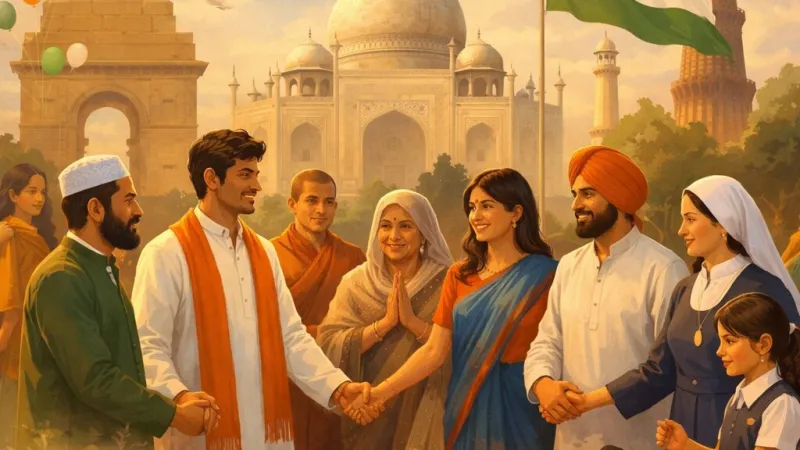
India is a land defined by its diversity—be it language, religion, culture, or geography. Amid these vibrant colours, special days that promote shared values and unity hold an extraordinary place in our society. One such day is Sadbhavana Diwas, which means ‘the Day of Goodwill and Harmony’. Celebrated every year on 20th August, this occasion is cherished for its deep significance and its message of unity in diversity. In this essay, I will explore the origins, meaning, celebration, and contemporary relevance of Sadbhavana Diwas, highlighting its impact on Indian society and its powerful message for future generations.Historical Background and Origin
The roots of Sadbhavana Diwas are intricately linked with the life of Rajiv Gandhi, one of the most influential figures of modern Indian history. Rajiv Gandhi, the son of India’s only female Prime Minister, Indira Gandhi, and the grandson of Jawaharlal Nehru, India’s first Prime Minister, was born on 20th August 1944. He rose to become the youngest ever Prime Minister of India at the age of 40, assuming office after his mother’s assassination in 1984.Rajiv Gandhi’s tenure, though filled with challenges, was distinguished by bold visions of modernisation, technological advancement, and above all, national harmony. Tragically, his life was cut short by assassination in 1991, but his ideas and dreams continue to inspire. To honour his memory, the Government of India designated his birth anniversary as Sadbhavana Diwas, a day not only to remember Rajiv Gandhi, but also to reinforce the ideals he championed—national integration, communal harmony, and progressive thought.
It is important to note that the word “Sadbhavana,” drawn from Sanskrit and Hindi vocabulary, literally embodies feelings of goodwill, positive intent, and benevolence towards others. Rajiv Gandhi often spoke passionately on the need for Indians—from the oldest cities of Varanasi to the bustling streets of Bengaluru—to coexist harmoniously, irrespective of community, caste or creed. Sadbhavana Diwas, therefore, is more than a remembrance; it is an annual reaffirmation of India’s collective commitment towards unity and social understanding.
The Meaning and Importance of Sadbhavana
The concept of ‘Sadbhavana’ is profound—brimming with the ideals of peace, tolerance, and universal brotherhood. In a country as kaleidoscopic as ours, the literal translation of Sadbhavana as goodwill is just the beginning; it is a call for a deeper sense of empathy, respect, and acceptance for all people.India, ever since independence, has witnessed both the triumphs and the trials of managing secularism amid so many religious, linguistic, and ethnic groups. From the communal violence of the past to present-day friction, the need for promoting harmony is ever-present. Sadbhavana is essential not just as an abstract value, but also as a practical guide for daily coexistence—ensuring that division and hatred do not undermine the nation’s achievements.
Sadbhavana Diwas serves as a gentle reminder each year that our strength as a country lies in celebrating differences rather than allowing them to create walls between us. It reinforces ideals such as “Vasudhaiva Kutumbakam,” the ancient Indian phrase meaning ‘the world is one family’, which has influenced Indian philosophy across generations. The day also propagates the message that democracy thrives when its citizens learn to engage respectfully with diverse perspectives—a value crucial for India’s continued development as the world’s largest democracy.
Celebration and Observance
Sadbhavana Diwas is observed with various ceremonies and activities throughout the country. On 20th August each year, local and national government offices, schools, and social organisations hold commemorative functions. The central government often organises a solemn event at Veer Bhumi in Delhi, the place where Rajiv Gandhi was cremated. Government functionaries, political leaders, and citizens pay tribute, but the event is always portrayed as an apolitical effort, open to every Indian.Schools and colleges play a pivotal role in spreading the message. Students and teachers come together for special assemblies and pledge ceremonies, where the Sadbhavana pledge is taken—a public commitment to foster harmony, avoid discrimination, and work towards a peaceful society. Cultural programs, such as skits based on themes of brotherhood, song and poetry competitions, and debates debating the importance of unity, are also common.
Several institutions use this day for environmental causes as well. Tree plantation drives have become a symbolic activity on this occasion—planting saplings to represent growing goodwill. These initiatives not only beautify campuses but also instil a sense of shared responsibility toward nature. Many NGOs and community groups conduct interfaith dialogues, inviting members from different backgrounds to discuss and celebrate shared values.
The media plays its role by airing documentaries on Rajiv Gandhi’s vision, publishing articles, and encouraging online discussions. Public service messages on television and radio reinforce the ideals of Sadbhavana, reaching urban and rural citizens alike.
Sadbhavana Diwas and Social Harmony
The true impact of Sadbhavana Diwas lies in its ability to nurture genuine ties of understanding and empathy across society. The day inspires individuals to look beyond labels—whether of caste, language, or religion—and relate as human beings. Small acts, like visiting neighbours from different backgrounds, participating in joint community service projects, or listening to stories from elders about India’s struggles for unity, help dissolve suspicion and foster friendships.For young people, the day holds special significance. Values taught during school assemblies or through stories—such as Harishchandra’s honesty or Kabir’s message of oneness—become lived realities when they interact with friends from diverse backgrounds. Some schools in India organise exchange visits, where students visit the homes of classmates from different communities, learning firsthand about customs and beliefs.
Throughout history, India has seen communal conflicts, ranging from the Partition riots to more recent disturbances. Each such incident leaves scars, but also presents opportunities for healing. Inspired by the goals of Sadbhavana Diwas, many communities have come together for peace marches and dialogue sessions after such unrest. During the aftermath of the Gujarat earthquake in 2001, for example, people across faiths worked side by side in relief camps. Such moments remind us that the spirit of Sadbhavana is much needed for rebuilding trust and healing wounds.
Environmental Aspect of Sadbhavana
An often underappreciated aspect of Sadbhavana Diwas is its link to the environment. True harmony is not limited to human society; it extends towards nature. By including tree planting, water conservation drives, and discussions about sustainable development, the day reminds us to respect and protect our ecological heritage.During Rajiv Gandhi’s regime, India witnessed the initial phases of the IT revolution and the laying of groundwork for renewable energy. Today, many activities on Sadbhavana Diwas echo his foresight—encouraging the use of solar power, advocating for pollution control, and promoting simple steps like reducing plastic waste. Thus, goodwill is redefined to encompass not only our interactions with fellow citizens but also our duty towards Mother Earth.
Contemporary Relevance and Challenges
The 21st-century world, including India, is increasingly interconnected but also more divided along certain lines. Social media, while bridging distances, sometimes amplifies hate speech and misconceptions. Political polarisation, too, creates misunderstandings between groups. In such an environment, the message of Sadbhavana Diwas is not just relevant—it is urgent.Implementing the ideals of goodwill and harmony requires persistent effort. Governments and civil society must go beyond ceremonial events to support long-term projects like communal education workshops, peace-building camps, and cultural exchanges. Youth must be empowered with the tools to critically examine divisive narratives and instead build bridges.
Personal Reflection and Role of Individuals
It is natural to ask: what can one individual, especially a student, do to further the goals of Sadbhavana Diwas? The answer lies in small, everyday actions. Greeting a neighbour from a different background, being fair and inclusive in group activities, and standing up against discriminatory speech all add up.Young people, especially, are vital agents of change. As students, participating in volunteer activities, teaching underprivileged children, or collaborating in multicultural events spreads goodwill in practice. In families, open conversations about India’s rich diversity and stories from both history textbooks and lived experiences help keep the flame of harmony alive.
Rate:
Log in to rate the work.
Log in