Sanchayika Day: Fostering Saving Habits Among Indian Schoolchildren
This work has been verified by our teacher: 4.05.2026 at 10:55
Type of homework: Essay Writing
Added: 2.05.2026 at 11:13
Summary:
Discover how Sanchayika Day teaches Indian schoolchildren the importance of saving money, building financial habits for a secure and disciplined future. 💰
The Significance of Sanchayika Day: Cultivating the Habit of Saving Among Schoolchildren in India
From the pages of Panchatantra tales where a wise squirrel stores nuts for the future, to the life lessons embedded in daily proverbs like “boond boond se sagar banta hai” (a sea is made of drops), Indian culture has celebrated the virtue of thrift across generations. In our rapidly changing world, where aspirations run sky-high and immediate gratification is often just a digital payment away, the timeless value of saving money is more critical than ever. The concept of saving does not just secure one’s future; it nurtures discipline, self-control, and foresight — qualities that form the foundation of a responsible life. Recognising the indispensability of financial prudence, schools in India observe Sanchayika Day, a unique nationwide initiative to introduce children to the habit of saving from a tender age.
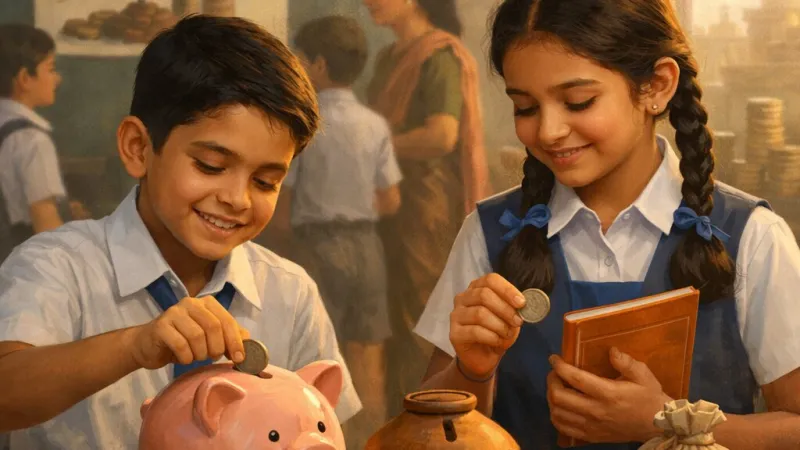
Literally meaning ‘saving box’ or ‘piggy bank’ in Hindi, Sanchayika Day is observed every year on 15th September and is often referred to as ‘School Banking Day.’ On this day, schools across India come alive with special events, workshops, and activities all centred around encouraging children to embrace the transformative power of saving. This essay explores how Sanchayika Day is not merely a ceremonial observance, but a profound method of instilling habits that can shape India’s future citizens into prudent financial managers.
---
Historical Background and Origin
The history of Sanchayika Day is rather understated in chronicles, perhaps reflecting the quietly persistent role saving has always played in Indian households. While there is no grand founding moment recorded for this observance, its emergence is rooted in post-independence efforts by the Indian government to instil banking awareness among the masses. Initiatives like the National Savings Organisation and the introduction of Post Office savings accounts for children laid the groundwork. Sanchayika Day appears to have evolved organically as schools adopted the practice of nurturing thrift through Sanchayika Banks, often in collaboration with local post offices.Over the decades, this humble movement gained strength as education authorities, from Kendriya Vidyalayas to state government schools, began to officially mark the day. Despite disruptions caused by the COVID-19 pandemic and the closure of physical schools, Sanchayika Day adapted with digital events and online forums, demonstrating its ability to survive challenging times and remain relevant for new generations.
---
Objectives and Purpose of Sanchayika Day
At its core, Sanchayika Day seeks to make saving a natural part of a child’s upbringing rather than an afterthought. The objectives extend beyond the mere act of setting aside money.Promoting the Habit of Saving
Indians have long sung lullabies of ‘dhan ki bachat’ (wealth preservation) to their children, but Sanchayika Day systematically counters the modern trend of casual spending by making savings concrete and participatory. When students deposit money in a Sanchayika account, they experience firsthand the satisfaction of seeing their small efforts accumulate over time, reinforcing the notion that even minimal amounts saved regularly can grow into something meaningful—just as the ant in the age-old fable saves for a rainy day.Financial Awareness and Literacy
A striking feature of Sanchayika Day is its teaching-through-doing approach. Children who open, maintain, and manage their accounts slowly grasp practical finance concepts otherwise perceived as abstract. Terms like ‘interest’, ‘deposit’, ‘withdrawal’, and ‘balance’ become part of daily vocabulary. The day provides a window into the world of banking, not with intimidating figures or jargon but with real-life experience, ensuring that children understand not only how to save, but why to save.Building Economic Discipline and Responsibility
A person who learns self-restraint at the moment of temptation is already halfway to success, as legendary Indian reformers like Ishwar Chandra Vidyasagar have argued. By encouraging children to wait before spending, Sanchayika Day teaches the difficult lesson of delayed gratification. The act of saving, periodic monitoring of their accounts, and setting financial goals—however small—builds character and responsibility.Encouraging Community and Social Involvement
No lesson in Indian life is learned in isolation. Families, teachers, and even post office employees contribute to the spirit of Sanchayika Day, showing children that saving is valued by society at large. Public events and community recognition (such as awards for best savers) transform individual discipline into a collective ethic.---
Role of Schools and Educational Institutions
Schools act as the main facilitators for Sanchayika Day. More than academic institutions, they transform into hubs where financial learning is seamlessly woven into daily routines.Implementation of Sanchayika Banks
The centrepiece is the Sanchayika Bank—a model school-bank run with the cooperation of India Post. Students (usually classes 8 to 12, though younger participants are encouraged too) open small savings accounts. A teacher assumes the role of ‘manager’, some students act as ‘cashiers’, and money brought from home is collected systematically. Ledgers are maintained, and deposits are tracked—turning the classroom into a miniature banking world.Schools as Financial Literacy Hubs
On Sanchayika Day, special assemblies, debates, posters, and street plays fill the corridors with excitement. Workshops explain topics from ‘how banks work’ to simple budgeting. The bureaucratic world of savings accounts is demystified, and teachers often drive home the point with real-life anecdotes—how a grandmother’s piggy bank helped tide over tough times, or how a small saving helped fulfil a cherished dream.Inclusion and Accessibility
Sanchayika schemes prioritise inclusivity; even in remote government schools or tribal hamlets, children are encouraged to participate. With the support of postal services—which have a bigger rural reach than most private banks—the practice extends beyond privileged urban centres, fulfilling the goal of ‘financial inclusion’.Examples of Celebratory Activities
From slogan-writing competitions (“Kal ke liye bachat aaj se! – Save today for a better tomorrow!”) to role plays depicting prudent and imprudent spenders, Sanchayika Day incorporates a variety of creative events. Peer-teaching, parent-invited seminars, and even exhibitions displaying handmade piggy banks witness enthusiastic participation.---
Impact on Children and Society
The benefits of Sanchayika Day ripple far beyond classroom walls.Early Financial Empowerment and Confidence
Handling one’s own money, tracking deposits, and earning interest transforms passive children into confident young decision-makers. When a student realises that her savings over one year can buy her schoolbooks or a cricket bat, she internalises the reward of patience and effort.Cultural Shift Towards Saving
As the winds of consumerism sweep across Indian cities and towns – with e-wallets and insta-buy options making spending seamless – Sanchayika Day stands as an anchor. It renews respect for saving as a social ideal, reviving a culture where thrift is a mark of intelligence rather than stinginess. In homes where children recount lessons from their school’s Sanchayika Bank, even parents sometimes reconsider their own practices.Long-Term Benefits
Habits, as Kabir has said, once formed in childhood, remain for life. The discipline instilled through Sanchayika schemes can reduce dependence on loans, prevent debt traps, and encourage planned investments in adulthood. On a macro scale, saving habits contribute to the economic resilience of families and communities, potentially reducing the state’s burden during crises.Government Support and Policy Impact
The steady encouragement from government bodies—like interest subventions for children’s savings—signals official commitment to broad-based financial inclusion. The Reserve Bank of India and the Ministry of Finance occasionally issue guidance to schools, ensuring that memorialising Sanchayika Day fits into the larger narrative of national economic health.---
Challenges and Limitations
Like any grassroots campaign, Sanchayika Day faces its fair share of obstacles.Lack of Historical Documentation
Its origins are so modest that some schools and states do not observe the day, risking fragmentation of its impact. A lack of mass media coverage adds to this underwhelming awareness.Pandemic-Induced Difficulties
COVID-19 threw up new challenges: with students at home, the excitement of physical banking and community events could not be replicated online. However, some institutions responded with digital quizzes and e-Sanchayika forms, demonstrating adaptability.Limited Outreach in Remote Areas
In the interiors of Jharkhand or the sand-swept schools of Rajasthan, infrastructure bottlenecks – poor banking connectivity, erratic internet – hinder smooth running of the initiative. Teachers often double up as bank managers and tech support!Engagement Challenges
In an age of instant entertainment, persuading children to delay rewards or prioritise savings over spending is not easy. Some children from economically weaker backgrounds contribute nominal amounts and may lose interest without constant motivation. Innovating in engagement is, therefore, an ongoing priority.---
Innovative Ways to Celebrate and Promote Sanchayika Day
To keep pace with changing times, new methods are emerging.Leveraging Technology and Social Media
Animated video series explaining saving, mobile apps that simulate deposits, and ‘digital piggy banks’ can appeal to today’s tech-savvy students. Schools now hold online awareness sessions, distributing certificates and prizes virtually.Collaboration with Banks and Financial Institutions
Branches of SBI, Canara Bank, and India Post have started collaborating with schools, sending representatives for guest talks, providing piggy banks or chequebooks as prizes, and offering occasional workshops on digital banking for children.Community Involvement and Campaigns
PTA meetings now also focus on family saving techniques. In some cities, neighbourhood-level drives see families contributing to common themes and children sharing stories of how their savings made a difference.Creative Student Participation
Competitions for best essay, poster, or savings slogan offer creative outlets for expression. Peer mentors from senior classes offer junior students guidance in opening and operating Sanchayika accounts. Cultural programmes—kavita path, nukkad natak, or songs—make learning fun and memorable.---
Conclusion
Sanchayika Day is much more than an annual event marked on a calendar. It is a movement to cultivate a well-rounded Indian citizen—one who is prudent, responsible, and economically smart. By nudging students toward saving and financial literacy, schools light the way for families and societies to adopt time-tested virtues.However, the journey is ongoing. To preserve the spirit of Sanchayika Day, schools, parents, and policymakers must work in concert, innovating and adapting to new realities. The habit of saving, built from childhood, should not end with one day’s celebrations, but blossom into a lifelong practice.
As the proverb says, “A penny saved is a penny earned.” In the Indian context, this could well be a rupee that sparks a dream—of education, security, or hope. The seeds sown on Sanchayika Day promise to grow into sturdy trees that shelter future generations, ensuring both individual and collective wellbeing. Let us remember: the humble act of saving is the first step towards building not just personal fortunes, but a prosperous and resilient nation.
Rate:
Log in to rate the work.
Log in