Exploring the Importance of Good Manners in Everyday Life
This work has been verified by our teacher: 24.04.2026 at 18:40
Type of homework: Essay Writing
Added: 23.04.2026 at 11:50
Summary:
Discover the importance of good manners in everyday life and learn how respecting others shapes personal growth and social harmony in Indian culture.
Paragraph on Good Manners
Introduction
Good manners are the gentle threads that bind the tapestry of human interaction. They are not merely outward gestures, but a genuine reflection of a person’s upbringing, values, and respect for others. In the Indian context, good manners are valued deeply, woven seamlessly into family traditions, rituals, and the everyday functioning of society. From greeting elders with a humble “Namaste” to offering a seat to someone in need on a crowded bus, good manners are the foundation of meaningful relationships and social harmony. As Mahatma Gandhi once observed, “Culture of the mind must be subservient to the heart,” reminding us that knowledge is meaningless without courtesy and kindness. Good manners, therefore, transcend ritual politeness and stand as essential qualities for personal growth, harmonious social living, and the creation of a civilised society.The Meaning and Nature of Good Manners
To understand good manners, one must see them as living habits rather than empty rituals. Unlike rote greetings, true manners are revealed in genuine respect, thoughtful words, and deliberate actions. In India, the distinction between simple ritual and heartfelt courtesy is clear, for example, in the way a student offers a ‘pranam’ to her teacher not just out of social compulsion but from real veneration, echoing the ancient ‘Guru-Shishya Parampara’. Good manners unfold through speech—speaking politely, listening patiently—and also through actions, such as standing up when an elder enters the room or maintaining hygiene in public places.The origins of such manners lie in early life. Parents, grandparents, and teachers play a decisive role in modelling and nurturing these values. In traditional Indian homes, children learn the importance of folding hands in greeting, waiting for their turn to speak, and sharing food. Schools, too, reinforce manners—morning assemblies that end with ‘Shanti Path’, lessons on respecting diverse backgrounds, and group activities that promote sharing and cooperation. At their heart, good manners reflect the larger values of Indian society, which prizes humility, self-control, and care for others.
Good manners cover several aspects: politeness in speech and behaviour, consideration for the feelings and needs of others, and self-discipline in actions like punctuality and cleanliness. A simple “thank you” after receiving help, a polite “excuse me” when interrupting, or the habit of not littering public spaces—these are daily expressions of good manners. All these reinforce not only individual character but also larger societal well-being.
The Importance of Good Manners in Personal Development
Good manners play a pivotal role in shaping a person’s character and personality. They not only make one more approachable but also instil self-confidence and maturity. A well-mannered individual radiates trust, making interactions smoother and more meaningful. Consider a student who waits patiently to speak rather than interrupting—the practice of such manners not only reflects discipline but also emotional intelligence, as one learns to empathise with others.Furthermore, the conscious effort to maintain good manners acts as a check on negative tendencies such as anger or jealousy. In a heated situation, for example, a polite tone can defuse conflict, opening the door to understanding and resolution—mirroring the Indian saying, “Vani se vyakti pehchana jaata hai” (A person is known by his speech). Manners teach us to handle disagreements respectfully, forgive easily, show gratitude, and choose generosity over selfishness.
In Indian schools, moral education is a staple subject—whether known as ‘Moral Science’ or integrated into value education classes. Here, students are taught that honesty, kindness, and respect should not remain concepts in textbooks, but become daily practices. When a child returns a lost pencil to a classmate or offers her seat to an elder, she expresses her moral learning through manners. Thus, good manners are the living expression of moral values, translating theory into action.
Within families, friendship circles, and school life, good manners lay the foundation for healthy, trusting relationships. They enhance communication, foster mutual respect, and reduce misunderstandings. Over time, mannered behaviour becomes a habit, resulting in a personality well-suited for harmonious coexistence.
Good Manners as a Foundation for Social Harmony
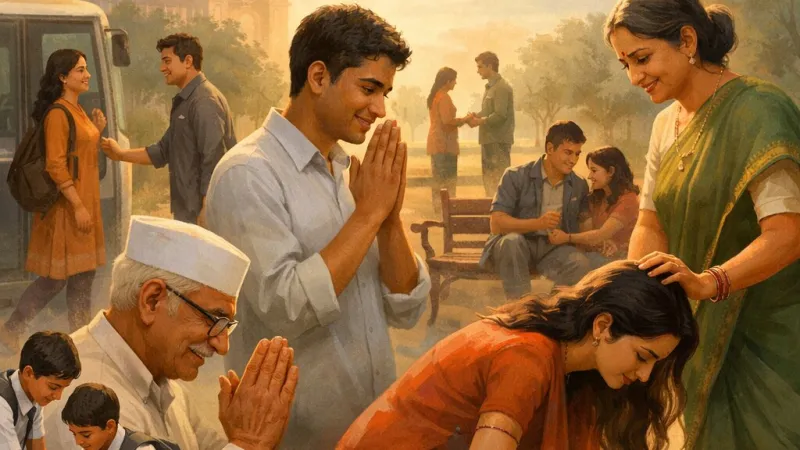
Manners, when practised collectively, form the basis of social etiquette and civil conduct. Social etiquette often prescribes certain rules for shared spaces—like refraining from loud conversations in a library or not jumping the queue at a railway booking counter. Manners are the personal commitment to follow these rules, even when nobody is watching.In Indian culture, this is vividly apparent. Traditionally, one wishes elders ‘Namaste’, touching their feet as a mark of respect—acts that are imbued with dignity and warmth. During festivals such as Diwali or Eid, offering sweets to neighbours, irrespective of religion or caste, reflects the spirit of inclusiveness. In public transport, giving up one’s seat for the elderly or differently-abled affirms the value of compassion.
Society often judges its level of civilisation by the collective practice of good manners. People are more likely to cooperate and trust one another in an environment where respect and courtesy are the norm. Indian society, rich in diversity, relies on such shared values to maintain peace and unity. When students refrain from damaging public property or help a stranger find their way, they contribute to a harmonious social order.
Manners also uphold social responsibility. Respecting public spaces—by keeping streets clean or maintaining silence near hospitals—shows consideration not just for individuals but for the welfare of the entire community. Such behaviours reduce social tensions and create space for diverse groups to live together peacefully.
Practical Ways to Cultivate and Demonstrate Good Manners
Cultivating good manners is a lifelong process that begins at home. Parents, often unwittingly, become the first teachers in this regard. A child who observes her father greeting the security guard every morning or her mother apologising sincerely when in the wrong learns the importance of humility and respect. Grandparents narrating stories from the Ramayana or Panchatantra often embed lessons on truthfulness and respect within their tales.Schools, too, have a vital role. Beyond the academic curriculum, many Indian schools conduct programs on value education, and initiatives such as ‘Swachh Bharat Abhiyan’ are promoted to instil the value of cleanliness. Teachers reward punctuality, teamwork, and honesty. Activities like group discussions, role-plays, and debates help students practise listening respectfully and presenting their opinions with grace.
However, good manners need constant attention. Reminding oneself to say “please”, being patient in crowded situations, or simply holding a door open for the next person—these small, everyday acts add up. Self-awareness is key: noticing one’s tone while speaking or checking if an action might inconvenience others goes a long way.
Modern technology also influences manners. Schools and NGOs use short films, posters, and interactive workshops to promote courteous behaviour among students. However, social media is a double-edged sword. While it can raise awareness about positive behaviour, it can also spread rudeness and insensitivity. It is essential, therefore, that youth learn digital etiquette—such as refraining from online bullying or minding their language in public forums.
The Broader Impact of Good Manners on Society and Future Generations
The ripple effects of good manners extend far beyond the individual. A society rooted in courtesy and respect experiences less conflict, smoother cooperation, and greater trust. In team activities, both in schools and in neighbourhood initiatives like tree-planting or cleanliness drives, those who treat others well inspire collaboration and shared achievement.Good manners are especially important for those in leadership roles. A school captain who listens to juniors, respects teachers, and leads by example draws admiration and sets a tone for the whole student body. In the political and social fabric of India, some of the most respected leaders—such as Dr. A.P.J Abdul Kalam—were cherished as much for their humility and approachability as for their achievements.
Cultural sayings and proverbs encourage the practice of good manners. “Atithi Devo Bhava” (Guest is God) urges hospitality, while “Jaisa karoge waisa bharoge” (You reap what you sow) warns against rudeness. These expressions, passed down for generations, highlight the central role of manners in character formation and societal well-being.
In an interconnected world, manners build bridges across cultures. When Indians travel abroad, small gestures such as respecting local customs or standing in orderly lines project a positive image of the country. Similarly, the ability to understand and adjust to cultural differences makes cross-cultural exchanges smoother.
Conclusion
In summary, good manners are far more than superficial gestures—they are the very heart of social interaction, personal development, and cultural identity in Indian society. From childhood lessons at home to formal education in schools, from daily acts of respect to the wise proverbs of our heritage, good manners illuminate the path towards a more compassionate world.As society evolves, the expressions of manners may change, but their spirit remains timeless. Each generation has the responsibility to learn, practise, and pass on this legacy, ensuring that kindness, respect, and harmony endure. By choosing to embrace good manners in our daily lives, we not only enrich ourselves but also make the world a warmer and more welcoming place for all. In the final analysis, good manners represent the best of what it means to be human.
Rate:
Log in to rate the work.
Log in