Top 10 Leadership Traits That Define Narendra Modi's Success
This work has been verified by our teacher: 19.05.2026 at 10:17
Type of homework: Essay Writing
Added: 18.05.2026 at 15:16
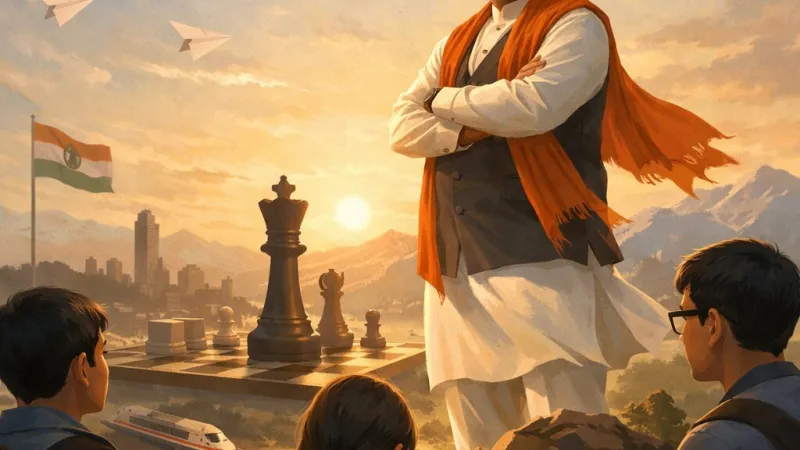
Summary:
Discover the top 10 leadership traits of Narendra Modi that drive his success, inspiring students to learn visionary thinking, communication, and determination.
Leadership Qualities of Narendra Modi: An In-depth Exploration
Leadership holds a special significance in India—a land teeming with diversity, traditions, and democratic vibrancy. The direction chosen by its leaders often sets the course for its billion-strong population. In this context, Shri Narendra Modi, the 14th Prime Minister of India, has become a towering figure, carving out a unique space in the country’s political and cultural consciousness. His journey from a tea vendor’s son in Gujarat to one of the world’s most recognised leaders is a testament not only to personal ambition but also to enduring leadership qualities. Through his visionary policies, remarkable communication, personal discipline, and connection to the grassroots, Narendra Modi has come to represent both aspiration and transformation for the new India. This essay will delve into the ten key leadership qualities that have defined Narendra Modi’s meteoric rise and enduring impact.---
1. Visionary Thinking and Long-term Planning
One of Narendra Modi’s most notable strengths as a leader is his unwavering focus on the future. Since his days as the Chief Minister of Gujarat, Modi has championed development agendas that emphasise sustainability and inclusiveness. For example, the concept of a “Vibrant Gujarat” summit transformed the state into a preferred business hub. After assuming office as Prime Minister in 2014, he unveiled ambitious national campaigns like Digital India, Make in India, and Swachh Bharat (Clean India). These initiatives were not just administrative exercises but part of a broader vision to shift the nation’s developmental paradigm. In Indian thought, visionary leadership has often been venerated—be it Akbar’s religious tolerance, Gandhi’s struggle for self-rule, or Nehru’s scientific temper. Modi’s strategic reforms, like the introduction of Goods and Services Tax (GST) and demonetisation, reflect a willingness to think beyond immediate political convenience in pursuit of transformation. This quality resonates in Indian education, where students are encouraged to “think big” and work towards nation-building rather than mere personal success.---
2. Masterful Communication Skills
Effective communication is a cornerstone of Modi’s leadership. Whether addressing a massive rally at the Ramlila Maidan or interacting with children on Teacher’s Day, his ability to connect with diverse audiences is unparalleled. Modi’s speeches blend storytelling, humour, and references to Indian epics like the Mahabharata and Ramayana, making his messages both relatable and inspiring. His monthly radio programme, “Mann Ki Baat,” has become a national platform for reaching millions, fostering a two-way engagement seldom seen earlier in Indian politics. Importantly, Modi has recognised the power of modern platforms; he maintains an active presence on social media, enabling instant outreach to youth and global listeners. In the context of Indian schools, where communication is paramount—on the debate dais or in morning assemblies—Modi’s example signals to young minds that clarity, confidence, and empathy are vital ingredients for effective leadership.---
3. Charisma Rooted in Cultural Pride
Narendra Modi’s personal journey from Vadnagar to New Delhi forms a narrative of determination and self-belief. Despite facing humble beginnings and adversities, his unshakeable confidence shines through his conduct. He often wears traditional attire, such as the kurta or the Nehru jacket, projecting not just personal preference, but a sense of cultural rootedness that appeals to Indian sensibilities. This fusion of global outlook and indigenous flavour is reminiscent of Swami Vivekananda’s teachings, urging Indians to “Arise, awake, and stop not till the goal is reached.” Modi inspires people not only through rhetoric or policy but also by exemplifying a disciplined, purposeful life. Stories of his 16-hour workdays and spartan lifestyle have become part of popular lore, reinforcing the respect for hard work and perseverance that is valued in Indian schools and families.---
4. Inclusivity and Focus on the Marginalised
A true leader in India cannot ignore social realities. Modi’s policies have repeatedly focused on those left on the margins. The Jan Dhan Yojana brought millions of previously unbanked citizens into the financial mainstream. Schemes like Ujjwala Yojana (providing LPG connections to rural households) and Swachh Bharat saw enthusiastic participation by women, children, and rural India. His government has also worked on skilling the youth through Skill India Mission, aiming to reduce the disconnect between education and employability—a challenge for countless students. Here, the Gandhian ideal of “Antyodaya,” the rise of the last person, finds renewed relevance. In classrooms all over India, inclusion means ensuring no student is left behind—a value Modi has tried to operationalise at the national scale.---
5. Personal Discipline and Work Ethic
Modi’s disciplined lifestyle inspires many across age groups. Rising at dawn and often working late into the night, his time management and dedication are legendary. In the Indian ethos, the story of Eklavya’s commitment or Sudha Murty’s simplicity points to the timeless appreciation of self-discipline and humility. Modi’s example underscores that leadership is not merely about issuing directions but about embodying commitment—a principle every student leader or class monitor will relate to during busy exam schedules and cultural events.---
6. Resilience in the Face of Criticism
Public life in India is rarely without turbulence—be it parliamentary sparring or social media vitriol. Modi’s ability to withstand criticism and adversities has been central to his leadership. Episodes like the Gujarat earthquake (2001), harsh scrutiny over policies like demonetisation, or managing the COVID-19 crisis have tested, but also cemented, his resilience. Rather than faltering, Modi has often responded to setbacks with more energy and innovation, echoing the words of Dr. A.P.J. Abdul Kalam—“Difficulties in life do not come to destroy you, but to help you realise your hidden potential.” For Indian students, who face pressures of academic performance and competition, such resilience offers valuable lessons in bouncing back stronger.---
7. Strategic Diplomacy and Global Outreach
In international forums—whether at the United Nations or when hosting foreign dignitaries—Modi has emphasised the importance of India’s voice. Through high-profile visits (such as to Israel, the US, or African nations) and policy initiatives (like International Yoga Day), he has successfully enhanced India’s visibility on the world stage. He believes in “Vasudhaiva Kutumbakam”—the world is one family—a value found in India’s ancient scriptures and one that aligns with globalisation. This outward-facing approach encourages young Indians to think not merely about national issues but also global challenges, fostering a generation with an international outlook.---
8. Innovative Governance and Use of Technology
Modi’s government has been at the forefront of leveraging technology for good governance. The introduction of Digital India aimed to bridge the urban-rural divide and make government services more accessible. From the launch of the UMANG app to the widespread use of Aadhaar for welfare distribution, efficiency and transparency have increased. He has encouraged youth to pursue innovation, supporting the start-up culture through the Startup India initiative and fuelling scientific research exemplified by ISRO’s Mars Mission. For Indian students, increasingly exposed to coding and digital learning, Modi’s emphasis on technological advancement signals the importance of adaptability and lifelong learning.---
9. Inspiring Mass Participation
Perhaps one of the most striking aspects of Modi’s leadership is his ability to mobilise people. Mass movements like Swachh Bharat, Fit India, and International Yoga Day have gone beyond government machinery, entering households, schools, and even cinema halls. Such participation reminds one of the freedom movement, where leaders like Sardar Patel united the nation. Encouraging citizens to act—for instance by cleaning public spaces or exercising—translates his belief that “government alone cannot bring change, people must be partners in progress.” This participative model teaches Indian students the value of teamwork and active citizenship.---
10. Setting High Benchmarks for Future Leaders
Finally, Modi’s legacy will also be defined by the standards he sets for future leaders. His focus on accountability, transparent governance, and public responsiveness have raised expectations from political leadership. Whether lauded or criticised, his methods have redefined what it means to be the Prime Minister of the world’s largest democracy. For students, many of whom will one day become doctors, engineers, teachers, or even politicians, Modi’s example is a call to be ethical, innovative, and above all, rooted in service.---
Conclusion
In summation, Narendra Modi’s leadership qualities—vision, communication, discipline, inclusivity, resilience, strategic outlook, and innovative governance—are deeply woven into India’s socio-political fabric. His journey mirrors the aspirations, hopes, and challenges of New India, inspiring millions to dream big, work hard, and serve selflessly. While debates on specific policies are bound to continue, Modi’s imprint as a leader who energises, mobilises, and transforms is unmistakable. As India strides into the future, his qualities will remain a touchstone for students, educators, and citizens aiming to make a difference—in their own lives and in the collective destiny of the nation. As Indian adage goes, “Netritva ki pehchaan parinaam se hoti hai”—true leadership is judged by its outcomes, and Narendra Modi continues to redefine what those outcomes mean for India and the world.Frequently Asked Questions about AI Learning
Answers curated by our academic expert team
What are the top 10 leadership traits that define Narendra Modi's success?
Visionary planning, effective communication, cultural pride, inclusivity, and discipline are key traits that define Narendra Modi's success, along with strategic reforms and grassroots connection.
How does visionary thinking feature among Narendra Modi's top leadership traits?
Visionary thinking is central to Modi's leadership, shown by his focus on long-term development plans like Digital India, Make in India, and transformative policy reforms.
How has Narendra Modi's communication skills contributed to his leadership success?
Narendra Modi's masterful communication, via speeches and platforms like Mann Ki Baat, connects with diverse audiences and makes his leadership more relatable and effective.
What role does cultural pride play in Narendra Modi's leadership traits?
Cultural pride strengthens Modi's charisma; his traditional attire and references to Indian heritage create a relatable, confident image that inspires people.
How do Narendra Modi's leadership qualities encourage nation-building among students?
Modi's qualities such as visionary planning and inclusivity promote the idea of working for nation-building, encouraging students to think beyond personal gain.
Rate:
Log in to rate the work.
Log in