Top 10 Lines on Ashok Chakra: Symbol of India's Highest Peacetime Gallantry Award
This work has been verified by our teacher: 19.02.2026 at 16:58
Type of homework: Essay Writing
Added: 18.02.2026 at 10:40
Summary:
Discover the top 10 lines on Ashok Chakra, India’s highest peacetime gallantry award, highlighting its history, significance, and inspiring acts of bravery.
10 Lines on Ashok Chakra—An Essay
India’s history, carved through centuries, glows with tales of indomitable bravery. From Maharana Pratap’s heroic resistance to the unheralded sacrifices of freedom fighters like Bhagat Singh and Rani Lakshmibai, valour has always been at the nation’s core. But true courage transcends the battlefield. In ordinary times—or what we call ‘peacetime’—the spirit of fearlessness often shines in subtle, crucial moments. Recognising such acts is important for a country whose vitality rests not just on soldiers’ guns, but on citizens’ hearts as well. The Ashok Chakra, the highest gallantry award in India for peacetime, stands as a luminous tribute to this spirit. Awarded to military personnel and civilians alike, the Ashok Chakra honours those who put their lives on the line for the greater good, without the backdrop of war. It is not merely a medal; it is the living emblem of India’s vow to salute courage wherever it appears, be it in the flicker of Hawa Singh’s torch or the selfless leap of Rukhsana Kausar, who warded off militants to protect her family.
Historical Background and Origin
The Ashok Chakra was instituted soon after India embraced its independence and republican values. On 4 January 1952, the Government of India began this tradition under the name ‘Ashoka Chakra Class I’, drawing inspiration from the revered emperor Ashoka. Emperor Ashoka’s emblem—depicted as a dharma chakra or ‘wheel of righteousness’—became an icon for the newly independent nation’s ideals. Recognising that courage is not limited to wartime exploits, the government felt the need to honour acts of gallantry performed by civilians and military personnel during peacetime scenarios—be it in the face of disasters or in the simple act of saving lives.By 27 January 1967, the award acquired its current name, the ‘Ashok Chakra’, to reinforce the inclusive nature of national bravery and align it more closely with India’s enduring cultural motif—Ashoka’s wheel, now at the centre of the national flag. Amongst gallantry awards, the Ashok Chakra is supreme for non-war acts. In India’s hierarchy of national honours, the only award above it is the Bharat Ratna, itself reserved for exceptional service. In many ways, it is the peacetime twin of the Param Vir Chakra, equalling its stature in the tapestry of India's highest recognitions.
Eligibility and Criteria for the Award
One of the most remarkable elements of the Ashok Chakra is its democratic nature. The recipients are not limited to a particular rank, region, or gender. All ranks from the Indian Army, Navy, Air Force, and even auxiliary units such as the Reserve Forces and the Territorial Army, are eligible. Significantly, the scope includes civilians—ordinary men and women whose extraordinary actions radiate courage. When terrorists threatened a village, it was not just police officers who risked all, but sometimes even young mothers and unarmed citizens, as the chronicles of the award demonstrate.What acts merit this highest accolade? Ashok Chakra awardees are often those who choose self-sacrifice over safety—saving hostages under gunfire, rescuing strangers from burning buildings, assisting flood victims by diving into raging rivers, or confronting criminals unarmed. The crucial point is that these acts occur when India is not at war—this marks the difference from awards like the Maha Vir Chakra, which are reserved for battlefield gallantry. Another poignant aspect is that a considerable proportion of Ashok Chakra awards are posthumous. This is a painful reminder of the selfless price of heroism: over half of all recipients receive the honour after giving their lives, leaving behind grieving yet proud families and a grateful nation.
Design and Symbolism of the Ashok Chakra Medal
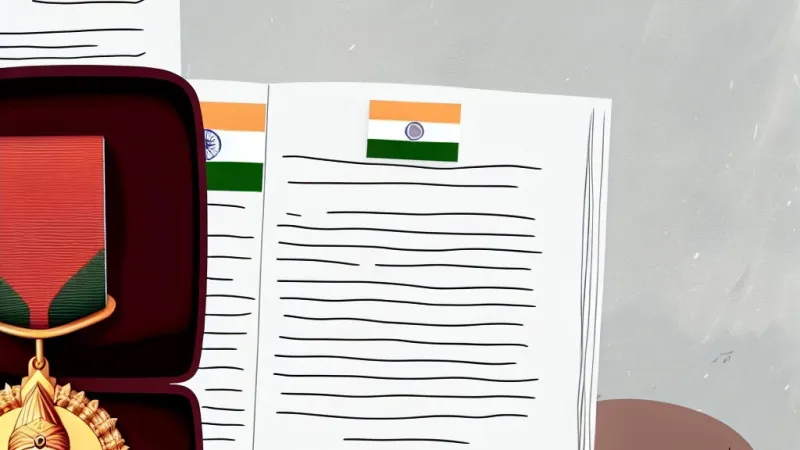
The Ashok Chakra medal is as meaningful in its appearance as in its purpose. Crafted in gilded gold, it has an unmistakably regal aura. The centre of the medal is adorned by the Ashoka Chakra—a 24-spoked wheel instantaneously recognised from the heart of the Indian flag. This motif symbolises not just righteousness and the path of dharma, but also relentless motion—a metaphor for the spirit that never yields. Surrounding this is a garland of lotus petals, an ancient Indian symbol for purity, courage, and spiritual awakening.The reverse of the medal bears the inscription ‘Ashok Chakra’ in both Devanagari and English scripts, embracing the diversity of our nation’s linguistic heritage. The ribbon is predominantly green, conveying peace, harmony, and the fertility of the land. The central orange line—saffron—serves as a visual reminder of sacrifice and unyielding bravery. Worn on the left side during ceremonial occasions, its presence on a uniform or attire immediately marks out the wearer as one of India’s bravest.
Noteworthy Recipients and Their Stories
The Ashok Chakra’s true meaning comes alive in the stories of those who have earned it. The award’s first recipient, Flight Lieutenant Suhas Biswas, demonstrated exemplary courage by averting disaster and saving innocent lives during a peacetime emergency, showcasing that heroism in the air transcends the context of war. Likewise, the immortal tales of Naik Narbahadur Thapa and Havildar Bachittar Singh show the Indian Army’s peacetime valor—whether in avalanche rescues or defending civilians from terror strikes.Notably, civilians like Rukhsana Kausar have also received this award. As a schoolgirl from Jammu, she overpowered militants invading her home, protecting her family and community. Such stories break the myth that gallantry belongs only to the uniformed. In countless acts—from police officers battling Naxal violence to railway staff averting disasters—Ashok Chakra recipients remind us that heroism is woven into the Indian fabric, regardless of one’s station in life.
Many heroes receive the medal posthumously. Major Sandeep Unnikrishnan, who lost his life during the 26/11 Mumbai terror attacks, and Constable Tukaram Omble, who captured Ajmal Kasab with his bare hands at the cost of his own life, are venerated not only for their sacrifice but for illuminating how death in service of others is the highest honour.
The Award Process and Recognition
The journey towards the Ashok Chakra begins with a recommendation—by a commanding officer or civilian authority who bears witness to the act. A committee, comprising senior officials and gallantry award experts, examines each case scrupulously, separating legend from fact. Once satisfied, the government sends its final choices to the President of India, who makes the prestigious conferment.The Ashok Chakra is formally presented by the President on Republic Day, in the presence of national leaders and honorees’ families. The visual grandeur of the ceremony at Rajpath (now Kartavya Path) brings national attention to acts often buried in obscurity. In gratitude, recipients receive a monthly stipend, and, in the case of posthumous awards, their dependents are supported by the state. However, more than the material benefits, it is a lifetime of respect and the knowledge that the nation stands in salute that matter most.
On rare occasions, the award can be annulled by the President if an act of dishonour or criminality is later discovered—a measure ensuring the medal’s sanctity remains untarnished.
The Ashok Chakra in the Context of Indian Society and National Identity
The Ashok Chakra does more than honour a select few. It reflects India’s belief that patriotism flourishes not just in battle, but in daily life. By granting this honour to both soldiers and citizens, the State bridges the gap between uniform and civilian clothes. School textbooks, Republic Day parades, and children’s essays increasingly feature stories of Ashok Chakra recipients, instilling pride and courage in young minds.This has a tangible influence on the aspirations of Indian youth. Learning about Major Unnikrishnan or Rukhsana Kausar pushes them to act selflessly—whether in small daily gestures or during emergencies. In a rapidly changing society, the award reiterates that acts of fortitude, empathy, and integrity are as vital as academic marks or professional success.
Challenges and Contemporary Perspectives
Despite its high prestige, awareness about the Ashok Chakra outside military or civil service circles remains limited. Too often, people believe gallantry awards are only for soldiers in war, ignoring the reality that true courage knows no uniform. There is also room for expanding the definition of bravery—should acts like foiling cyberattacks, rescuing children from child labour rings, or standing up to social injustice not also qualify for the country's greatest honour?The process, though robust, sometimes faces delays. Ensuring timely, transparent, and inclusive procedures would make sure every saviour is recognised in due course, and their stories echo across the land. As India modernises, it could consider ways to amplify the stories of living recipients, perhaps through interactive museum exhibits or digital campaigns.
Conclusion
The Ashok Chakra, as India’s highest peacetime gallantry award, symbolises the timeless virtues of courage and sacrifice that run deep through our soil. More than a piece of gilded metal, it acts as a mirror for national values, reminding us that daring, compassion, and moral strength are the foundations of the Indian spirit—no matter the frontier.Honouring both uniformed warriors and ordinary citizens, the Ashok Chakra is a powerful tool for inspiring unity, patriotism, and the readiness to help others, no matter the danger. Its legacy will endure for as long as there are Indians willing to put others before themselves—on the line dividing fear from hope. In celebrating these heroes, we celebrate the best in all of us, sending out a clarion call: bravery is not exceptional—in India, it is everyday.
---
10 Quick Lines on Ashok Chakra (Summary): 1. The Ashok Chakra is India’s highest award for bravery in peacetime. 2. It was instituted in 1952 and is awarded to civilians and military personnel alike. 3. The medal features the Ashoka Chakra wheel, symbolising righteousness and courage. 4. Its ribbon is green with an orange stripe, representing peace and sacrifice. 5. Recipients are chosen for exceptional acts of valor during peace, such as rescue operations or fighting terrorism. 6. Both men and women, military and civilian, are eligible for the honour. 7. Many awards are given posthumously, reflecting acts of supreme sacrifice. 8. The award ceremony is held on Republic Day, conferred by the President of India. 9. Recipients receive lifetime respect and benefits from the nation. 10. The Ashok Chakra inspires Indians by proving that true heroism exists far beyond the battlefield.
Rate:
Log in to rate the work.
Log in