World No Tobacco Day: A Global Call to End Tobacco Use
This work has been verified by our teacher: 19.02.2026 at 12:30
Type of homework: Essay Writing
Added: 18.02.2026 at 15:22
Summary:
Explore World No Tobacco Day to understand its global impact, health risks of tobacco, and how students can support a tobacco-free future in India.
Paragraph on World No Tobacco Day
World No Tobacco Day, commemorated on 31st May each year, stands as a global call to action against a powerful adversary—tobacco. Established by the World Health Organization (WHO) in 1987 and first observed in 1988, this annual initiative has become a crucial platform for societies worldwide to confront the dangers posed by tobacco use. In India, where tobacco consumption presents unique cultural and public health challenges, World No Tobacco Day serves as a timely reminder for citizens, government, and the medical fraternity to unite in the battle against tobacco addiction.The Far-Reaching Impact of Tobacco
India is home to the world’s second-largest population of tobacco users, with over 26 crore people consuming tobacco in some form. Tobacco’s grip extends beyond cigarettes—bidi, gutka, khaini, and pan masala are widely consumed, often glamorised in popular culture and sometimes even viewed as markers of tradition or masculinity. The adverse health effects, however, are anything but traditional: tobacco use is directly responsible for a host of deadly conditions, ranging from lung and oral cancers to heart ailments, strokes, and chronic respiratory diseases. According to India’s Ministry of Health and Family Welfare, nearly 13.5 lakh Indians lose their lives to tobacco-related ailments annually—more than the population of a small city.Tobacco’s impact is not confined to active users. Second-hand smoke, or passive smoking, claims innocent lives every year, with children and women in particular suffering exposure within their homes. Studies indicate that children who grow up in households with smokers are more vulnerable to asthma, bronchitis, and even delayed cognitive development. Given India’s close-knit joint families, the ripple effect of tobacco use is immense and deeply worrying.
Economically, tobacco also exacts a heavy toll. Treatment for tobacco-related illnesses drains the country’s healthcare budget, and loss of productivity due to illness and premature death compounds the burden further. According to a Public Health Foundation of India estimate, tobacco costs India over ₹1 lakh crore annually—a figure far exceeding the total revenue earned through the tobacco industry.
The Purpose and Power of World No Tobacco Day
Each year, World No Tobacco Day is guided by a specific theme to address emerging threats and guide campaigners in their outreach. For instance, the 2019 theme, “Tobacco and Lung Health,” placed the spotlight on respiratory diseases and the need to protect the air we breathe. In 2020, the focus shifted to “Protecting youth from industry manipulation,” recognising how tobacco companies often target young people through clever marketing and misleading narratives. These annual themes serve an important function—they create a focal point for public messaging and enable campaigners to mobilise resources and attention to particularly vulnerable groups.The key objectives of World No Tobacco Day are multifaceted: to generate awareness of the myriad ways in which tobacco destroys health; to encourage individuals to quit, and prevent new users—especially the youth—from picking up the habit; and to persuade governments to strengthen tobacco control through robust legislation and funding for cessation programmes. The day is also a rallying point for teachers, doctors, NGOs, and media professionals, each contributing in their own way to the anti-tobacco crusade.
The Role of WHO, Government, and Society
The World Health Organization acts as a guiding force for nations, providing frameworks, research, and technical support for tobacco control. WHO assists countries in adhering to the Framework Convention on Tobacco Control, an international treaty that commits signatories like India to implement measures such as banning advertisements, mandating pictorial warnings on packaging, and prohibiting sales to minors.The Indian government has made significant strides in this realm. Laws like the Cigarettes and Other Tobacco Products Act (COTPA) ban smoking in public places, restrict sale near educational institutions, and insist on graphic health warnings on packaging. Yet, enforcement often remains patchy, and the tobacco industry’s powerful lobbying tactics continue to undermine progress. The industry’s notorious history of manipulating policy, marketing to vulnerable youth, and contesting tax hikes means that vigilance is always required.
Healthcare professionals play a vital, if sometimes unsung, role on the ground. Doctors and nurses offer cessation counselling, prescribe nicotine replacement therapy, and educate patients about the dangers lurking in every packet of tobacco, be it in Chennai’s bustling government hospitals or the PHCs serving remote villages in Assam. In recent years, digital tools like mobile apps for quitting guidance and helpline numbers have become valuable assets, bridging urban-rural divides and providing support to those seeking to break free.
Awareness Campaigns and Innovative Approaches
On World No Tobacco Day, Indian cities and villages alike witness a flurry of activity. Educational institutions hold essay and poster competitions, street plays, and seminars. NGOs collaborate with government bodies to organise health camps, where screening for oral cancer—the most common cancer in Indian men, thanks to smokeless tobacco—is provided free. Social influencers and film celebrities join hands in campaigns, lending star appeal to the message and challenging the glamorisation of tobacco in Bollywood films.Media outlets devote columns and airtime to stories of survivors and families impacted by tobacco use. Special radio programmes and community WhatsApp groups become vehicles for information sharing. One memorable campaign, “Tambaku se Azadi” (Freedom from Tobacco), used catchy jingles and street rallies to mobilise youth in Uttar Pradesh. Another, the “Quit Tobacco Movement” led by the Tata Memorial Hospital, has become a beacon for scientific, sustained anti-tobacco efforts.
Policy innovation is considered essential. Higher taxes on tobacco products have been shown to deter usage—tax hikes are especially effective in low-income groups and among the youth who are most price-sensitive. Plain packaging, adopted by some states, strips tobacco brands of their allure. Strict bans on flavoured products, often aimed at first-time adolescent users, are also gaining ground.
Persistent Challenges
Despite these efforts, India faces stubborn challenges. The addictive nature of nicotine means that smokers and chewers struggle to give up even in the face of life-threatening illness. Furthermore, societal norms, peer pressure, and sometimes misinformation—such as the myth that chewing tobacco is less harmful than smoking—act as barriers. In rural and tribal areas, where access to medical counselling is limited, tobacco remains embedded in daily life and rituals.The tobacco industry is adept at exploiting these vulnerabilities—launching new forms of products, offering aggressive discounts, and using digital marketing to reach impressionable youth. The lack of sustained public funding for anti-tobacco campaigns, especially compared to the deep pockets of the industry, remains a serious obstacle. Enforcement of existing laws is another weak link, with violations of public smoking bans and sales to minors often going unpunished.
Individual and Collective Responsibility
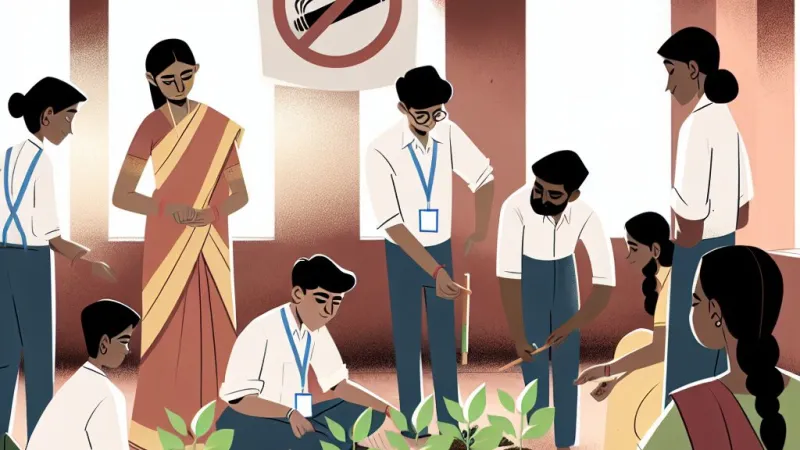
No campaign can succeed without the active participation of individuals and communities. At the individual level, the first step is self-awareness about the hazards of tobacco, coupled with the courage to seek help. Many Indian celebrities, from cricketer Yuvraj Singh to actor Vivek Oberoi, have spoken publicly about the importance of quitting, helping reduce stigma and offering hope. Peer support groups—particularly in schools and colleges—can be instrumental in encouraging friends to stay tobacco-free.Schools hold a special position. Through curriculum additions, morning assembly talks, and student-led awareness drives, pupils become both learners and teachers within their communities. Students can volunteer for local NGOs, design posters or even present short plays in their neighbourhoods or social media platforms. Young people have the power to break intergenerational cycles of addiction by choosing not to start, and by educating their elders as well.
Community-level engagement is vital too. Gram panchayats, religious leaders, and women’s self-help groups can spread awareness in ways that formal campaigns sometimes cannot. Local health workers, anganwadi staff, and ASHA workers are trusted figures who often serve as the first point of contact for families dealing with tobacco addiction. Their involvement in grassroots awareness is invaluable.
Finally, government and institutions shoulder the enormous responsibility of enforcing laws, ensuring access to cessation services, supporting ongoing research, and refusing to bow to industry pressures. The success of Sikkim—one of India’s states to declare itself nearly tobacco-free—shows that determined, coordinated action yields results.
Conclusion
World No Tobacco Day is far more than a date on the calendar; it is a movement for life, health, and dignity. In India, where tobacco takes more than a lakh lives each year and leaves many more families grieving, the need for such a day—and sustained action that follows—is overwhelming. Each year, as schools stage plays, doctors counsel quitters, and the government enforces regulations, there is renewed hope that the clutches of tobacco addiction will one day be broken.All of us—students, teachers, policy-makers, and ordinary citizens—are called upon to do our bit. If we remain vigilant, innovative, and united, the vision of a tobacco-free India can become reality. As Mahatma Gandhi once said, “It is health that is real wealth.” On World No Tobacco Day, let us pledge to safeguard this precious wealth for ourselves and our nation.
Rate:
Log in to rate the work.
Log in