Meaningful Paragraph on Mother's Day Celebrations and Importance
This work has been verified by our teacher: 2.04.2026 at 10:43
Type of homework: Essay Writing
Added: 31.03.2026 at 15:52
Summary:
Explore the importance of Mother’s Day celebrations and learn how this special day honors mothers’ love, sacrifices, and cultural significance in India.
Paragraph on Mother’s Day
: The Heartbeat of Every HomeMother’s Day, a day dedicated exclusively to honouring mothers, stands as one of the most touching celebrations across the world. In every culture and society, a mother’s influence shapes individuals and, through them, entire communities. The mother, called 'maa' in Hindi, 'amma' in Tamil and Telugu, or 'ayi' in Marathi, is revered as both nurturer and guide. Mother’s Day, therefore, is more than just a date on the calendar—it is a heartfelt occasion to express gratitude for the countless sacrifices, unwavering support, and unconditional love that mothers bestow upon us. The notion that ‘Maatru Devo Bhava’ (Mother is God) from ancient Indian scriptures captures this sentiment, making Mother’s Day relevant not only in global cultures but deep within our Indian ethos as well.
Tracing the Roots: From Ancient Traditions to Today
Honouring mothers is not new to Indian society. Our epics and legends, such as Mahabharata and Ramayana, abound with tales wherein the strength and wisdom of mothers like Kunti and Kaushalya are celebrated. Festivities and rituals—for example, the worship of goddess Parvati, the universal mother, during festivals like Navratri—are intrinsic to Indian culture. In these times, women are venerated as the embodiment of motherhood and power. Across the globe, civilizations like ancient Greece would pay homage to Rhea, the mother to their gods, as a way to venerate the qualities of nurture and creation.However, the modern celebration of Mother’s Day has a distinct origin. It was Anna Jarvis in the early twentieth century in the United States who first campaigned for a day to remember her own mother’s sacrifices, refusing to let such selfless love go unacknowledged by society. Her activism led Mother’s Day to officially be recognised on the second Sunday of May, eventually catching on in different countries, each making the festival their own. Though this formal observance started in the western world, its values easily resonated with Indian sensibilities, and it has since found a warm space within Indian homes.
The Meaning Behind Mother’s Day
At its core, Mother’s Day is about recognising the immeasurable love, resilience, and guidance provided by mothers. In the Indian context, where the mother is traditionally respected as the first teacher and moral compass, this day becomes an occasion to remember her pivotal role in our upbringing. Countless stories are woven into Indian literature highlighting this bond—whether it is Sudha Murty recalling her mother’s silent strength in her essays, or Rabindranath Tagore expressing gratitude to his mother through poetry, the central message remains clear: a mother’s influence is lifelong.Mother’s Day is a reminder to acknowledge not just the love a mother gives, but the sacrifices she makes—whether it is keeping late nights during a child’s exams, forgoing personal comforts, or supporting children’s education and dreams. In Indian society, where joint families were once the norm, mothers often run the household, mediate family disputes, and act as the glue holding everyone together. A single day dedicated to mothers serves as a symbolic gesture to focus all our appreciation in a manner that is both meaningful and memorable.
Furthermore, as we grow older, we begin to truly value the emotional security and sense of belonging that our mothers offer. Psychologists argue that showing gratitude has proven benefits for mental wellness and strengthens family ties—a truth reflected deeply in the Indian joint family system.
Diverse Ways of Celebrating Mother’s Day Across the World and in India
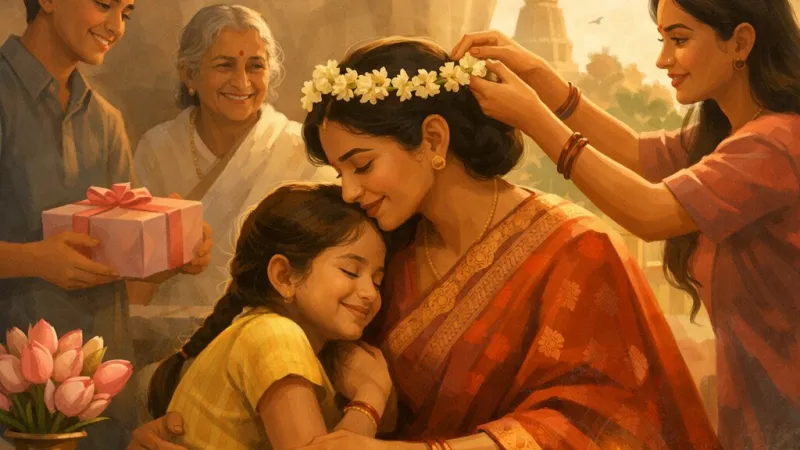
Although Mother’s Day is celebrated globally—with nations assigning different dates and traditions to this day—the common thread is the recognition of mothers' contributions. In India, as in the United States and many other countries, Mother’s Day falls on the second Sunday of May. Families mark this day by spending quality time together, preparing a special meal or perhaps gifting mothers with thoughtful presents—flowers, hand-written notes, or items crafted by their children.In Indian cities, where the influence of the West is pronounced, buying cakes, giving cards, and dining outside have gained popularity. Companies, especially bakeries and greeting card brands, have smartly tapped into the emotional significance of this day, creating innovative offers and products tailored for the occasion. Schools, too, play a role: many organize events where students perform plays, sing songs, or recite poems dedicated to mothers, sometimes even inviting mothers to participate.
In rural or more traditional Indian settings, the celebration may be less about gifts and more about gestures—doing household chores, cooking for mothers, or simply spending time together. Even before the arrival of the Western-influenced Mother’s Day, Indian festivals quietly celebrated motherhood. Karva Chauth sees married women pray for their husbands, but their mothers-in-law often become central figures during the rituals. Festivals like Durga Puja venerate Goddess Durga, seen as a mother protecting her children from harm. These embedded practices highlight that respect and affection for mothers is deeply rooted in Indian customs, even if it is not always wrapped up in commercial trappings.
Mother’s Day: Celebration or Commercialization?
As Mother’s Day grows more popular, especially among urban middle-class families, concerns about excessive commercialization have been voiced. What started as a day of heartfelt appreciation has, for some, become a competition of extravagant gifts, flashy advertisements, or the pressure to outdo previous years' celebrations. Anna Jarvis herself distanced from the commercial aspects that emerged, fearing the loss of authenticity.In India, critics worry that the commercialized nature of Mother’s Day may overshadow existing cultural traditions and the daily acts of respect children naturally express. After all, gifting a pricey watch can never substitute for the love, care, and companionship a mother truly desires. Yet, this new attention may also be viewed positively, for it provides yet another forum for people to remember and celebrate the role of mothers, even if the celebration has a modern twist.
Staying True to the Spirit: Meaningful Ways to Celebrate
Mother’s Day should ideally remain focused on genuine appreciation. Some of the most touching gestures do not require money—helping with household chores, cooking breakfast for mother, spending an uninterrupted day with her, or simply hugging her and saying ‘thank you’. Many children in India take the opportunity to write a heartfelt letter or a poem, something that can be cherished for years.Schools sometimes arrange for students to craft handmade cards, recite Hindi or regional poetry, or even narrate stories about their mothers. Famous Indian authors such as Shivani and Mahadevi Verma have immortalised tales of motherly love, reminding every generation of the depth and complexity of this bond.
Beyond the personal, Mother’s Day also offers a chance to address social realities. Across India, there are mothers facing challenges—single mothers, those in poverty, or those who have worked tirelessly in the fields or factories. On this day, community organisations can host events or fundraisers to help underprivileged mothers, discuss maternal health, or raise awareness about women’s rights. A day dedicated to mothers should also be a day where wider society reflects on their well-being.
Rate:
Log in to rate the work.
Log in