Brief and Engaging Lines on the DadaSaheb Phalke Award for Students
This work has been verified by our teacher: 6.04.2026 at 18:33
Type of homework: Essay Writing
Added: 3.04.2026 at 11:54
Summary:
Discover the DadaSaheb Phalke Award’s legacy and significance in Indian cinema through 10 concise lines perfect for students' homework and essays. 🎬
Essay Title: 10 Lines on DadaSaheb Phalke Award
---Introduction
The DadaSaheb Phalke Award is a name that every lover of Indian cinema recognises with pride and awe. For more than five decades, this towering honour has been the highest tribute an Indian film personality can receive, signifying a lifetime of outstanding contribution to the world of movies. Summing up such a rich institution in just ten lines poses a challenge, yet it is crucial for young students to grasp its essence swiftly. As cinema blossomed into a powerful vehicle for culture and expression in India, the award emerged as a symbol of ultimate achievement. It stands not only for excellence in film but also for the vision and spirit of Dhundiraj Govind Phalke, whose pioneering journey paved the way for countless others.---
Historical Background of DadaSaheb Phalke and Indian Cinema
Every legend has a beginning, and for Indian cinema, it started in the imaginative mind of DadaSaheb Phalke. Born in 1870 in Trimbak, Maharashtra, Phalke’s early education was steeped in art, photography, and technical innovation. His restless curiosity eventually led him to filmmaking, a medium then unheard of in India. In 1913, he gifted the nation its very first full-length silent feature, “Raja Harishchandra,” produced with a handful of passionate collaborators and a shoestring budget. The film, weaving together Indian myth and drama, sparked the Indian audience’s love affair with the silver screen. Phalke’s struggle was immense—the lack of resources, societal doubts, and the daunting novelty of the medium—but he pressed on, earning the revered title “Father of Indian Cinema.” His legacy is visible in the storytelling spirit, technical skill, and sheer creativity that now flourish in every corner of the Indian film industry.---
Origin and Purpose of the DadaSaheb Phalke Award
Years after Phalke’s passing, the Government of India felt the need to celebrate those who carried his torch. In 1969, marking the centenary year of Phalke’s birth, the Ministry of Information and Broadcasting inaugurated the DadaSaheb Phalke Award. Administered by the Directorate of Film Festivals, this honour commemorates outstanding individuals who have woven India’s rich cinematic tapestry through long and visionary service. Unlike awards that reward a single film or performance, this is given for lifetime achievements, reflecting years of artistic creation and contribution. It occupies a pride of place at the National Film Awards ceremony, where it is considered the crowning moment—a mark of national appreciation and respect for a film personality’s enduring impact on the industry.---
Description and Symbolism of the Award
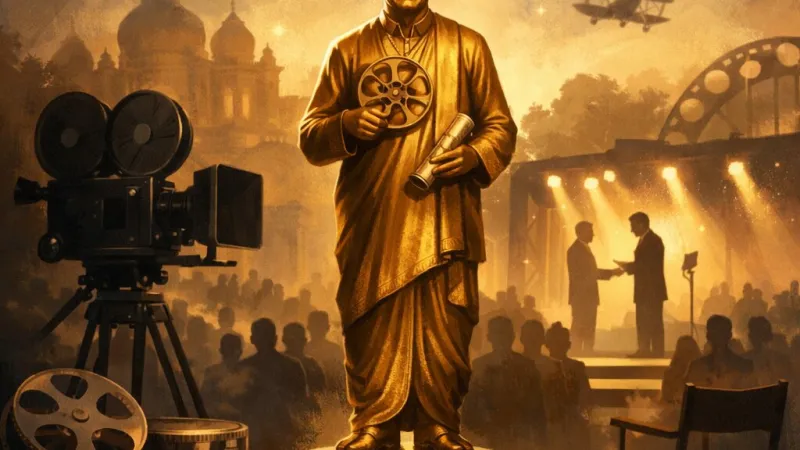
The DadaSaheb Phalke Award is not just a prize, but a collection of meaningful symbols. The recipient is presented with the Swarna Kamal (Golden Lotus), a medal crafted in shimmering gold. The lotus is revered in Indian mythology as a sign of purity, enlightenment, and transcendence, fitting ideals for cinematic excellence. Accompanying the medallion are a shawl, a formal citation, and a substantial cash prize (which has varied over the years, presently above ₹10 lakhs). The presentation is made in a grand ceremony attended by government dignitaries and eminent film personalities, adding a sense of national honour to the proceedings. Each element—be it the gold, the lotus, or the formal celebration—reflects the respect and gratitude India extends to its cinema legends.---
Notable Recipients and Their Contributions
Since its inception, the award has graced the hands of some of India’s greatest cultural icons. The first winner, Devika Rani, was a trailblazer for women in film, remembered for her pioneering roles and for establishing Bombay Talkies, a studio that spearheaded modern Indian filmmaking. Satyajit Ray, the master director from Bengal, accepted the award in 1984, having brought India worldwide acclaim through films like "Pather Panchali." Hindi cinema’s beloved Raj Kapoor, known as the greatest 'showman', and Lata Mangeshkar, the 'Nightingale of India', have both found their place among the honourees. These laureates have shaped not just movies but music, acting, and direction, leaving imprints that echo across generations. The award is not limited to Bollywood—it recognises stature from all regional industries: luminaries like K. Balachander and Dr. Rajkumar from the South bear testimony to its inclusivity. Posthumous awards to Prithviraj Kapoor and Vinod Khanna, among others, reflect a deep respect for those whose brilliance lives on, even after they are gone.---
Importance of the Award in Indian Cinema Culture
The DadaSaheb Phalke Award is not only an individual accolade—it is a living institution that motivates, inspires, and unites. For artists, receiving it is a grand encouragement to keep striving for excellence, persist through ups and downs, and contribute beyond personal gain. Unlike commercially-oriented honours, this award hints at a deeper fulfilment: recognition of one’s lifelong service to society through art. By bringing together creators from languages and states across India, the award weaves a symbolic tapestry that bridges regional and national divides. It is a chronicle, recording the evolutionary journey of Indian cinema from black-and-white frames to world-renowned blockbusters. Through each new recipient, we remember the changing times and the eternal power of storytelling.---
Challenges and Controversies
No prestigious institution is entirely free from challenges. Over the years, the DadaSaheb Phalke Award ceremonies have occasionally suffered delays, often due to administrative issues or national events like general elections. These setbacks can dampen spirits among industry veterans awaiting their moment of recognition. Another issue is the growing confusion due to a proliferation of private awards bearing Phalke’s name, which sometimes causes misunderstandings among the public and dilutes the stature of the original national award. Yet, despite these issues, the government and the film fraternity continue to preserve the dignity and authenticity of the award.---
The Award’s Continuing Legacy and Future Outlook
Recent recipients such as Amitabh Bachchan, Rajinikanth, and Asha Parekh add contemporary sheen to the award, attracting a new generation of aspiring filmmakers, actors, musicians, and technicians. With the ongoing wave of globalisation and the surge in independent and digital cinema, the DadaSaheb Phalke Award serves as an anchor, celebrating not only mainstream giants but also those who drive the medium forward through innovation. The future may even see the award including broader categories or going beyond traditional formats, ensuring its relevance as cinema evolves. Media coverage, social media tributes, and new platforms have only helped in spreading the influence and legend of this great recognition.---
Summary of the “10 Lines” Concept about the Award
To condense such a weighty subject into ten lines is about wisdom and clarity—an art India herself excels at, as in her couplets and shlokas. Here is a sample approach:1. The DadaSaheb Phalke Award is India’s highest film honour. 2. It was instituted in 1969 by the Government of India. 3. The award celebrates lifetime contribution to Indian cinema. 4. It is named after DadaSaheb Phalke, the “Father of Indian Cinema.” 5. Recipients receive the Swarna Kamal (Golden Lotus), a citation, and a cash prize. 6. Devika Rani was the first awardee. 7. Legends like Satyajit Ray, Raj Kapoor, and Lata Mangeshkar have won it. 8. It includes icons from all regional film industries. 9. The award unites and inspires the entire Indian film fraternity. 10. It remains a symbol of India’s artistic spirit and cinematic legacy.
By framing facts this way, students and fans can quickly learn crucial details while appreciating the depth behind each point.
---
Rate:
Log in to rate the work.
Log in