Understanding Jitiya Puja: Traditions and Significance in Indian Culture
This work has been verified by our teacher: 16.04.2026 at 13:15
Type of homework: Essay Writing
Added: 13.04.2026 at 16:32
Summary:
Explore the traditions and significance of Jitiya Puja in Indian culture. Learn its origins, rituals, and the festival’s impact on family and devotion.
A Comprehensive Study of Jitiya Puja: Tradition, Significance, and Celebration
Introduction
India is often described as the land of festivals, its diversity reflected by the innumerable customs and age-old rituals that dot its cultural landscape. From the resonant sounds of Durga Puja pandals in West Bengal to the luminance of Diwali diyas across the country, each celebration carries deep meaning and communal spirit. Among these, fasting festivals have always stood apart, embodying sacrifice, prayer, and unwavering faith, especially amongst women. Jitiya Puja—also known as Jivitputrika Vrat—is one such devoted festival, observed predominantly by mothers in select regions of North India. Far more than a ritual or fast, Jitiya Puja is an emotional plea for the well-being and longevity of their sons, steeped in mythological lore and carried forward by generations. This essay explores the origins, rituals, cultural importance, and evolving practice of Jitiya Puja, emphasizing its unique position in India’s vibrant festival tapestry.I. Historical and Mythological Background of Jitiya Puja
Origin of the Festival
Like many Indian rituals, the story of Jitiya Puja is rooted in myth and folklore. One of the most popular legends centres on the noble King Jimutvahana, who once ruled the kingdom of Gandhara. According to the narrative, Jimutvahana sacrificed his own life to save the offspring of Nagas (serpent beings) from Garuda, the mighty eagle. His ultimate act of generosity and protection highlights the themes of selflessness and maternal (or parental) love, which have come to define the spirit of the festival. Mothers honouring this puja see Jimutvahana’s rescue of vulnerable lives as a parallel to their wish for their own children’s safety.In another telling from the Mahabharata, Uttara—the wife of Abhimanyu and daughter-in-law of Arjuna—performed severe penance for her son Parikshit. After Abhimanyu was killed in the battle of Kurukshetra, Uttara prayed fervently and fasted for the birth and protection of her child, highlighting yet another tale where a mother’s devotion ensures her child's survival.
Significance of the Stories
These stories are not mere entertainment. They become living lessons, highlighting sacrifice, steadfast devotion, and the unbreakable bonds of family. In many ways, they build the very moral fabric of the communities that observe this festival. Parents, especially mothers, are seen not just as nurturers but as protectors, able to call upon divine blessings through penance and prayer.Evolution Over Time
Oral tradition has played a crucial role in preserving the essence of Jitiya Puja. Storytelling by elders and priests ensures that even children who may not actively participate come to internalise the festival’s values. The festival, in this way, is a living form, subtly adapting over centuries while its core message remains unchanged: to cherish, preserve, and pray unceasingly for one's children.II. Timing and Occurrence of Jitiya Puja
Calendar and Astronomical Timing
Jitiya Puja is observed annually during the Ashwin month (September–October) of the Hindu lunar calendar, specifically in the Krishna Paksha—the dark fortnight. The principal days are Saptami (7th day), Ashtami (8th day), and Navami (9th day). Rituals are intricately tied to these lunar phases, with the fast (nirjala vrat) conducted on Ashtami, considered to be especially auspicious and powerful.Seasonal and Agricultural Context
The festival’s timing, just after the monsoon and at the start of the agricultural harvests, is no coincidence. For many farming communities in Bihar, Jharkhand, Uttar Pradesh, and adjoining regions, this period heralds both abundance and anxiety: crop yields are deeply connected to prosperity and child welfare. Thus, the festival’s spiritual prayers for children’s longevity are deeply linked to the seasonal cycles of hope and renewal, mirroring the rhythms of rural life.III. Who Participates? Social and Cultural Context
Demographic Participation
Jitiya Puja is distinguished by the devotion of married women—mothers, grandmothers, aunts—who undertake the fast for their sons' good health and longevity. The role of women as nurturers and guardians is both celebrated and reinforced through this observance. Even women struggling with infertility or expecting mothers might participate, expressing their longing and hope for children.Geographical Spread
Though concentrated in Bihar, Jharkhand, Eastern Uttar Pradesh, and some parts of Nepal, Jitiya Puja’s reach now includes urban migrants and diaspora, making it a marker of cultural identity. Within these regions, slight differences in the mode, prayers, or foods offered add to the richness and diversity of the festival’s practice.Community and Social Dynamics
While the individual fast holds deep personal meaning, Jitiya Puja is essentially communal. On the banks of rivers or local ponds, groups of women gather, sharing stories and supporting each other during the rigorous fast. The sharing of prasad (holy offerings) and collective singing of traditional songs foster a sense of belonging and communal strength—vital in times of hardship or adversity.IV. Preparations Before the Puja
Physical and Ritual Cleanliness
Preparations begin well in advance. Houses and courtyards are swept and washed, and places of worship, often beside water bodies, are decorated with rangoli (alpana) and flowers. The emphasis on cleanliness is not just physical; bathing and donning fresh clothes signify mental purity and readiness to undertake the spiritual fasting.Purchasing and Wearing New Clothes
Wearing new clothes during the puja is symbolic of renewal and respect for the sacredness of the occasion. Married women also tie a sacred thread, known locally as “Jitiya,” around their necks or wrists, believed to offer divine protection to their sons.Preparation of Prasad and Special Foods
The fast itself is severe, but the preparation of prasad is done with great care. Traditional delicacies like Datkhat—a flat bread made from rice flour and rice cakes—are commonly prepared. Interestingly, certain foods are offered to wild animals, especially the kite (chill), fox (siyar), and occasionally the dog, as a tribute to the creatures involved in the ancient legends, symbolising protectors and intermediaries of well-being.V. Rituals and Observances During Jitiya Puja
Sequence of Rituals Spread Over Days
Jitiya begins on Saptami with the ritual of “Nahai-Khai”—women bathe and consume a single meal, often including specific vegetables and rice, meant to purify the body for the coming fast. On Ashtami, they begin the nirjala vrat, abstaining from even a drop of water until Paran (breaking the fast) on the Navami dawn. The fast is among the toughest in India, requiring immense mental fortitude and faith.Puja Location and Setup
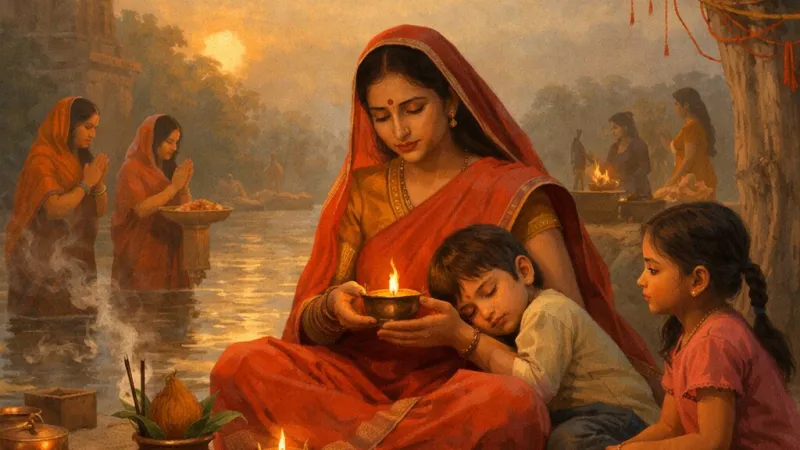
The riverbank becomes a sanctum for observance. Women gather in groups, setting up small altars with images and symbolic representations of Jimutvahana along with holy grass, flowers, and sacred water. Lamps and mud diyas are lit, lending a spiritual glow as the sun sets.Main Prayer and Storytelling Sessions
Priests or elderly women narrate the stories of King Jimutvahana and Uttara, repeating them year after year. Evenings resound with folk songs and bhajans describing a mother’s love and her resolve to secure her child's well-being.Symbolic Offerings and Prayers
Offerings are made to Surya Dev (the Sun God), considered a cosmic witness to the mother’s prayers. Aarghya (libation of water) is offered at sunrise. The act of feeding wild birds and animals as part of the rituals underscores the belief that every living being plays a role in cosmic protection and harmony.VI. Cultural Significance and Social Impact
Maternal Devotion and the Protection of Sons
Jitiya Puja is, above all, an ode to motherhood—epitomising a mother’s readiness to bear discomfort for her child’s sake. The fast is not about personal gain but the desire to transfer blessings, often at great personal expense. This aspect resonates strongly among communities, reinforcing intergenerational respect and care.Community Cohesion Through Festivities
Apart from religious observance, the festival is a time for togetherness. Communal singing, dancing, and sharing meals bring a sense of celebration despite the rigour. Local folk songs known as ‘Jitiya geet’ or ‘Jivitputrika geet’ add a musical touch and create memories that last beyond the fast.Preservation of Regional Identity
Festivals like Jitiya reinforce regional identity, especially for migrant populations in cities. Observing these customs becomes an assertion of origin and cultural roots, ensuring that the next generation understands and values their heritage.VII. Challenges and Contemporary Relevance
Modern Lifestyle and Changing Perspectives
With increasing urbanisation, strict fasting becomes challenging for many working women and students. Some choose to adapt the fast—consuming fruits or water—to balance tradition with personal well-being, underlining the festival's evolving and inclusive nature.Health Considerations Regarding Nirjala Fast
The nirjala vrat, while spiritually significant, is demanding and not advised for everyone. Many families seek counsel from elders and health experts, especially for women with health concerns. This adaptation does not dilute faith but prioritises well-being.Inclusion and Evolving Participation
Jitiya is no longer solely the domain of elderly women in villages. Media and digital platforms now play a role in telling the stories, teaching the songs, and sharing the significance with a global audience. Younger family members, regardless of gender, often participate or assist, expanding the tradition’s reach.VIII. Conclusion
Jitiya Puja stands as a testament to India’s spiritual diversity and the vital role of women in sustaining culture. Rooted in ancient tales and driven by the selfless love of mothers, it continues to inspire devotion, resilience, and togetherness. Amidst India’s rapidly changing society, the enduring legacy of Jitiya Puja serves as a reminder of the power of tradition—to nurture, to protect, and to bind communities across generations. In cherishing such festivals, we ensure that the threads of faith, story, and sacrifice continue to weave through the fabric of Indian life for centuries to come.---
Optional: A Glance at Similar Fasting Festivals
Jitiya Puja shares similarities with Karva Chauth and Hartalika Teej, where women also fast for the well-being of family members. However, each festival retains unique regional stories, rituals, and emphasis—Jitiya being particularly focused on the bond between mother and child.---
FAQs
- Who observes Jitiya Puja? Primarily married women, especially mothers in Bihar, Jharkhand, eastern Uttar Pradesh, and parts of Nepal. - What is “nirjala vrat”? A fast observed without water, considered highly demanding spiritually and physically. - Why are offerings made to animals like kites and foxes? These animals are associated with festival legends and are revered as protectors in the narrative tradition.
---
By understanding and partaking in Jitiya Puja, each generation connects to a profound legacy of love, endurance, and shared history—a heritage that continues to illuminate the Indian festival calendar with meaning and warmth.
Rate:
Log in to rate the work.
Log in