Exploring the Impact and Importance of Internet of Things (IoT)
This work has been verified by our teacher: 1.05.2026 at 14:12
Type of homework: Essay Writing
Added: 30.04.2026 at 5:33
Summary:
Discover the impact and importance of Internet of Things (IoT) and learn how this technology is transforming daily life and industries across India.
Paragraph on Internet of Things (IoT)
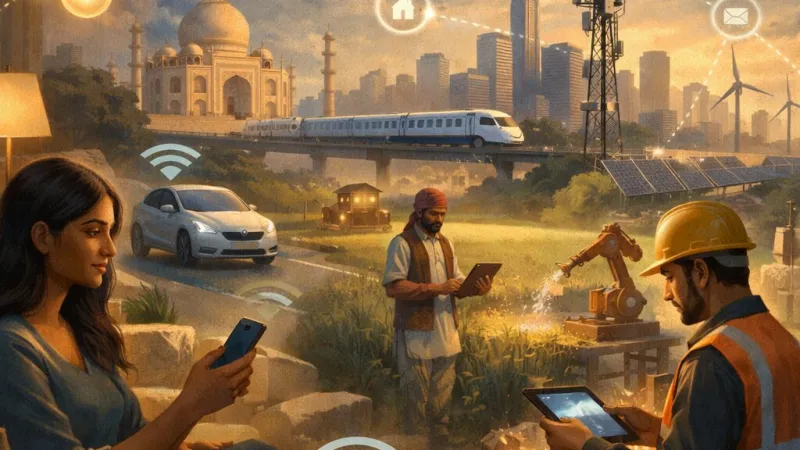
In today’s era, few technologies have transformed our everyday experiences as profoundly as the Internet of Things, commonly referred to as IoT. At its heart, IoT represents a remarkable leap forward in the way inanimate objects communicate and collaborate with each other, often without human involvement. Imagine the lights in a home switching on just as dusk settles, or a farmer in rural Maharashtra being alerted on his mobile phone when the moisture level in his fields drops below a threshold; such conveniences are increasingly possible thanks to IoT. But IoT goes beyond mere automation—it interweaves hardware, software, and connectivity to create an intelligent fabric that spans homes, industries, cities, and even remote villages. As India strengthens her digital backbone with ambitious projects like Digital India and Smart Cities Mission, the prominence of IoT in our collective future cannot be overstated. This essay seeks to unravel the concept, building blocks, significance, and potential of IoT, especially from the perspective of an Indian student living amidst rapid technological change.
Understanding the Concept of Internet of Things
To grasp the essence of IoT, let us begin by picturing an ordinary object—say, a water tank equipped with a sensor that detects its water level. Traditionally, one had to physically check it. In an IoT scenario, the sensor constantly monitors the level and wirelessly informs the homeowner’s smartphone when water is low. Thus, IoT is essentially an ecosystem of devices (‘things’) embedded with electronics such as sensors, processors, and means of communication (like Wi-Fi), all orchestrated to sense, analyse, and transmit data.One encounters IoT devices in various forms even in daily Indian life: smart bulbs that adjust brightness, wearable fitness watches that count our steps, buses fitted with GPS tracking systems for better fleet management, or remotely operated irrigation pumps in the hinterland. Here, it is crucial to distinguish IoT from earlier technologies like simple machine-to-machine (M2M) communication. While M2M connects machines, IoT involves broader networks, harnesses internet connectivity, and is capable of analysis and decision-making, often through cloud computing.
The process typically unfolds thus: sensors capture data (say, temperature), communication modules transmit it to the cloud, where software analyses the information and triggers suitable actions—turning on fans, sounding alarms, or sending alerts. India’s remarkable surge in internet users—over 80 crore at last count—coupled with cheap data rates, has made the soil for IoT adoption increasingly fertile.
The Evolution and Historical Background of IoT
While IoT seems freshly minted, its roots stretch a few decades back. The germ of the idea appeared as early as the 1980s. For example, a refrigerated Coca-Cola vending machine at Carnegie Mellon University was connected to the internet to report its contents and temperature remotely. However, the phrase “Internet of Things” itself was coined by Kevin Ashton in 1999, reflecting the idea that not just computers and people but all manner of everyday objects could connect and interact via the internet. Early forays included refrigerators sending grocery lists and internet-linked toasters in the 2000s, regarded at the time as novelty items.Come the 2010s, and there was an explosion of “smart” devices in the market, with global giants like IBM, Cisco, and Google leading the charge, while Indian tech companies like Tata Communications and start-ups such as Stellapps (revolutionising dairy supply chains) began to localise IoT solutions for the subcontinent. The more recent push has been fuelled by three main factors: the widespread roll-out of cheap 4G/5G networks, the plummeting cost of precise sensors, and the growing proliferation of affordable smartphones even in tier-2 and tier-3 cities. Thus, what started as a futuristic fantasy evolved into a tangible, rapidly growing ecosystem both globally and within India.
Key Components that Make IoT Possible
IoT is not a single device but a confluence of various layers. At the foundation lies hardware—tiny sensors for detecting temperature, humidity, air quality, motion, or pressure. These are embedded in things as ordinary as geysers or as industrial as machine tools. Microprocessors interpret the sensor data, while communication modules (Wi-Fi, Bluetooth, ZigBee, NB-IoT, or RFID tags) act as messengers, transmitting information locally or to the internet.The software layer involves firmware on devices and powerful cloud platforms where data is not just stored but processed, compared, and converted into actionable insights. In buses running between Delhi and Agra, for instance, GPS data is constantly analysed to estimate arrival times.
Network connectivity is pivotal. Urban India leans on Wi-Fi and cellular networks, while rural areas might use LoRaWAN (long-range wide-area networks) or satellite technologies for farther reach at lower cost. Guarding this dispersed network is an ongoing challenge—secure data transmission, encrypted communication, and robust cybersecurity measures are crucial, as these networks are tempting targets for hackers and data thieves. Finally, all user interaction is through interfaces: mobile apps, web dashboards, or even simple SMS alerts.
Diverse Applications of IoT in Everyday Life and Industry
The beauty of IoT is how it quietly integrates into myriad spheres, often becoming invisible yet indispensable. Consider smart homes: lights adjusting to sunlight, voice assistants in Hindi or regional languages like Alexa or Google Home answering questions, or refrigerators monitoring their contents. For differently-abled individuals, such devices are not just conveniences, but enablers of independent living.Indian healthcare has seen IoT-powered wearable devices like ECG-enabled watches and remote glucometers, making chronic disease management easier for millions. Telemedicine—through smart health kiosks and apps—has brought affordable diagnostics to remote corners from Assam to Kanyakumari.
Cities like Pune and Bengaluru are experimenting with smart traffic systems—adaptive signals that respond to congestion, saving precious hours for commuters, while Indian Railways uses IoT sensors to monitor track and equipment health. On highways, automated toll collection (FASTag) uses RFID, easing traffic bottlenecks.
India’s dependence on agriculture finds a reliable ally in IoT. Companies like DeHaat are pioneering IoT soil sensors to help small farmers monitor soil fertility and moisture, thus optimising irrigation and fertiliser use. Such digital interventions, if scaled up, can greatly reduce wastage and boost rural incomes.
In the industrial sphere, the “Industry 4.0” movement is already making headway. Automated assembly lines, real-time equipment monitoring for predictive maintenance, and supply chain visibility are helping Indian manufacturers vie on the global stage. Meanwhile, environmental concerns prompt the use of IoT air quality monitors, for example, in Delhi’s fight against hazardous smog, and remote wildlife sensors help track endangered tigers in Madhya Pradesh.
Advantages and Challenges of IoT Technology
Advantages
The biggest strength of IoT is the *convenience* it brings to daily routines—saving time and effort in tasks like switching appliances or scheduling repairs. For businesses, it translates to *efficiency* and *cost savings*, minimising human errors and optimising resource use. For government, data-driven governance is possible—city administrations can target water leakage or pollution hotspots with precision.Crucially, IoT is a catalyst for India’s digital economy, spawning opportunities for start-ups and IT graduates, and even encouraging young innovators to devise solutions for local problems, such as low-cost water sensors or dairy monitoring tools.
Challenges
Yet, the IoT story has its obstacles. Data security remains a looming risk. A smart camera or connected power meter, if poorly secured, can become an open door for cybercriminals. Rural regions may face high upfront hardware costs and patchy network connectivity, impeding IoT adoption. The lack of universal standards often makes it hard for devices from different companies to interact seamlessly. There are also concerns about privacy—who owns the data, and is it misused? Ethical questions about surveillance are especially acute in public spaces.The Indian government has launched policies like the National Digital Communications Policy and frameworks for smart cities, but implementation demands constant vigilance and regulatory updating.
Future Prospects of IoT in India and Worldwide
Looking ahead, the prospects are staggering. Industry experts predict that by 2030, more than 125 billion devices worldwide may be interconnected. India’s own market is set to surge, especially as 5G networks reach rural areas and affordable IoT solutions are tailored for local needs—smart water metering, digital agriculture, connected schools, and real-time disaster early warning systems.Advancements in Artificial Intelligence and edge computing (processing data locally rather than in distant data centres) will make IoT devices smarter and faster, with less delay. New opportunities will emerge in education, where smart classrooms can adapt to each student’s needs, and in health, where remote monitoring can foresee outbreaks.
This fast-paced world demands a steady supply of skilled youth. Indian students, especially those trained in electronics, coding, and cyber ethics, will be the lynchpins of this “smart” revolution. The spirit of jugaad and ingenuity seen in Indian hackathons and innovators’ circles can ensure that our IoT journey addresses not only urban luxury, but the aspirations of rural India as well.
Conclusion
The Internet of Things is much more than a buzzword—it is a silent yet powerful force knitting together the physical and digital layers of our society. Rooted in simple ideas but blossoming through complex technology, IoT is weaving its way into our homes, fields, industries, and hospitals. Its promise lies in empowering people, increasing efficiency, and fostering a data-literate society, while its risks remind us to tread carefully.As India embraces this wave, blending traditional wisdom with modern science, the onus is on all—students, engineers, government, and citizens—to ensure this technology is harnessed wisely, inclusively, and ethically. Ultimately, IoT offers us not merely gadgets but a blueprint for a smarter, fairer future—one that is distinctly suited to the colourful, diverse, and ambitious land that is India.
Rate:
Log in to rate the work.
Log in