Top 10 Lines Highlighting the Courage of Rani Lakshmi Bai
This work has been verified by our teacher: 19.03.2026 at 15:57
Type of homework: Essay Writing
Added: 17.03.2026 at 15:21
Summary:
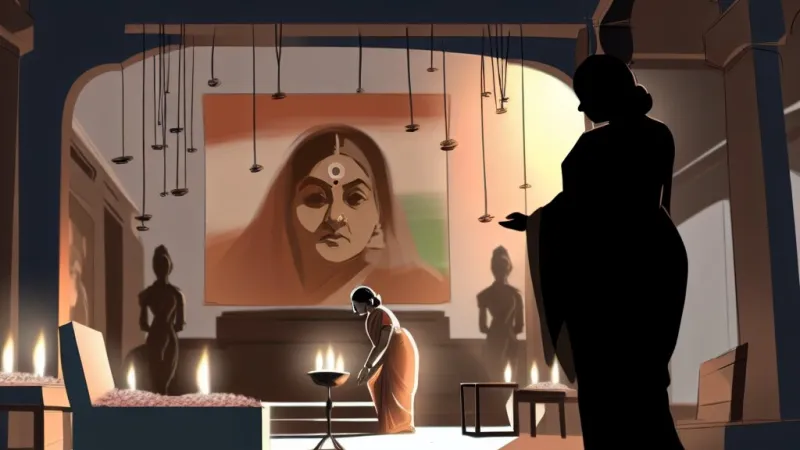
Explore the top 10 lines highlighting the courage of Rani Lakshmi Bai and learn about her bravery, leadership, and inspiring legacy in Indian history.
Introduction
Among the many valiant figures who shaped India’s destiny during the tumultuous years of fighting for freedom, Rani Lakshmi Bai of Jhansi stands tall as an embodiment of courage, resilience, and unwavering patriotism. She was not only a queen, but also a fearless warrior and a woman far ahead of her time, remembered and revered across generations. Her inspiring story, woven into Indian folklore, textbooks, and art, continues to ignite the spirit of self-belief and bravery among students and citizens alike. Understanding her life’s struggles and achievements is pivotal for those seeking lessons in nationalism, the quest for justice, and breaking stereotypes in Indian society. In this essay, I will present ten well-crafted lines that capture the essence of Rani Lakshmi Bai’s extraordinary journey, delving into her background, battles, and enduring legacy.---
Early Life and Family Background
Rani Lakshmi Bai, known at birth as Manikarnika Tambe, was born on 19 November 1828 in Varanasi, a city rich in history and spirituality. Her father, Moropant Tambe, served as a court official, and her mother, Bhagirathi Sapre, came from a cultured Marathi Brahmin family. Due to her mother’s early demise, young Manu (her childhood nickname) was raised single-handedly by her father, who instilled in her both scholarly wisdom and martial skills—a rare combination for girls in nineteenth-century India. While most girls of the era were limited to domestic chores and rudimentary education, Manikarnika mastered the use of weapons, horse riding, and even wrestling. She learned Sanskrit shlokas as fervently as she practiced swordplay, reflecting the shloka from the Bhagavad Gita: “Karmanye vadhikaraste, ma phaleshu kadachana,” which extols duty over reward. Her upbringing in the lanes of Varanasi thus shaped her as both compassionate and formidable—a precursor to her future avatar as the queen who would challenge the might of the British Empire.---
Life as the Queen of Jhansi
At the age of fourteen, Manikarnika’s life took a new turn when she was married to Maharaja Gangadhar Rao Newalkar, the ruler of Jhansi, a small but significant princely state in present-day Uttar Pradesh. Upon marriage, she was bestowed the name Lakshmi Bai, with ‘Lakshmi’ symbolising the goddess of wealth and power—a harbinger of her own destiny. The royal household of Jhansi soon witnessed her keen interest not just in palace matters but also in affairs of state. She would often accompany her husband to the durbar, learning the intricacies of administration and the challenges faced by the people. In 1851, happiness arrived in the form of her son, Damodar Rao. Sadly, fate dealt a blow with the child’s untimely death and the failing health of the Maharaja. To preserve the royal lineage, the king adopted a relative’s son (also named Damodar Rao) as the legal successor, an act that would soon bring Lakshmi Bai face-to-face with colonial power.---
The Outbreak of Crisis: Doctrine of Lapse
Following the Maharaja’s demise in 1853, Rani Lakshmi Bai’s world was upended by a new adversary—British colonial officials. Lord Dalhousie, then Governor-General, was implementing the Doctrine of Lapse, a controversial policy devised to annex Indian princely states lacking direct male heirs. The British dismissed the adopted Damodar Rao as illegitimate and ordered the annexation of Jhansi. The queen’s appeals and petitions to Britain fell on deaf ears; her pleas for justice were reduced to paperwork. But Rani Lakshmi Bai was not one to surrender her homeland at the stroke of a pen. “Mein Jhansi nahi doongi,” she declared—a phrase that would echo through history as an uncompromising assertion of self-respect and sovereignty, especially when most Indian rulers hesitated to confront the empire.---
Leader in the First War of Independence
The simmering discontentment under colonial rule erupted across North India in 1857, commonly known as the First War of Indian Independence. When mutinous sepoys arrived in Jhansi, Rani Lakshmi Bai emerged as their natural leader. Donning a warrior’s attire, she took charge of forging alliances, fortifying the city’s defenses, and reorganising her army with remarkable tact. She included Ghulam Ghaus Khan as her artillery head and trusted advisers like Laxman Rao and Jhalkari Bai, revealing her inclusiveness and capacity to inspire people beyond caste and creed. Famous Indian historian S.N. Sen wrote about her unique ability to turn even ordinary townspeople into soldiers. It was under her leadership that the fort of Jhansi withstood a tough siege laid by British forces under General Hugh Rose in 1858. The Queen would be seen riding her horse, Badal, with her son strapped on her back, sword raised high—a symbol immortalised by poet Subhadra Kumari Chauhan in “Khoob ladi mardani, woh toh Jhansi wali Rani thi.”---
Battles, Sacrifice, and Heroic End
Despite overwhelming odds, Lakshmi Bai’s resistance shook the British forces. She managed to escape from the besieged Jhansi fort at night, joining hands with Tantia Tope and leading the armies towards the fort of Gwalior. She continued to inspire both men and women with tales of courage and guile. On 18 June 1858, during a fierce battle near Gwalior, the Rani sustained fatal injuries. Still, refusing to be captured, she called for her trusted aides to help her attain a heroic death—a martyr’s departure, true to the ideals of dharma and honour prevalent in Indian tradition. Her body was respectfully cremated in secrecy, ensuring that even in death she remained unconquered.---
Rani Lakshmi Bai’s Lasting Impact
Rani Lakshmi Bai’s legacy did not end on the battlefield; rather, her story became a guiding light for future Indian freedom fighters, from Bal Gangadhar Tilak to Subhas Chandra Bose. Her ability to uphold dignity in a deeply patriarchal society, to wield sword and pen alike, inspired movements challenging social and gender norms. The textbooks across schools in Maharashtra, Uttar Pradesh, and Madhya Pradesh dedicate chapters to her life, and a variety of folk songs and dramas—such as the Bundeli ballads—keep her defiant spirit alive even in remote rural communities. Her statue, often depicted riding a rearing horse, has become a landmark in many Indian cities—Kanpur, Pune, and, of course, Jhansi itself.---
Rani Lakshmi Bai and the Context of Women in Her Time
It is important to recognise that Lakshmi Bai’s achievements were not just extraordinary in a military or political sense, but also as a woman challenging the deeply entrenched patriarchy of nineteenth-century India. Girls at that time were rarely given opportunities for formal education or physical training; widow remarriage and access to public life were limited and often stigmatised. Even in such times, Rani Lakshmi Bai’s resolve to take control of her state, to train armies, and to become the face of resistance against a global colonial power, was revolutionary. Leaders of later social reform movements, including Savitribai Phule and Pandita Ramabai, often cited such defiant women as proof of Indian women’s courage and potential.---
Rani Lakshmi Bai in Contemporary Memory
Modern India honours her through postage stamps, films like “Manikarnika: The Queen of Jhansi,” and an endless array of street names, sports tournaments, and institutions. In school annual functions, students often enact episodes from her life, waving wooden swords and donning shimmering saris, feeling, if only for a moment, the spirit of the original warrior queen. For young girls, she continues to be an aspirational icon—proof that women can be shapers of history, not merely witnesses. The National Cadet Corps (NCC) and several women’s wings in the armed forces draw inspiration from her legacy, using her story to foster leadership and patriotism among Indian youth.---
Conclusion
To summarise the life and legend of Rani Lakshmi Bai in ten lines may seem an impossible task, but if one must, they would highlight her humble beginnings in Varanasi, her transformation into a queen, her fierce love for Jhansi, her relentless battles against British imperialism, her undaunted leadership in the 1857 revolt, her defiant words and deeds, her tragic martyrdom, and most importantly, her role as a beacon of hope and courage for future generations. Rani Lakshmi Bai remains an inseparable part of India’s historical consciousness, continually stirring the resolve to speak and act bravely against injustice. Her legacy is a reminder that, even against insurmountable odds, a single determined soul can alter the course of history. As we read about her in our classrooms, let us strive to imbibe her qualities of selflessness, willpower, and love for the motherland.---
10 Original Lines on Rani Lakshmi Bai
1. Rani Lakshmi Bai, born Manikarnika Tambe in Varanasi, was known for her courage from a young age. 2. She lost her mother early and was brought up by her father, who encouraged her education and martial skills. 3. Married to the Maharaja of Jhansi at 14, she was given the name Lakshmi Bai and soon became an able queen. 4. After her husband’s death, she faced the British policy of annexation and fought for her adopted son’s right to the throne. 5. Lakshmi Bai resolutely refused to hand over Jhansi and prepared her people to defend the city. 6. She led her forces from the front during the 1857 uprising, riding into battle with her child on her back. 7. Her strategic insight and stirring leadership turned ordinary citizens into brave soldiers. 8. Even after Jhansi’s fall, she continued the struggle, fighting alongside other leaders till her last breath. 9. Rani Lakshmi Bai died in battle near Gwalior in 1858, refusing surrender to the British. 10. Her legacy as a symbol of womanly courage and patriotism endures in Indian hearts, art, and history.Frequently Asked Questions about AI Learning
Answers curated by our academic expert team
What are the top 10 lines highlighting the courage of Rani Lakshmi Bai?
The top 10 lines present her bravery in battle, refusal to surrender, leadership in war, mastery of martial arts, and commitment to Jhansi, emphasizing her inspiring courage and patriotism.
How did Rani Lakshmi Bai show courage as Queen of Jhansi?
As Queen, Rani Lakshmi Bai managed state affairs, learned warfare, and famously refused to give up Jhansi to the British, demonstrating resolute leadership and valor.
What is the importance of Rani Lakshmi Bai's courage for Indian students?
Her courage teaches Indian students about patriotism, self-belief, and standing up against injustice, serving as a motivational example in history and society.
How did Rani Lakshmi Bai's upbringing contribute to her bravery?
Her upbringing in Varanasi included martial training and education, preparing her to face adversities and become a fearless leader against British rule.
Why is Rani Lakshmi Bai's courage remembered in Indian history?
Rani Lakshmi Bai's courage is celebrated because she resisted colonial rule, fought valiantly for Jhansi, and became a symbol of independence for future generations.
Rate:
Log in to rate the work.
Log in