Mahavir Jayanti: Significance and Celebration of Lord Mahavira's Birth
This work has been verified by our teacher: 3.05.2026 at 9:11
Type of homework: Essay Writing
Added: 30.04.2026 at 10:57
Summary:
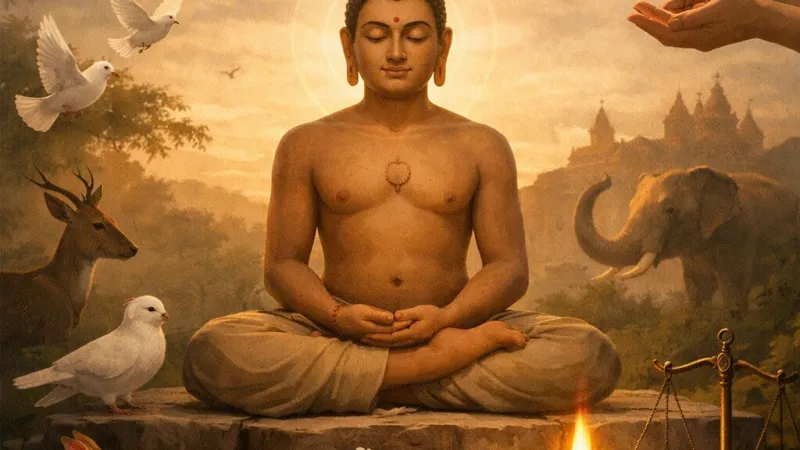
Explore the significance and celebration of Mahavir Jayanti to understand Lord Mahavira’s life, teachings, and the timeless message of non-violence and truth.
Paragraph on Mahavir Jayanti
In the vibrant tapestry of India’s cultural festivals, Mahavir Jayanti stands out not just for its religious significance but also for its profound message of non-violence, truth, and compassion. Celebrated as the birth anniversary of Lord Mahavira, the 24th and final Tirthankara of Jainism, this festival occupies a sacred place for the Jain community and is also admired by people of various faiths for its universal values. As with Buddha Purnima in Buddhism or Guru Nanak Jayanti among Sikhs, Mahavir Jayanti is much more than a religious event—it represents a living tradition that influences millions of lives and enriches our pluralistic society. The festival, usually observed in the Hindu month of Chaitra (March-April), reminds people across India of the timeless wisdom Lord Mahavira bequeathed to the world over two millennia ago.
Historical and Mythological Background of Lord Mahavira
Lord Mahavira, in whose honour this festival is celebrated, was born around 599 BCE in the ancient kingdom of Vaishali, present-day Bihar. His birth took place in the esteemed Ikshvaku dynasty—a family said to uphold justice and righteousness, revered in many Indian legends. The son of King Siddhartha and Queen Trishala, Mahavira’s arrival into the world was heralded by auspicious dreams—fourteen in number—that his mother experienced, symbolising the advent of an extraordinary soul. Jain texts, such as the Kalpa Sūtra, describe how celestial beings rejoiced at his birth, and Lord Indra himself is believed to have performed a ceremonial anointment on Sumeru Parvat, foreshadowing Mahavira’s divine purpose.From a young age, Mahavira displayed signs of deep contemplation and an inherent sense of kindness. Although raised amid royalty and luxury, his heart was set on understanding the higher truths of existence. At the age of 30, leaving behind his palace, family, and renouncing all worldly attachments, Mahavira embarked on a path of asceticism—an act reminiscent of Prince Siddhartha Gautama who became the Buddha. For twelve long years, he undertook intense meditation and self-discipline before attaining Kevala Jnana, or absolute knowledge, ultimately becoming an enlightened teacher who would transform the spiritual landscape of ancient India.
Core Teachings and Philosophy of Lord Mahavira
The bedrock of Mahavira’s teachings lies in the five great vows, or Mahavratas, which continue to inspire countless seekers of truth. The foremost among these is Ahimsa—complete and unyielding non-violence, not only in action but also in words and intentions. Mahavira taught that even an unspoken thought of harm creates negative karma, firmly grounding Jainism as one of the world’s most non-violent faiths. This teaching has influenced entire communities; for example, the strict vegetarianism and reverence for all forms of life practiced by Jains.The second vow, Satya, urges adherence to truth. It is echoed in Indian epics such as the Ramayana, where Lord Rama is an embodiment of honesty and dharma. Mahavira’s third injunction, Asteya, or non-stealing, appeals for respect towards others’ property and rights. The fourth, Brahmacharya, is often interpreted as celibacy for ascetics or self-control for the laity, emphasising restraint over passions. Aparigraha, the fifth vow, preaches non-possession and detachment, highlighting the futility of materialism—a sentiment found, too, in the teachings of saints like Sant Ravidas and Kabir.
Liberty from the endless cycles of birth and death (Samsara), and the pursuit of Moksha, forms the central spiritual quest in Jainism. According to Mahavira, it is relentless adherence to the five vows and the path of discipline that can free the soul from karma, leading to permanent bliss and knowledge—Kevala Jnana. Mahavira’s emphasis on universal compassion, self-mastery, and harmony with nature finds resonance throughout Indian philosophy, complementing the ideas of ahimsa championed by Mahatma Gandhi in India’s freedom struggle and principles upheld in modern social reform movements.
Rituals and Customs of Mahavir Jayanti
As the spring air heralds the month of Chaitra, Jain communities across India prepare for Mahavir Jayanti with immense devotion and enthusiasm. Temples are cleaned, adorned with fragrant flowers, and decorated with colourful rangolis at the entrance. Flags bearing sacred symbols flutter atop temple spires, and the idol of Lord Mahavira—often beautifully robed and jewelled—is placed at the centre of the festivities.One of the most significant rituals is the ceremonial abhisheka or bathing of the idol, performed with water, milk, sandalwood paste, and even fragrant oils, accompanied by melodious hymns and mantras like the Navkar Mantra. Devotees gather in large numbers, singing bhajans extolling Mahavira’s life and virtues. Many Jains observe strict fasts or practice abstinence from certain foods as a sign of purity, using the occasion to meditate and reflect on their own conduct.
A striking aspect of Mahavir Jayanti is the grand rath yatra or chariot procession. The idol or picture of Mahavira is placed on a lavishly decorated chariot, followed by devotees along city streets, with children, elders, and musicians in colourful attire. In some places, beautifully adorned elephants, horses, and dancers participate, adding to the spectacle. These processions often halt at public spots where sermons on Mahavira’s teachings are delivered or charitable acts are undertaken, such as distribution of prasad—sacred food prepared without onion or garlic, keeping in mind non-violence even towards micro-organisms living in root vegetables. Volunteers serve wholesome vegetarian food, fruits, and sweets to all, echoing the principle of equality and compassion.
In keeping with the spirit of aparigraha, acts of charity are integral to the day. Community kitchens, medical camps, and blood donation drives are organised in cities like Ahmedabad, Jaipur, and Indore. On this day, groups like the Jain Social Groups and the Bharatvarshiya Digambar Jain Mahasabha intensify their outreach, serving the needy irrespective of caste or religion.
Geographical and Cultural Significance
The epicentre of Mahavir Jayanti celebrations are the states with substantial Jain populations, such as Gujarat, Rajasthan, Maharashtra, and Madhya Pradesh. The famous Jain temples of Palitana, Girnar, Ranakpur, and Mount Abu come alive with special pujas and fairs, attracting pilgrims from all over the country. In Bihar, particularly Pawapuri where Lord Mahavira is believed to have attained nirvana, devotees gather in thousands, performing puja in the historic Jal Mandir—its marble floors shining under lamps, its surroundings redolent with incense.Kolkata’s Parasnath temple, and the Jain temples at Shravanabelagola in Karnataka, also witness grand ceremonies. Even in metropolises like Delhi and Mumbai, processions snake their way through busy streets, often halting traffic and drawing the curious eyes of passers-by belonging to diverse backgrounds.
India’s Jain diaspora in East Africa, the UK, the USA, and the Middle East have carried these traditions abroad, celebrating Mahavir Jayanti with the same fervour. Jain temples in Nairobi, Dubai, and Leicester hold discourses, charitable events, and processions, using the festival as a platform to introduce young generations to their heritage and connect with the broader Indian community.
Above all, Mahavir Jayanti exemplifies unity and the sharing of values. In many places, people of all communities join in, drawn by the festival’s atmosphere of joy, sharing, and reflection. The message of non-violence is so universal that it transcends religious differences and finds a home in every heart.
Contemporary Relevance of Mahavir Jayanti
If we look around, the relevance of Mahavira’s message seems only to grow with time. The world today grapples with violence, environmental crisis, stress, and social divisions—problems that stem, in part, from a loss of compassion and self-restraint. Mahavir Jayanti is a gentle but powerful reminder that peace begins with the individual and that care for life, respect for truth, and control over desires remain cornerstones of ethical living.In recent years, Mahavir Jayanti has also become an occasion for social service, with Jains and others participating in initiatives like eye camps in Maharashtra, food distribution in Hyderabad slums, or tree plantings in Bengaluru. Schools and colleges conduct essay competitions, quizzes, and exhibitions to spread awareness about Mahavira’s philosophy—fostering understanding among the young.
Indian media now covers these events widely, with documentaries on Mahavira and interviews with Jain monks broadcast on channels like DD National and Aastha TV. Newspapers carry stories of young Jains volunteering at animal shelters or holding workshops on ethical vegetarianism—demonstrating that Mahavira's legacy is alive and evolving.
Conclusion
In the end, Mahavir Jayanti is not just a day for rituals, but an opportunity to pause and reflect on how timeless spiritual wisdom can guide our modern lives. By celebrating this festival, we honour not only Lord Mahavira’s memory but also the core Indian ideals of harmony, peace, and respect for diversity. One need not belong to any particular faith to appreciate and embody the values taught by Mahavira—Ahimsa, Satya, Asteya, Brahmacharya, and Aparigraha—which are essential for a just and happy society.As countries and cultures grapple with differences, the message of Mahavira stands like a lighthouse, urging us to be kind, to seek truth, to share what we have, and to rise above narrow selfishness. Mahavir Jayanti, thus, is not just a Jain festival, but a celebration of universal values that can inspire all Indians to work towards a society built on respect, compassion, and self-discipline. By imbibing these teachings in our daily lives, we can truly honour the spirit of Mahavir Jayanti and contribute to the creation of a more harmonious and peaceful world.
Rate:
Log in to rate the work.
Log in